
By Mark Ryan, BACP Accredited Psychotherapist and NCPS Accredited Relationship Therapist
Choosing a couples therapist can be harder than choosing an individual therapist. Two people have to agree on the approach, the cost, the location, and crucially, the person sitting in the room with them. In a city the size of London, with many therapists offering couples work from every tradition and at every price, the choice can feel overwhelming.
Most guides skip the practical reality of doing this in London specifically. They talk about credentials and approaches in the abstract, but not about how to weigh location against fit, or how to manage the awkward truth that the person who feels right to you may feel wrong to your partner.
This guide covers what I think matters when choosing a couples therapist in London. It is written from inside the profession, with the things I would want a friend or family member to know if they were starting this process.
In brief
Check that the therapist is on a professional register, and that they have training in couples work and not only individual work.
Choose the person more than the method. The evidence for the two best researched approaches is good, and the relationship with your therapist also matters.
Ask how the therapist tracks whether the work is helping. Research suggests this can make a real difference.
Location, fees and format are practical decisions that affect whether you can keep going.
Book more than one free consultation, and trust what you notice in the room.
Credentials, and what they mean
Counselling and psychotherapy are not regulated by law in the UK, and the titles 'counsellor' and 'psychotherapist' are not protected. In practice this means that anyone can use them (BACP, n.d.; Unsafe Spaces Campaign, n.d.). What separates a properly trained therapist from someone using the title loosely is, in my view, membership of a recognised professional body that holds a register and a code of ethics.
The main bodies you will see on a therapist's website include:
BACP (British Association for Counselling and Psychotherapy). The BACP Register is accredited by the Professional Standards Authority. People listed on the Register are Registered Members (MBACP), Accredited Members (MBACP Accred) or Senior Accredited Members (MBACP Snr Accred). Student and individual members do not appear on the Register (BACP, n.d.). Accreditation is a further, voluntary step beyond registration, so a registered therapist is not necessarily less skilled than an accredited one, but accreditation tells you the therapist has met an additional set of standards.
NCPS (National Counselling and Psychotherapy Society). A professional body with a register of practitioners. NCPS has an Accredited Relationship Therapist designation for therapists with additional training in couples work, which is worth looking for if relationship therapy is what you need.
UKCP (UK Council for Psychotherapy) and BPC (British Psychoanalytic Council). Professional bodies for psychotherapists, with BPC associated with psychoanalytic and psychodynamic training.
COSRT (College of Sexual and Relationship Therapists). A body for therapists who work with sexual and relationship difficulties, which can be worth looking for if sex is part of what you want to address.
You can check any therapist's entry on the relevant register yourself, and I would encourage you to. For couples work specifically, the question to ask is whether the therapist has training in couples or relationship therapy as well as their general qualification. Many therapists work only with individuals, and some who advertise couples work have had relatively little specific training. A few honest questions in the consultation will tell you which you are dealing with.
Things I would treat as red flags: no registration body listed at all, vague claims about qualifications, no mention of clinical supervision, or a website that talks about results and testimonials but not about training.
Modality, and why it may matter less than people think
Couples therapists in London tend to work in one of several traditions, sometimes called modalities or approaches. The main ones you will come across are:
Integrative. Draws on several approaches and tailors the work to the couple. In my experience, many experienced therapists end up here, whatever they first trained in.
Imago Relationship Therapy. Developed by Harville Hendrix and Helen LaKelly Hunt. Centres on the idea that we are often unconsciously drawn to partners who echo our early caregivers, and that conflict is an invitation to heal those earlier patterns together. Structured dialogue is a core feature, slowing down conversations so each partner can be properly heard before responding.
Emotionally Focused Therapy (EFT). Developed by Sue Johnson and rooted in attachment theory. A review of the research concluded that EFT meets or exceeds the guidelines for an evidence based couple therapy (Wiebe & Johnson, 2016). It tends to focus on the emotional patterns underneath the arguments.
The Gottman Method. Based on the work of John and Julie Gottman. In my experience it is more structured, often involving questionnaires and homework, and it tends to focus on communication patterns.
Behavioural approaches. Integrative Behavioural Couple Therapy and its predecessor have been studied in trials. In one study that followed 134 seriously and chronically distressed couples for five years, both forms produced substantial effect sizes, and the authors concluded that the results compared favourably with other long term results of couple therapy (Christensen et al., 2010).
Psychodynamic or psychoanalytic. Looks at how patterns from earlier in life shape current relationships. In my experience it is slower and more reflective. In a UK clinic study of 877 people who completed at least two sessions of psychodynamic couple therapy, individual distress fell with a large effect size and relationship satisfaction improved with a medium effect size, and the authors described effect sizes similar to those reported in randomised trials (Hewison et al., 2016).
Systemic or family therapy approaches. Sees the couple as a system, and looks at how each person's behaviour shapes the other's.
A review of a decade of research on couple therapy found that it positively affects about 70 per cent of couples who receive it, and singled out Integrative Behavioural Couple Therapy and emotion focused therapy as especially promising (Lebow et al., 2012). So the evidence for couples therapy is encouraging across several approaches. What I cannot point to is evidence that any one approach is clearly better than the others. My advice is therefore not to get too caught up in choosing the right method. Choose the right person.
Fit, which matters more than anyone admits
One of the better studied features of therapy is the relationship between therapist and client, known as the alliance. A meta analysis of 24 studies of alliance and outcome in couple and family therapy, of which seven were couple studies, found a small to medium positive association between alliance and outcome overall (r = .26). In the couple studies the association was stronger (r = .37) (Friedlander et al., 2011). The authors point to a problem that is particular to couple work: alliances can become 'split' or unbalanced, so that one partner feels much closer to the therapist than the other. They also stress the importance of ensuring safety and of building a shared sense of purpose between the partners.
A study of 250 couples found that the alliance rated at the last session predicted outcomes for both partners, and that couples whose alliance started above average and grew were more likely to achieve reliable or clinically significant change (Anker et al., 2010). That sample was White, Euro Scandinavian and heterosexual, so I would be careful about how far it travels.
For couples, that means three relationships, not one. You have to feel the therapist is a good fit. Your partner has to feel the therapist is a good fit. And the three of you have to feel like a working team.
This is the part of the decision that no amount of research can settle. A therapist who looks ideal on paper may simply not be the right person for the two of you. A therapist whose website is plain and unfussy may turn out to be exactly the right person.
A few things to pay attention to when you meet a therapist:
Do you both feel heard, or does one of you feel the therapist has already picked a side?
Does the therapist seem genuinely curious about you as a couple, or are they running through a standard script?
Can you imagine being honest in front of this person, including about things you have not yet said to each other?
Does the therapist's manner feel professional and contained, or does it feel performative?
Many couples therapists offer a free or low cost initial consultation. This exists precisely so you can check fit before committing. Use it. If anything feels off after the consultation, it is entirely reasonable to say thank you and try someone else.
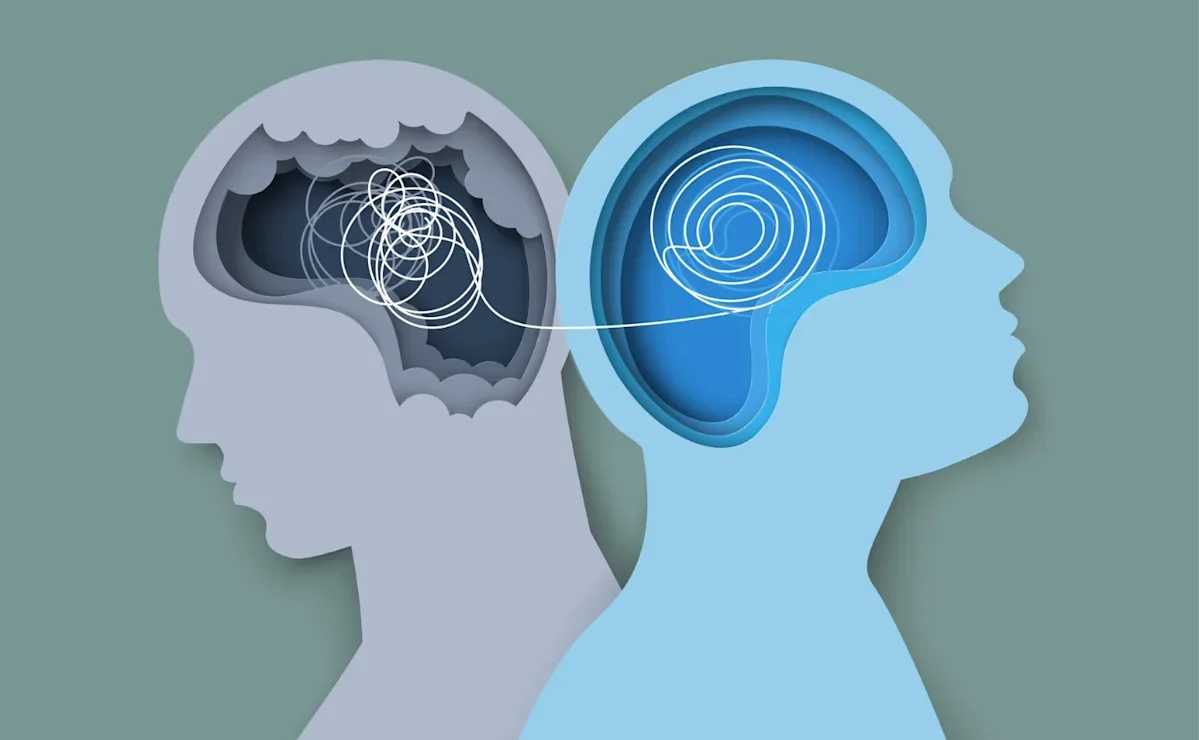
A therapist who looks ideal on paper may simply not be the right person for the two of you
Ask how they will know whether it is working
This is the question I would most like every couple to ask. In a randomised trial of 410 people attending a community family counselling clinic, couples whose therapists received regular feedback on their progress and on the quality of the alliance did better than couples receiving treatment as usual. The feedback group showed significantly greater improvement, achieved nearly four times the rate of clinically significant change, kept their advantage at six month follow up, and had a significantly lower rate of separation or divorce (Anker et al., 2009). Researchers who studied the gap between trials and everyday practice make a similar recommendation, that therapists clarify whether a couple's goal is to improve the relationship or to decide about it, use standardised assessment, and monitor progress and the therapeutic alliance as therapy goes on (Halford et al., 2016).
So I would ask any therapist: how do you track whether our sessions are helping, and what happens if they are not? A good therapist will have an answer. If you would like a wider view of the research, I have written about whether couples therapy is worth it.
Location, and the proximity question nobody talks about
This is the section most guides skip, and in my experience it matters more than people realise. Where the therapy room is changes whether you can sustain weekly attendance, and attendance matters for any therapy to work.
There are a few tensions worth thinking through. These are my observations from practice and not research findings.
Close enough to be sustainable
Couples therapy tends to work best when sessions are weekly, at least at the start. A therapist whose room is a long journey followed by a long walk will be the right person for some couples, but the wrong person for couples who already struggle to find time together. Be honest about the journey you can keep up for six months, not the journey you can do once.
Far enough to feel separate
Many couples deliberately choose a therapist a few stops from home rather than around the corner. Therapy benefits from a small amount of separation from daily life. Walking past the room on the school run, or running into your therapist at the local supermarket, can quietly erode the sense that therapy is a space apart.
Neither partner's home turf
This is a subtler point. If the room is two minutes from one partner's office or in the neighbourhood where one partner grew up, the other can subtly experience the space as not quite neutral. London's transport network makes this easier to solve than in most cities. Picking somewhere reasonably equidistant, or somewhere that belongs to neither of your day to day lives, gives the work a small advantage.
Easy to get home from after a hard session
A point that I rarely see on therapists' websites. Couples therapy sessions can be emotionally heavy, and a long, crowded journey home straight afterwards can undo some of the work of the session. When you are choosing a location, think about how you will get home, not just how you will get there. Some couples find a short walk after a session is part of what makes the work bearable.
Where couples therapists tend to practise
Couples therapists in London are spread across the city, with many clustered in central areas such as Kensington and Notting Hill in the west, Marylebone and the Harley Street area in the centre, Pimlico and Westminster, the City and Islington, and south London areas such as Clapham. Each area has its own character, and a therapist's fee often reflects where the room is, as the next section explains. If you work in one of these areas, it may be easiest to look nearby, and if you do not, think about somewhere between you and your partner.
Where I work
Rise and Grow Therapy™ works from three areas of central London: Kensington on Mondays, Pimlico on Wednesdays and Thursdays, and Angel on Tuesdays and Fridays. This is partly a practical choice, since couples in London live and work across the city, and being in three areas means most clients can find a location that works for both partners. You can find details of each on the Kensington, Pimlico and Angel, Islington pages.
In person or online: which works better for couples?
Online therapy expanded dramatically during the pandemic, and for individual therapy it works well for many people. For couples, in my experience the picture is more mixed, and worth thinking through carefully. I am describing my own practice here and not research findings.
Online suits some couples well. Couples in stable phases of work, couples doing maintenance or check in sessions, couples whose schedules genuinely cannot accommodate in person work, and couples in long distance relationships can all do reasonable work online.
In my experience, in person tends to be the stronger choice when the work is active, recent or charged. The reasons I find in person matters more for couples than for individuals are these:
Body language and the dynamic between you are much more visible to the therapist in the room.
It is harder for one partner to disengage, glance at their phone, or quietly disappear behind a screen.
The room itself becomes a shared, neutral space, which matters when home feels charged.
Emotional intensity is, to my mind, held better in person. Tears and difficult moments do not translate well over a video call.
Hybrid is a real option. Some couples do a mix, with most sessions in person and occasional online sessions when work or travel makes it necessary. A good therapist will be open about which mode suits which kind of work.
Cost, and what to actually expect to pay
Couples therapy in London is not cheap, and fees vary a good deal. There is no official survey of what London therapists charge, so the best picture comes from published fee guides, directories and clinics' own price lists. These are not rigorous, and they do not agree with each other, so treat what follows as a rough guide and not a benchmark.
The guides do agree on one thing. Lower fees tend to belong to therapists who are newly qualified or in training, and to charities and sliding scale services, where the fee is adjusted to a couple's circumstances. One booking marketplace says couples work with a graduate therapist starts at about £50, and that the average counsellor charges £70 to £80 an hour (Bark, 2025). A London guide puts a newly qualified counsellor at £60 to £75 (UK Therapy Guide, 2026a). Those lower figures are real, but they describe a different kind of service from an experienced, accredited couples therapist, so I would not use them as the benchmark for what to expect from one.
For experienced therapists, the published figures sit mostly above £100. One guide gives £90 to £150 for standard couples counselling in London and £120 to £180 for specialist relationship therapy such as EFT (UK Therapy Guide, 2026a). A London clinic lists couples sessions at £170 (One Therapy, n.d.). A directory puts typical London fees for couples or family therapy at £170 to £250, with longer sessions common (TherapyRoute, 2026), and the booking marketplace says some Harley Street therapists charge as much as £200 (Bark, 2025). Putting these together, a reasonable expectation for an experienced, accredited couples therapist in central London is somewhere from about £100 to £250 a session, with many clustering between about £120 and £180. My own fees are £120 for a weekly reserved slot and £140 for ad hoc booking (Rise and Grow Therapy, 2026).
Three things help when you compare:
Check the session length. Some therapists work 50 minutes and some 60 or longer. A longer session at a higher fee can work out at a similar rate per minute. One guide notes that couples sessions are often longer than individual sessions (UK Therapy Guide, 2026a).
Ask what the fee includes. One guide explains that the fee covers more than the time in the room. It includes preparation, notes, room rental, professional indemnity insurance and clinical supervision (Counselling UK, n.d.).
Ask about trainees. If a fee looks unusually low, it is perfectly legitimate to ask whether the therapist is in training and working under supervision.
Many therapists charge a different rate for couples work than for individual work, and couples work asks for additional training, so comparing a couples fee with an individual fee is not a like for like comparison. For a fuller breakdown, see how much couples therapy costs in London.
What to ask in a free consultation
The consultation is for you, not the therapist. Most therapists will spend it explaining their approach and asking about what brings you. That is fine, but it is also worth coming with a short list of questions of your own. A useful checklist:
How long have you worked with couples specifically, as opposed to individuals?
How do you track whether our sessions are helping?
What is your approach when one partner is more reluctant to be there than the other?
How do you handle individual sessions within couples work, if at all?
What is your policy on between session contact, particularly if things escalate at home?
What is your cancellation policy?
Do you work with couples like us? (This matters particularly for same sex couples, non monogamous couples, couples from specific cultural or religious backgrounds, or couples navigating particular issues like sex difficulties or recovery from infidelity.)
What does ending therapy look like with you? How do we know when we are done?
None of these questions is a test. They are there to help you decide whether the therapist's answers feel like a fit for what you need. If you are not sure what a first session will be like, I describe it in your first couples therapy session in London. If your partner is not yet convinced, what to do when your partner won't go and an honest guide for the sceptic may help. If you are in a same sex relationship, I write about gay couples therapy in London and lesbian couples therapy.
I’ve also created a free downloadable guide for reflecting on what you might want to raise at your first consulation with a potential therapist. You can download it using the button below.
Red flags worth taking seriously
Most couples therapists I know are competent and well intentioned. A few are not, and in my experience the warning signs are usually visible early. Things I would watch for:
No clear professional registration, or registration with a body you cannot find online.
Pressure to commit to a fixed package of sessions upfront, before you have met.
Side taking in the consultation. The research on couple therapy points to split alliances as a particular risk (Friedlander et al., 2011), and a therapist who appears to agree with one of you against the other in the first conversation is a warning sign to me.
Refusal to answer reasonable questions about training, approach, or supervision.
No mention of clinical supervision anywhere on the website or in conversation. In my view supervision is a basic expectation of ethical practice, not an optional extra.
Claims to fix relationships in a fixed number of sessions, or guarantees of outcomes.
Heavy use of language that feels coercive, dramatic or unprofessional, particularly anything that pathologises one partner.
A final thought
Choosing a couples therapist in London is worth taking time over. The right person, in the right location, at the right point in your relationship, can shift things that have felt stuck for years. The wrong fit, however well intentioned the therapist, can leave a couple feeling that therapy did not work for them, when what really did not work was the fit.
Most therapists offer a free consultation precisely because fit cannot be judged from a website. If you are at the start of this process, the most useful thing is often to book consultations with two or three therapists rather than one. The contrast tells you something the websites cannot. If you are still deciding whether the time is right, I wrote about that in when to go to couples therapy.
If you would like to talk about whether Rise and Grow Therapy™ might be the right fit for you and your partner, the free 30 minute consultation, available in person or online, is the place to start.
About the author
Mark Ryan is a BACP Accredited Psychotherapist and NCPS Registered Relationship Therapist working with individuals and couples across three central London locations: Kensington, Pimlico, and Angel. His practice focuses on relationships, intimacy, and sexuality, with particular experience supporting LGBTQ+ couples and clients navigating non-traditional relationship structures.
If you would like to talk about whether couples therapy might help, you can book a free thirty-minute consultation, available in person or online.
References
Anker, M. G., Duncan, B. L., & Sparks, J. A. (2009). Using client feedback to improve couple therapy outcomes: A randomized clinical trial in a naturalistic setting. Journal of Consulting and Clinical Psychology, 77(4), 693 to 704.
Anker, M. G., Owen, J., Duncan, B. L., & Sparks, J. A. (2010). The alliance in couple therapy: Partner influence, early change, and alliance patterns in a naturalistic sample. Journal of Consulting and Clinical Psychology, 78(5), 635 to 645.
BACP. (n.d.). Register of members. British Association for Counselling and Psychotherapy. Retrieved 5 October 2026.
Bark. (2025). How much does relationship or marriage counselling cost 2025. Retrieved 5 October 2026.
Christensen, A., Atkins, D. C., Baucom, B., & Yi, J. (2010). Marital status and satisfaction five years following a randomized clinical trial comparing traditional versus integrative behavioral couple therapy. Journal of Consulting and Clinical Psychology, 78(2), 225 to 235.
Counselling UK. (n.d.). Cost of couples counselling in the UK: What to expect. Retrieved 5 October 2026.
Friedlander, M. L., Escudero, V., Heatherington, L., & Diamond, G. M. (2011). Alliance in couple and family therapy. Psychotherapy, 48(1), 25 to 33.
Halford, W. K., Pepping, C. A., & Petch, J. (2016). The gap between couple therapy research efficacy and practice effectiveness. Journal of Marital and Family Therapy, 42(1), 32 to 44.
Hewison, D., Casey, P., & Mwamba, N. (2016). The effectiveness of couple therapy: Clinical outcomes in a naturalistic United Kingdom setting. Psychotherapy, 53(4), 377 to 387.
Lebow, J. L., Chambers, A. L., Christensen, A., & Johnson, S. M. (2012). Research on the treatment of couple distress. Journal of Marital and Family Therapy, 38(1), 145 to 168.
One Therapy. (n.d.). Our fees. Retrieved 5 October 2026.
Rise and Grow Therapy. (2026). How much does couples therapy cost in London? Retrieved 5 October 2026.
TherapyRoute. (2026). How much does therapy cost in London in 2026? Retrieved 5 October 2026.
UK Therapy Guide. (2026a). How much is therapy in London? (2026 cost guide). Retrieved 5 October 2026.
Unsafe Spaces Campaign. (n.d.). Written evidence submitted by the Unsafe Spaces Campaign (PSA0008). UK Parliament Committees. Retrieved 5 October 2026.
Wiebe, S. A., & Johnson, S. M. (2016). A review of the research in emotionally focused therapy for couples. Family Process, 55(3), 390 to 407.
