
 Image 1 of 4
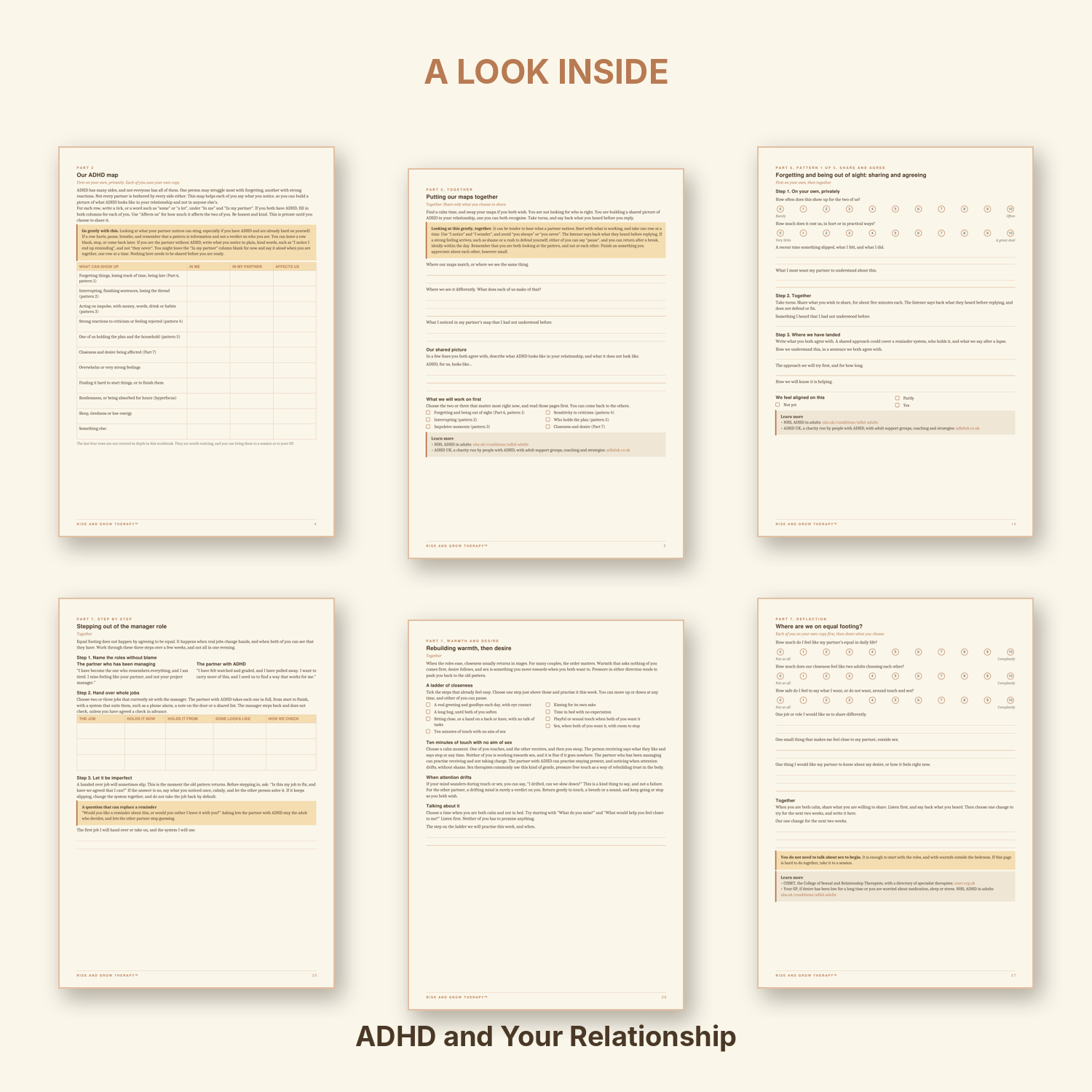 Image 2 of 4
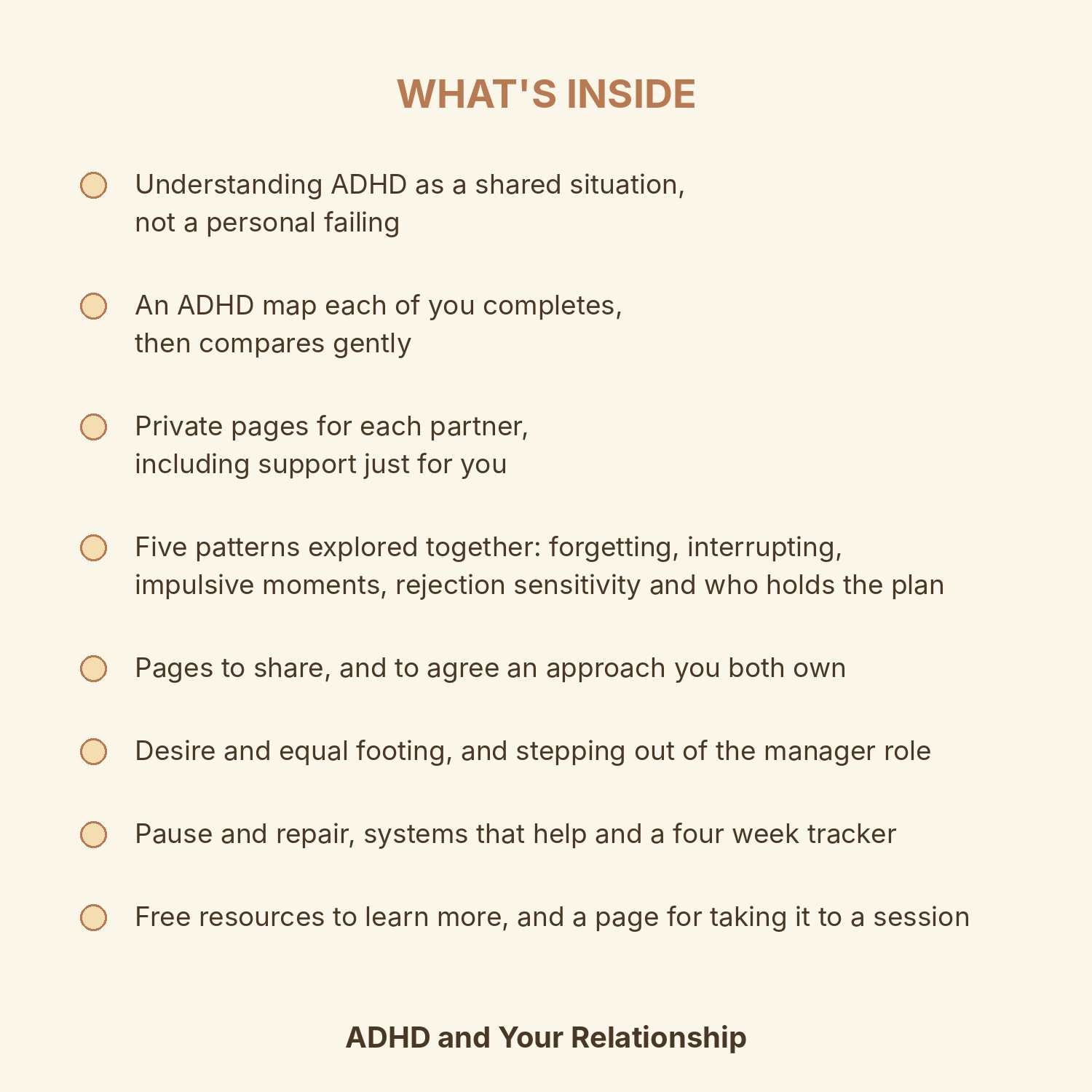 Image 3 of 4
 Image 4 of 4
New feature: trying to book, but can’t find a suitable time? You can now join the waitlist while booking and be notified by text when space becomes available.
New section: we have added a new Resources section where you can find guides (both free and available for purchase).
Is ADHD coming between you, even though you both care?
When one partner has ADHD, a pattern can set in. One person feels they are never quite getting it right, and carries a lot of shame for it. The other feels tired, unheard and alone with the plan. Each of you can be trying hard and still end up hurt.
This workbook starts from a different idea. ADHD is a shared situation, not a personal failing or a choice. When you can both see it that way, the conversation can move from “what is wrong with you” to “what do we need to do about this”.
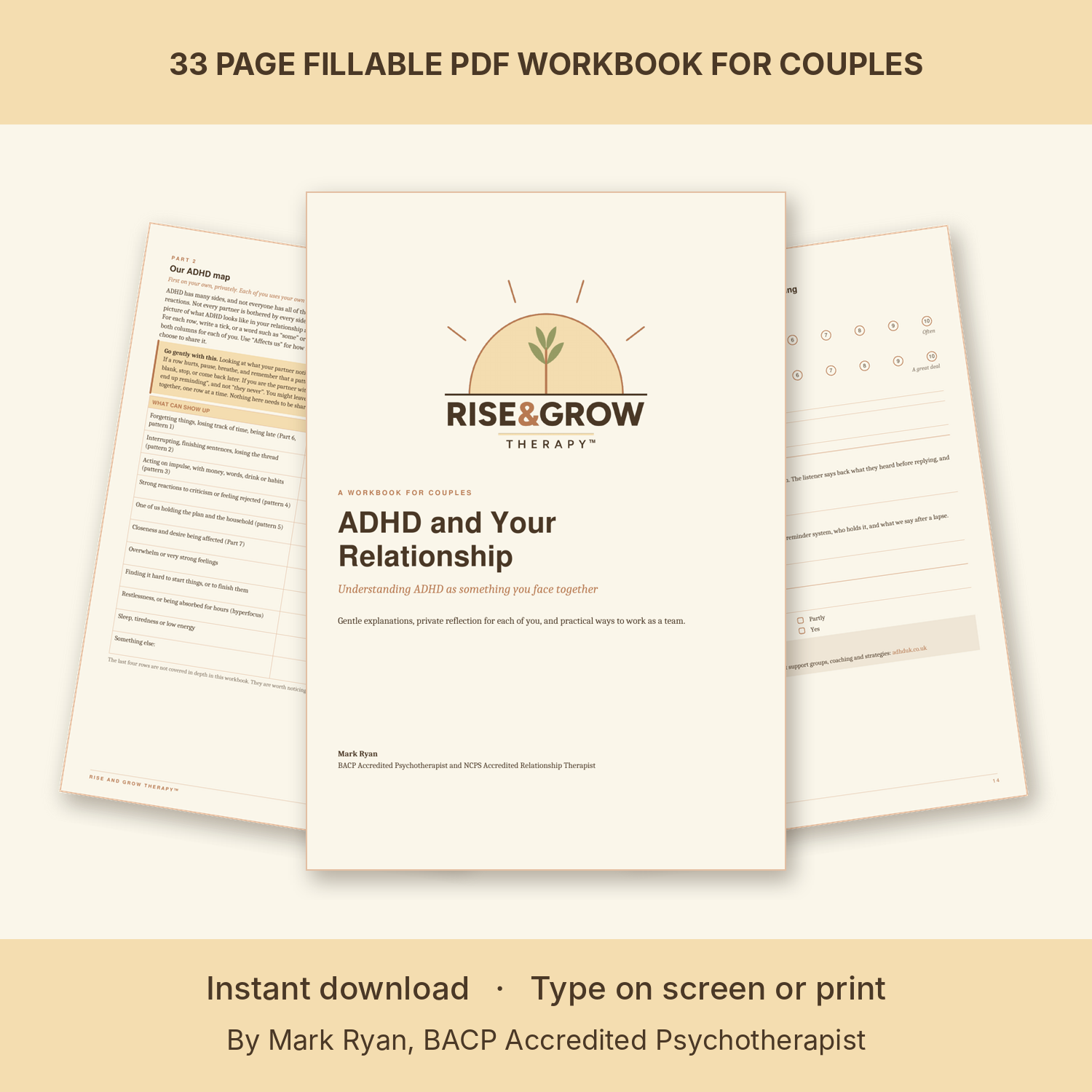
ADHD looks different in every relationship, and not every person with ADHD experiences every side of it. So the workbook begins with a map each of you completes privately, then compares gently, so you build a picture of what ADHD looks like for the two of you. You then choose what to work on first. Each section helps you explore it, share it and agree an approach you both own.
What you will work through
A shared explanation of how ADHD can affect attention, memory and time, impulses and feelings
An ADHD map each of you completes privately, then compares with care, with guidance for managing rejection sensitivity gently
Private pages for the partner with ADHD, covering shame, the story you tell yourself and what you bring, with a page of support just for you
Private pages for the partner without ADHD, covering what you have been carrying, resentment and looking after yourself
Five common patterns, each with a page to understand it and a page to share it and agree an approach: forgetting, interrupting, impulsive moments, sensitivity to criticism, and who holds the plan
Desire and equal footing, on how the manager and managed roles can affect closeness, how to step out of them, and how to rebuild warmth
Systems that help, a pause and repair plan, a four week tracker and a page for taking it to a session
Free resources to learn more at the end of each section, and a full reference list
Who it is for
Couples where one or both partners have ADHD, or think they might, and who want to understand what is happening between them with kindness. It works with or without a formal diagnosis. It can be used alongside therapy, and it can be used by couples of any gender, sexuality or relationship structure.
Please read before buying
This workbook is not suitable if either partner is afraid of the other, or if there is controlling or threatening behaviour or violence. ADHD never excuses these. A support page near the end lists specialist helplines, including help with alcohol and drugs.
About the author
Mark Ryan is a BACP Accredited Psychotherapist and NCPS Accredited Relationship Therapist, and the founder of Rise and Grow Therapy in London. He works with couples of every background and relationship structure, and with individuals working through relational issues. His practice is fully affirming of LGBTQ+ people.
Details
Format is a fillable PDF, A4, 33 pages
Type straight into the boxes on a computer or tablet, or print it and write by hand
Instant digital download, no physical item is sent
For personal use only
Please note
This workbook is educational. It is not therapy, an assessment or a diagnosis, and it is not a substitute for medical or psychological advice. The explanations draw on published research, and the workbook says where the evidence is still developing.
If you would like support with your relationship, I offer a free 30 minute consultation, online or in person in London.