
 Image 1 of 4
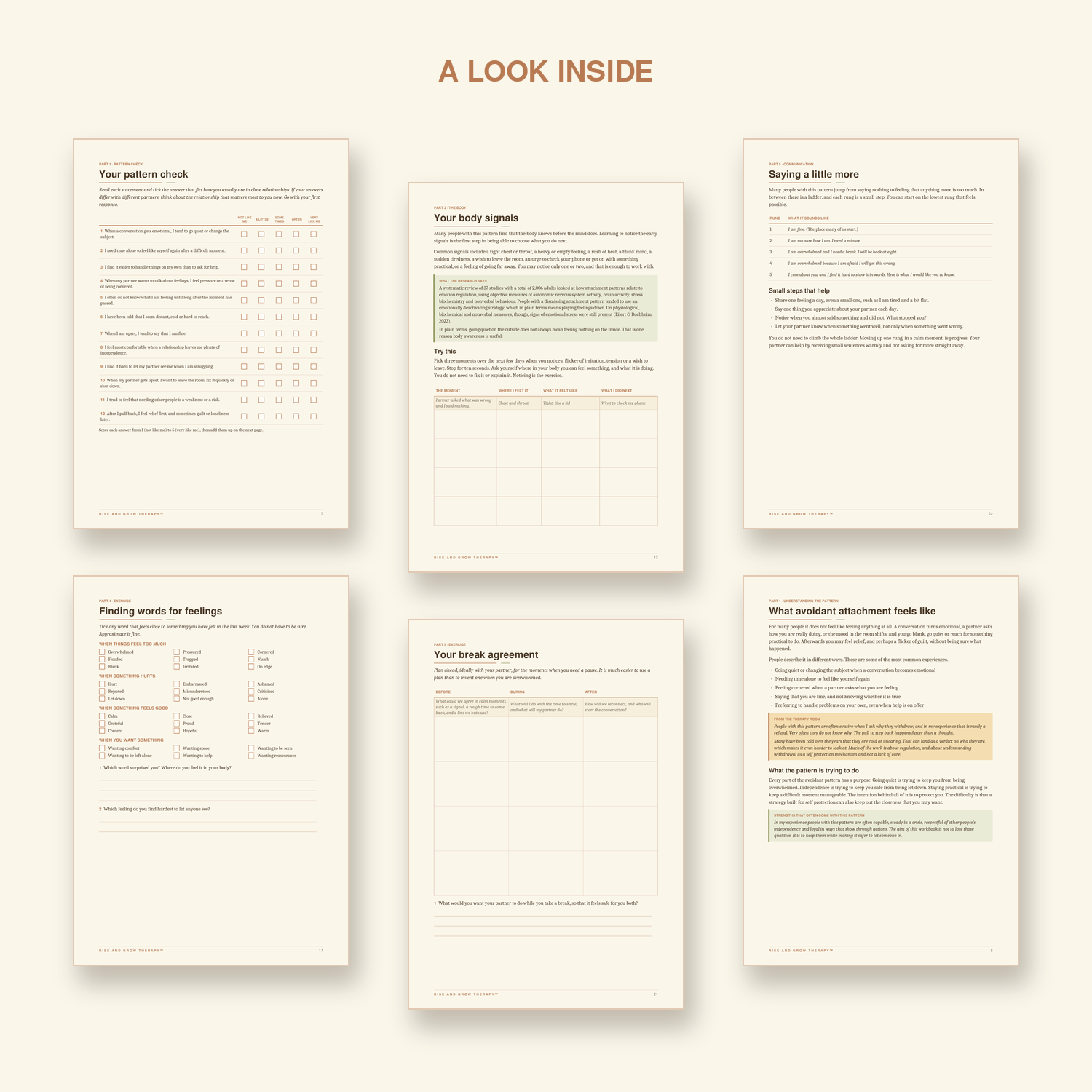 Image 2 of 4
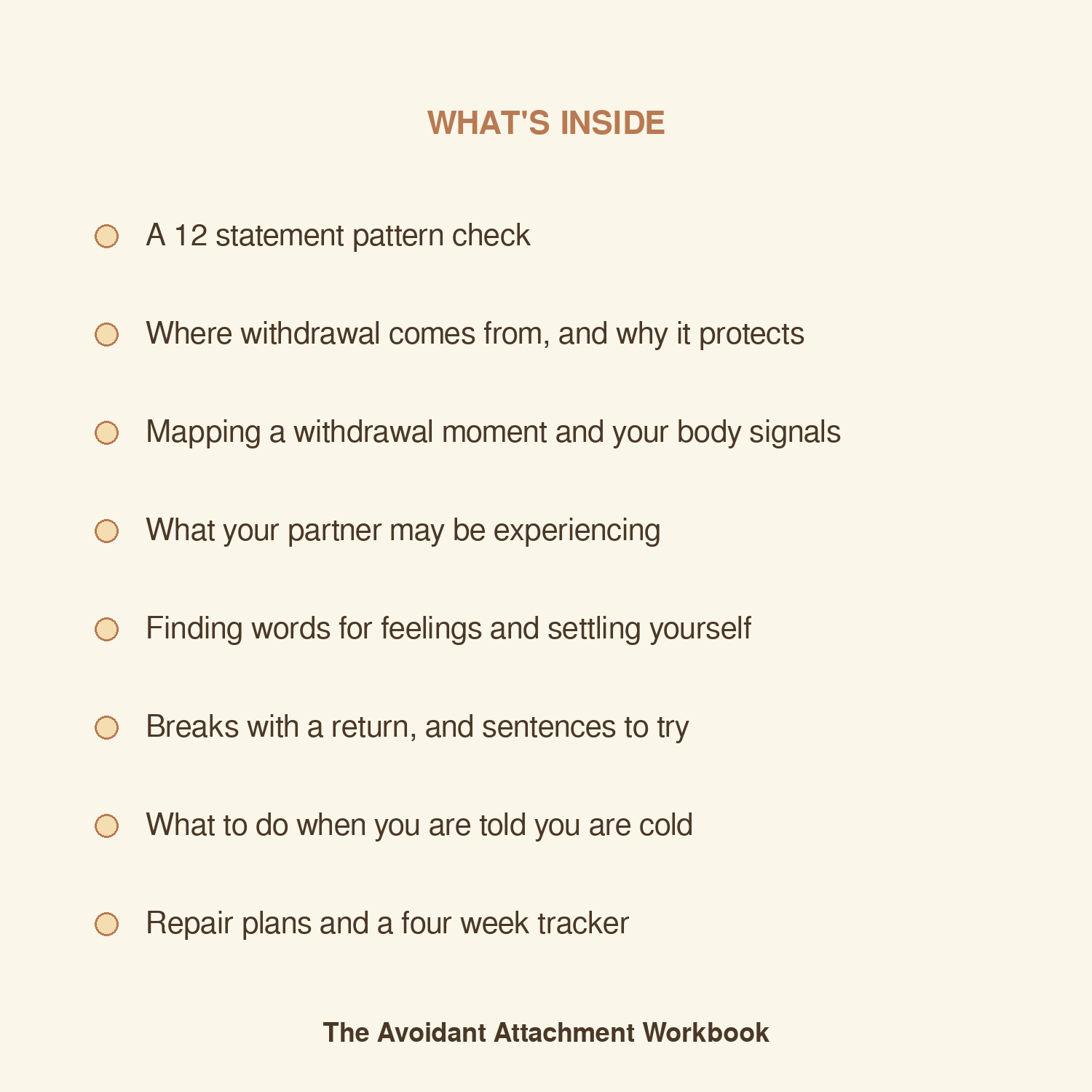 Image 3 of 4
 Image 4 of 4
Do you go quiet when things get emotional, then wonder why you cannot explain it?
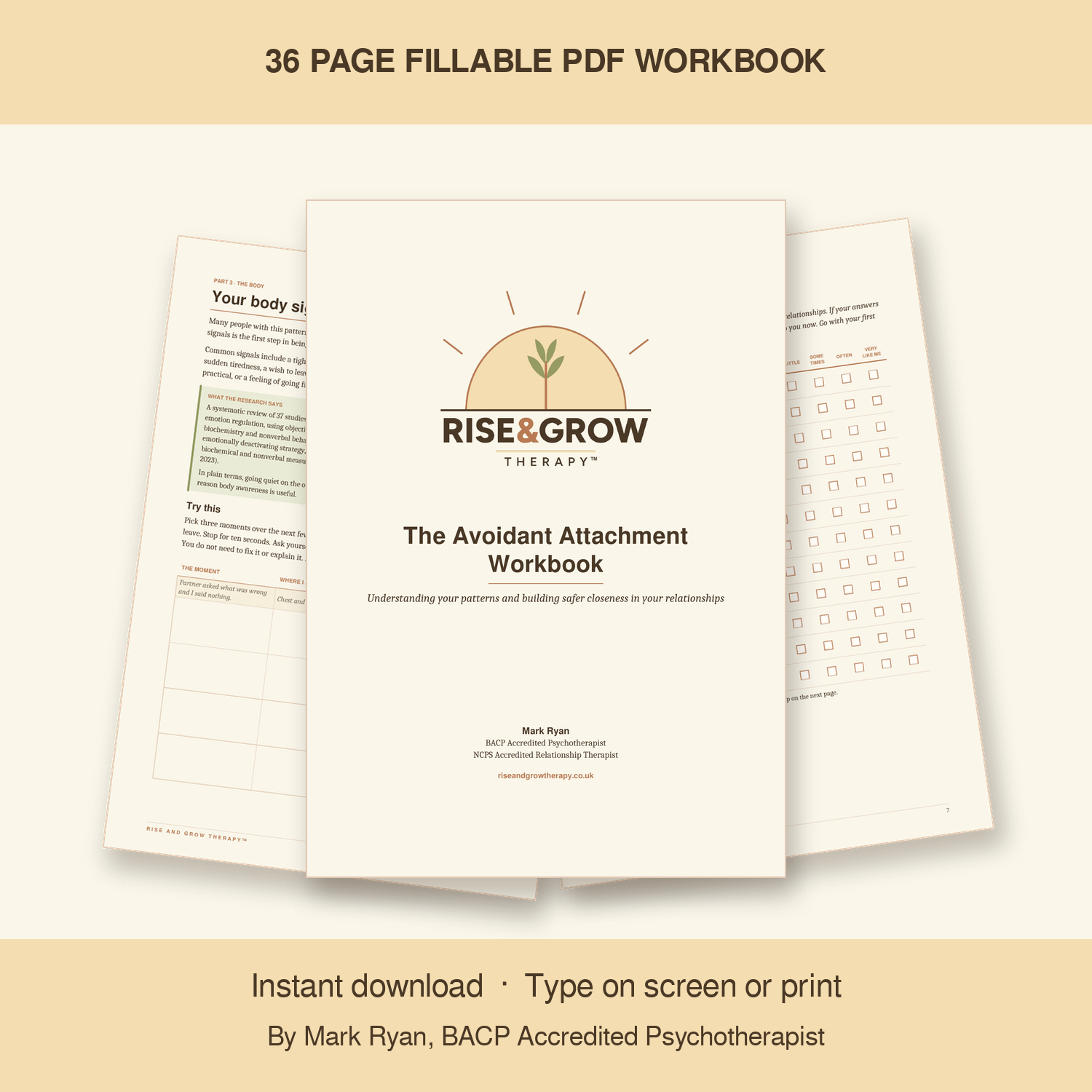
Avoidant attachment is a pattern of relying on yourself, needing space and finding closeness hard to sustain when it feels like pressure. It is not coldness and it is not a diagnosis. It is a form of self protection that was learned for good reasons, and it can soften with understanding and practice.
This workbook is a practical guide to your own pattern. It combines short, clear explanations with reflective exercises you can type into on screen or print and write on by hand. If you find feelings hard to put into words, short answers and single words are fine.
What you will work through
A 12 statement pattern check to help you notice how your pattern shows up
How the pattern was built, and your own blueprint
Withdrawal as protection, with a worked example of the loop between two people
Mapping a withdrawal moment and noticing your body signals
What your partner may be experiencing, and what is true for you
Finding words for feelings, and a regulation plan for settling yourself
Breaks with a return, so that taking space feels safe for you both
A ladder of sentences for saying a little more, and what to do when you are told you are cold
What helps you stay in a difficult conversation
Repair after a withdrawal, your intentions and a four week tracker
A one page plan to keep
Who it is for
Anyone who recognises themselves in the urge to shut down, go practical or leave the room when a conversation gets emotional, whether you are single, dating, partnered or in a relationship with more than one person. It can be used on your own or alongside therapy.
About the author
Mark Ryan is a BACP Accredited Psychotherapist and NCPS Accredited Relationship Therapist, and the founder of Rise and Grow Therapy in London. His practice is fully affirming of LGBTQ+ people, and he works with relationships of every structure. The research referred to in the workbook comes from open access studies, and every reference is free to read online.
Details
Format is a fillable PDF, A4, 36 pages
Works on a computer or tablet, or print and write by hand
Instant digital download, no physical item is sent
For personal use only
Please note
This workbook is educational. It is not therapy and it is not a substitute for medical or psychological advice. The pattern check is a tool for reflection and is not a diagnostic or validated test. If anything in the workbook brings up distress that feels hard to manage, or if you feel afraid in your relationship, please see the support page near the end of the workbook.
If you would like to talk with someone about your relationship patterns, I offer a free 30 minute consultation, online or in person in London.