
Coercive Control vs Conflict: Knowing the Difference
By Mark Ryan, BACP Accredited Psychotherapist and NCPS Accredited Relationship Therapist
I've written before about the signs that point toward emotional abuse, and what doesn't necessarily belong in that category. This piece goes a level further into one specific distinction, between coercive control and ordinary relationship conflict, because it's the distinction that determines what kind of help is appropriate, and it's not always obvious from either inside or outside a relationship. Two couples can both describe themselves as fighting constantly. One of them is dealing with a communication problem that couples therapy is built to help with. The other is dealing with something the law in England and Wales now treats as a criminal offence. Telling them apart matters, and it changes what happens next.
What ordinary conflict looks like
Researchers studying intimate partner conflict have long noted that most of it doesn't fit the picture people imagine when they hear the word abuse. The sociologist Michael Johnson's typology, now one of the most established frameworks in the field, distinguishes what he originally called situational couple conflict from a fundamentally different pattern built around sustained control. Situational conflict tends to be specific to a dispute, roughly bidirectional between the two people involved, and doesn't extend into a broader project of controlling the other person's whole life. It can still be frequent, loud, and painful. What it doesn't do is systematically strip one partner of independent access to money, contact with other people, or confidence in their own judgement (Cares, Haselschwerdt, Hardesty and Few-Demo, 2024). Around two-thirds of couples who report some form of conflict or aggression fall into this category, not the more severe pattern discussed below.
This is worth knowing because plenty of couples arrive at therapy frightened that their arguments mean something more sinister is happening between them. Shouting, slammed doors, and things said in anger that both people regret are not, on their own, evidence of coercive control. A couple who both raise their voices over money, both apologise afterward, and both still see their own friends and make their own decisions the next day, are having a hard time, not living inside a controlling dynamic, closer to the ordinary feeling of not being heard by a partner than to anything organised around dominance. What I'm listening for, discussed further below, is whether the pattern has a direction to it that only ever runs one way.
What coercive control is
The sociologist Evan Stark, who did more than anyone to define this concept, described coercive control as a sustained strategy for subordinating another person, built from isolation, intimidation, degradation, and the ongoing micromanagement of everyday choices, rather than any single dramatic act. It doesn't require physical violence to be present, though it often coexists with it. What defines it is the direction and the scope. Money, movement, contact with friends and family, what someone wears, what they believe about themselves, all becoming areas where one partner's say gradually crowds out the other's.
This is structurally different from situational conflict in a specific way. It isn't organised around a dispute that flares up and settles. It's organised around maintaining dominance across every part of the other person's life, continuously, regardless of what either of them is disagreeing about that week (Stark and Hester, 2019).
The law in England and Wales
This distinction isn't only clinical. Since 2015, controlling or coercive behaviour in an intimate or family relationship has been a specific criminal offence in England and Wales, under section 76 of the Serious Crime Act. The offence requires repeated or continuous behaviour, between people who are or have been partners or family members, that causes fear of violence on at least two occasions, or serious alarm or distress with a substantial effect on ordinary day-to-day life. It carries a maximum sentence of five years. The offence was later extended to cover behaviour that continues after a couple has separated, recognising that control doesn't always end when a relationship does.
The guidance around the offence is explicit that individual incidents can look unremarkable in isolation. A restriction on spending, a demand to account for your whereabouts, a rule about who you can see, might each seem minor or even reasonable on its own. What the law asks investigators to weigh is the cumulative pattern and its effect, not any single moment, which mirrors exactly how this shows up clinically too. Nobody describing coercive control from inside it tends to open with a single dramatic incident. They describe a slow accumulation of restrictions that, taken together, added up to losing control over their own life.
I mention the legal definition not because this is a legal advice piece, it isn't, but because it's a useful anchor. If a pattern would meet that legal threshold, that's a strong signal you're dealing with coercive control rather than a couple who simply argue badly. If it wouldn't, that's a strong signal you're dealing with something conflict-focused work can help with, whatever language either of you has been using to describe it to yourselves or to each other.
Why the same words get used for both
Part of what makes this confusing is that language has flattened the distinction. Both a partner in a controlling relationship and a partner in an ordinary, badly handled argument might use words like control, gaslighting, or toxic to describe what's happening to them. Those words have moved from clinical and legal vocabulary into everyday speech faster than most people's understanding of what they were originally built to describe. A partner in a situationally conflictual relationship isn't lying or exaggerating by reaching for that language. They're using the vocabulary that's culturally available for describing distress, which happens to be vocabulary built for something more specific and more severe. This is one more reason the words someone uses to describe their relationship are a weaker signal than the pattern of what's happening in it.
Why it isn't obvious from outside
Friends and family often can't tell these apart, and neither can the couple themselves, at least not easily. A situationally conflictual couple can sound alarming from the next room, raised voices, harsh words, occasionally language borrowed from therapy or social media that makes things sound more clinical than they are. A coercively controlling relationship, meanwhile, can look calm to everyone outside it. Control doesn't require volume. Some of the most entrenched patterns involve no visible conflict at all, because one partner has stopped contesting anything a long time ago.
The clearest marker isn't how loud things get. It's symmetry. In situational conflict, both people are frustrated, both people sometimes behave badly, and both retain a functioning sense of their own autonomy even in the middle of a bad patch. In coercive control, the traffic runs one way. One person's world keeps contracting. The other's doesn't.
A useful, if uncomfortable, question is what a year of the relationship has done to each partner's independent life. Has one person's circle of friends, financial independence, or confidence in their own judgement grown or stayed roughly the same, while the other's has visibly shrunk. That kind of asymmetry, tracked over time rather than judged from a single week, tends to be far more revealing than the volume or frequency of any argument. It's also usually easier for someone outside the relationship to notice than for either partner to see clearly from inside it, which is part of why an outside professional's read on the pattern often differs from either partner's own account, not because either of them is lying, but because both are too close to the slow accumulation to measure it accurately.
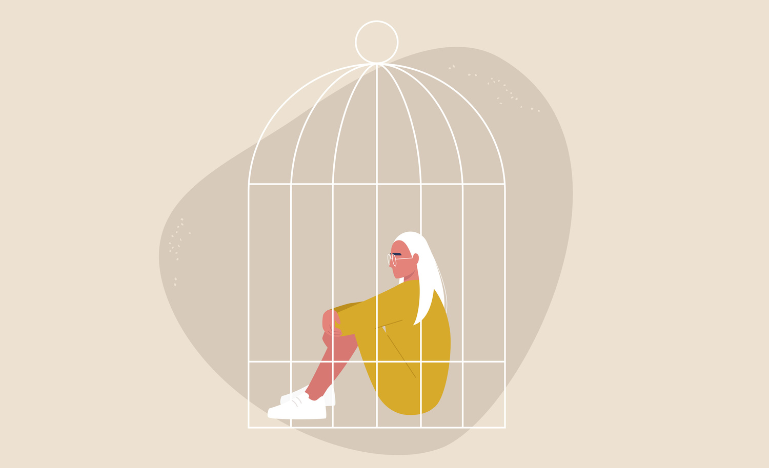
Coercive control is a sustained strategy for subordinating another person, built from isolation, intimidation, degradation, and the ongoing micromanagement of everyday choices, rather than any single dramatic act
Why the distinction changes what kind of help is right
This is the part that has direct consequences for what happens in a therapy room. The research on couples work and intimate partner violence has moved past a simple yes-or-no answer, conjoint therapy isn't universally unsafe, and it isn't universally fine either. What the evidence supports is that screening for which pattern is present should happen before deciding on a treatment approach, not after (Hurless and Cottone, 2018). Couples dealing with situational conflict, including conflict that has become frequent, hostile, or exhausting, are typically well suited to working on it together. Couples where coercive control is present are a different matter. Sitting both partners down as though this were an ordinary disagreement can hand the controlling partner more information, more leverage, or simply another audience, and it can implicitly frame something one-directional as though both people share equal responsibility for it, which is not an accurate account of what's happening.
When there are children involved
Coercive control rarely stays contained to the two adults in a relationship where children are present. Controlling access to money, monitoring movements, or dictating who the family sees tends to shape a child's experience of home just as much as the partner's, even when nothing is ever said or done to the child directly. This is one of the reasons the legal definition of controlling or coercive behaviour was extended to family relationships more broadly, not only intimate partners, and it's a significant part of why professionals treat this pattern differently from ordinary parental disagreement about how to raise children. Situational conflict between parents, even frequent and difficult conflict about parenting decisions, schooling, or discipline, is a different clinical picture, and usually a more workable one, than a home organised around one adult's control of everyone else in it.
What happens in an initial conversation
When I see a couple together, I'm listening for which of these patterns is present, not assuming either one by default. That usually means understanding what happens around conflict rather than just the conflict itself. Whether both people can disagree and still function independently afterward. Whether apologies and repair happen from both sides over time, or only ever from one. Whether either partner describes needing permission for ordinary parts of life, or feeling less able to see friends, spend money, or express an opinion than they did a year ago. None of this gets assessed through a single question or a checklist. It comes out of listening to how each of you describes a recent disagreement, in detail, and noticing where the account of who did what to whom stops matching up.
Where the answers point toward coercive control, the right next step is usually individual work for the partner affected, alongside appropriate specialist support, rather than joint sessions. Where they point toward situational conflict, however entrenched or painful, couples therapy is exactly the right tool, and often an effective one.
This screening happens whether or not either of you has used the word abuse yourself. Some people arrive already using that language, sometimes accurately, sometimes borrowed from something they've read online that doesn't quite fit their situation. Others describe something that sounds, on the surface, like an ordinary rough patch, and turns out on closer questioning to involve a level of control neither partner had named out loud before. Neither starting point tells me much on its own. What matters is what emerges once we look at the actual pattern together, rather than whichever label either of you walked in with.
If what you're describing suggests risk to your safety, that's not something to work out through a website article, and it isn't something couples therapy is the right first step for either. The National Domestic Abuse Helpline (0808 2000 247, free and confidential, 24 hours) is a better starting point than anything written here.
How therapy can help
If the pattern between you is conflict rather than control, however bad it's become, couples therapy is where that gets addressed directly, both of you in the room, working on the specific communication and repair skills that have broken down. A lot of what looks unsalvageable from inside a bad patch of situational conflict responds well to fairly structured work, learning to argue about the actual issue rather than reopening every past grievance, learning to recognise when a conversation has stopped being productive and needs to pause, and rebuilding the basic trust that repair is possible after a bad exchange.
If it's control rather than conflict, my role changes. I'm not there to explore dynamics between two equally responsible people, because that isn't an accurate description of what's happening, and treating it as though it were risks making things worse. In that situation the more useful next step is individual support for the partner affected, and where appropriate, connecting that work to the wider network of domestic abuse services this kind of pattern usually needs alongside therapy. Couples therapy is one of the more effective tools available for working out whether a relationship has a viable future or has reached its end, but only once we've established which of these two situations we're looking at.
You don't need to arrive already knowing which one applies to you. That's part of what the first conversation is for, and it's a different conversation depending on the answer, not a formality before the real work starts. Most people find that simply being asked these questions directly, rather than assumed one way or the other, is itself a relief, whatever the eventual answer turns out to be.
If you feel like now might be the right time to have that conversation, I offer a free 30-minute consultation in person (in London) or online.
About the Author
Mark Ryan is a BACP Accredited Psychotherapist and NCPS Accredited Relationship Therapist working in person across central London, from rooms in Pimlico, Kensington, and Angel. He works with couples, individuals, and polycules on relationship issues including jealousy, affairs and betrayals, sex problems, and considered separation. His practice is integrative, sex-positive, and affirming of all relationship structures and identities.
References
Stark, E., & Hester, M. (2019). Coercive control: Update and review. Violence Against Women, 25(1), 81–104. https://doi.org/10.1177/1077801218816191
Cares, A. C., Haselschwerdt, M. L., Hardesty, J. L., & Few-Demo, A. L. (2024). After all this time: Clarifying misconceptions and charting clear directions for the next 25 years of Johnson's typology. Journal of Family Violence, 39, 1–8. https://doi.org/10.1007/s10896-023-00669-6
Hurless, N., & Cottone, R. R. (2018). Considerations of conjoint couples therapy in cases of intimate partner violence. The Family Journal, 26(2), 274–282. https://doi.org/10.1177/1066480718795708
