
Signs of Emotional Abuse in a Relationship
By Mark Ryan, BACP Accredited Psychotherapist and NCPS Accredited Relationship Therapist
Emotional abuse is hard to name for a specific reason. The pattern often coexists with real affection, so the same relationship contains both the warmth that makes you want to stay and the behaviour that's harming you. It also relies on you using your own judgement to assess something that's specifically working to undermine that judgement, which is a strange position to think clearly from. And the word itself now gets used so loosely, for exes, for difficult partners, for ordinary bad behaviour, that it can be unclear whether it applies to what you're experiencing or not. This piece is about untangling that. What emotional abuse looks like, in specific and recognisable terms, and what it isn't, because getting that distinction wrong in either direction tends to cost people something, either by staying too long in something harmful, or by carrying a label into a relationship or a breakup that doesn't fit what happened.
What emotional abuse is
Emotional abuse is a pattern, not an incident. A single unkind comment, a bad argument, or a moment either of you handled badly is not, on its own, evidence of abuse. What defines emotional abuse is repetition with a direction to it, behaviour that consistently works to control, diminish, or destabilise the other person, over time, in a way that the person on the receiving end starts to organise their own behaviour around. That last part matters clinically. Abuse tends to produce a kind of adaptation. You find yourself managing someone's moods before they happen, editing what you say before you say it, or feeling a specific kind of relief when they're in a good mood that has nothing to do with anything you did. That adaptation is often the clearest signal, more than any single behaviour on its own.
Gaslighting and the erosion of your own judgement
Gaslighting is probably the most recognisable term in this space, and also one of the most misused, so it's worth being precise. It describes a pattern where a partner repeatedly denies, distorts, or contradicts your account of events and your feelings about them, to the point where you start doubting your own memory, perception, or judgement rather than theirs. A qualitative study of gaslighting survivors found it typically develops gradually inside a relationship that also contains real affection, which is part of what makes it so disorientating, the same person providing warmth is also the one undermining your grip on what's real (Klein, Li and Wood, 2023). Being told once that you're remembering something wrong is not gaslighting. Being told this consistently, about your own feelings and experiences, until you stop trusting your own read of situations, is a different thing entirely.
Control that doesn't look like control
Isolation from friends or family, monitoring of your phone, money, or movements, and rules about who you can see and when, are the more obvious signs people usually associate with control. But a lot of emotional abuse operates more quietly than that. It can look like a partner who consistently makes you feel you need permission for ordinary things, who responds to your independence with sulking or withdrawal until you stop exercising it, or who reframes every boundary you set as evidence that you don't love them properly. The behaviour doesn't have to be dramatic to be controlling. What makes it controlling is the direction it consistently pushes you in, toward less autonomy, less contact with people outside the relationship, and less confidence in your own decisions.
Money, technology, and quieter forms of control
Two specific patterns are worth naming on their own, because they're common and often go unrecognised as control for a long time. The first is financial, one partner controlling access to money, requiring receipts or explanations for ordinary spending, or structuring finances so the other person has no independent means and no real ability to leave. The second is technology-facilitated, tracking a partner's location, reading their messages, or monitoring their online activity, sometimes framed as care or transparency rather than surveillance. Research on coercive control specifically identifies both as recurring, deliberate tactics rather than incidental features of a controlling relationship, part of a broader pattern aimed at restricting a partner's independent movement, contact, and choices (Kassing and Collins, 2025). Neither pattern requires raised voices or dramatic confrontation to do its work. Both tend to be framed, at the time, as reasonable, protective, or simply practical, which is part of why they're so often missed until someone else names them from outside the relationship.
Contempt, degradation, and walking on eggshells
Some emotional abuse is delivered as humour, sarcasm you're told you're too sensitive to take, or public jokes at your expense that leave you unable to object without seeming humourless. Some of it is more direct; name-calling, comparisons to other people designed to diminish you, or a consistent tone of contempt that treats your feelings, opinions, or needs as inherently less important than theirs. A common downstream effect is what's often described as walking on eggshells, a state where you're managing your own behaviour continuously to avoid an outburst, a mood, or a punishment you can feel coming before it arrives. If a significant part of your energy in the relationship goes into anticipating and avoiding your partner's reactions rather than expressing your own needs honestly, that's worth taking seriously as a sign, regardless of how the specific behaviour gets labelled.
Blame that never lands anywhere else
One of the more reliable signs is what happens after conflict. In a relationship without abuse, both people generally end up holding some share of responsibility for a difficult moment, even if it isn't split evenly. In an emotionally abusive dynamic, responsibility has a strange habit of always landing on the same person, regardless of what happened. Raising a legitimate concern gets met with a counteraccusation. Naming hurt gets reframed as you attacking them. Over time, this pattern trains the person on the receiving end to stop raising things at all, since raising something reliably costs more than it resolves. I've written more generally about how blame operates in relationships and what tends to break the pattern, which is worth reading alongside this if the pattern above sounds familiar.
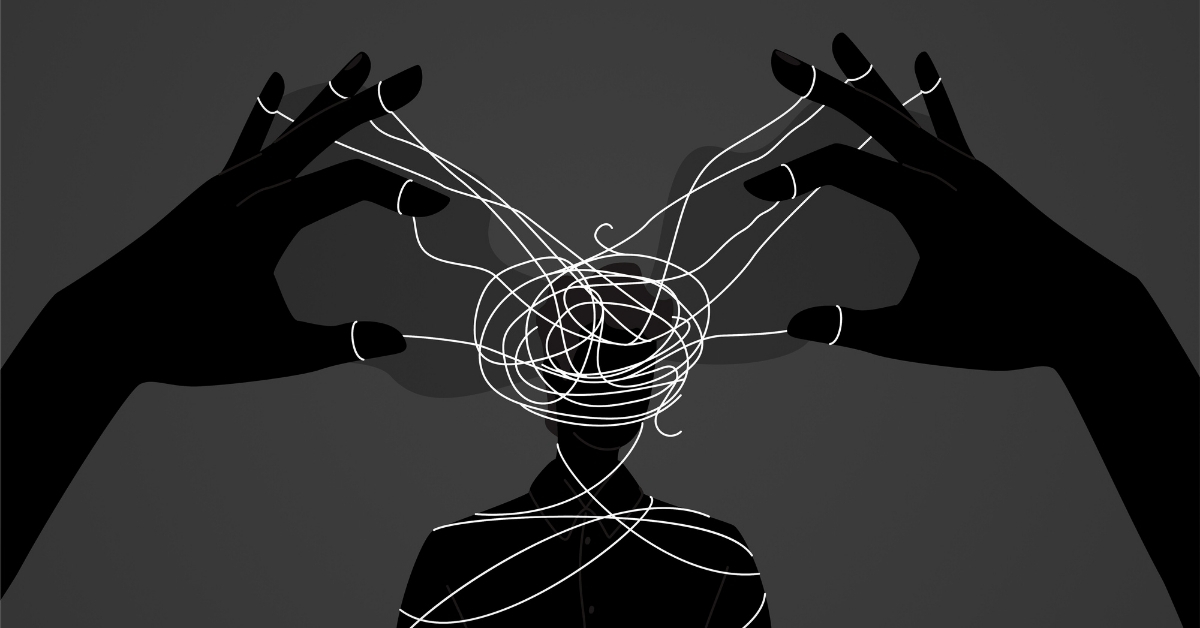
In an emotionally abusive dynamic, responsibility has a strange habit of always landing on the same person, regardless of what happened.
What's not necessarily abuse
Not every difficult, disappointing, or even painful relationship dynamic is abuse, and treating ordinary relational struggle as though it is can leave people feeling stuck, frightened, or hopeless about situations that are workable.
Insecure attachment, for instance, can produce behaviour that looks alarming from the outside; jealousy, difficulty self-soothing, a strong reaction to perceived distance, without any of it being a deliberate strategy to control or diminish the other person. I've written elsewhere about how attachment patterns shape adult relationships, and the honest answer is that a lot of what gets described online as red flags is closer to an anxious or avoidant attachment style playing out under stress than it is to abuse. The distinction that matters clinically is intent and responsiveness. Someone with an anxious attachment style who panics when you don't reply to a text is doing something uncomfortable, possibly something worth addressing in therapy, but they're usually capable of hearing feedback, feeling remorse, and changing the pattern once it's named. Someone who is controlling in the way that matters here tends not to, because the behaviour is serving a purpose for them that they're not motivated to give up.
Ordinary conflict is not abuse either, even when it's frequent or painful. Contempt, one of the patterns Gottman's research identifies as most corrosive to a relationship, overlaps in appearance with some of what's described above, but a couple who are simply bad at fighting, who criticise, defend, and withdraw in a repeating cycle neither of them likes, are dealing with a skills and communication problem, not necessarily a power and control problem. The two can coexist, and sometimes do, but they're not automatically the same thing, and the intervention for one is not the intervention for the other.
It's also worth naming something specific happening in the culture right now. There's been a sharp rise in casually diagnosing an ex, or a difficult partner, as a narcissist, an avoidant, or some other clinical label, often based on a short video rather than any actual assessment. Researchers call this general pattern concept creep, the tendency for harm-related words, including abuse itself, to gradually stretch to cover a much wider and often much milder range of experiences than they originally described (Haslam, 2016). This isn't a small semantic quibble. Calling every difficult partner a narcissist, or every painful breakup abuse, tends to flatten real differences between situations that need very different responses, and it can make it harder, not easier, to recognise the real thing when it's present. This phenomenon, the reflex to reach for a clinical label rather than sit with an ordinary, complicated, painful dynamic, deserves fuller treatment than a section can give it, and it's something I'm planning to write about separately.
Why this often doesn't feel constant
One thing that confuses people trying to work out whether what they're experiencing is abuse is that it rarely feels constant. Most descriptions of emotionally abusive relationships involve a cycle rather than a steady state, periods of real warmth, affection, and even generosity, followed by tension, followed by an incident, followed by remorse and a return to warmth. That warmth is not usually performed cynically. It's often sincere in the moment, which is precisely what makes the pattern so hard to leave and so hard to describe honestly to people outside it. If you've found yourself explaining away a difficult pattern by pointing to how good things are most of the time, that's worth sitting with rather than dismissing, because it's a common feature of the dynamic itself, not evidence against it. Friends and family outside the relationship often see only the good periods, which can leave the person inside it feeling even more isolated in trying to describe what the harder periods are like.
Why the distinction matters
Getting this wrong in either direction has a real cost. Naming something as abuse when it's an attachment pattern or a communication problem can shut down a relationship that had a workable path forward and can leave someone carrying an unfair label into their next relationship too. Failing to name something as abuse when it is can leave someone minimising a pattern that's actively harming them, often because the behaviour doesn't match the more dramatic picture of abuse they've absorbed from films or headlines. Neither error is more forgivable than the other. Both are common, and both are exactly the kind of thing worth bringing to a professional rather than trying to settle alone, particularly when you're the person inside the relationship and least able to see it clearly.
What happens in a session
You won't be asked to arrive with a diagnosis of your relationship, your partner, or yourself. What I'm listening for is the actual pattern between the two of you, what happens before, during, and after conflict, who tends to end up apologising, and how safe each of you feels raising something difficult. Where the pattern points toward genuine control and diminishment, the work looks different to where it points toward two people with a communication problem or an attachment injury playing out under stress and figuring out honestly which one you're dealing with is usually the first and most useful thing therapy can do.
Couples therapy starts with both of you in the room together, from the first session, not with one of you attending alone until the other is ready to join. Once you're both attending, occasional individual sessions are a normal part of that ongoing work, particularly useful for checking in on safety separately, but they sit inside the couples work rather than coming before it.
If you're not yet at the point of bringing your partner into a room together, or you're still working out privately whether what's happening between you is abuse, that's a different, legitimate starting point, individual therapy rather than couples therapy, and often exactly where this kind of process needs to begin. Once you are both in the room, I'm watching for how each of you responds when the other names something difficult, whether it's met with curiosity and some willingness to take responsibility, or with immediate counteraccusation and denial. That single response, more than almost anything either of you says in the first session, tends to tell me which kind of work this is.
If what you're describing suggests risk to your safety, that's not something couples therapy is the right first step for, and I'll say so directly rather than proceeding as though it is. The National Domestic Abuse Helpline (0808 2000 247, free and confidential, 24 hours) is a better first call in that situation than any of what I've written here.
How therapy can help
If what's going on between you turns out to be closer to an attachment injury, a communication breakdown, or the kind of ordinary relational difficulty that gets mislabelled online, couples therapy is where that gets worked on directly, both of you together, building the specific skills or repairing the specific injury involved.
If it turns out to be closer to a genuine pattern of control, my role isn't to mediate between two equally responsible parties, because that framing doesn't fit what's happening, and sitting the two of you down together as though this were an ordinary disagreement can make things worse rather than better. The right next step there is usually individual work for the partner experiencing the pattern, not joint sessions.
You don't need to have worked out which of these you're dealing with before you get in touch. That's part of what the first conversation is for. The concrete next step is the same either way, a free 30-minute consultation, in person in London or online, where we start working out together which situation you're in.
If you feel like now might be the right time to have that conversation, I offer a free 30-minute consultation in person (in London) or online.
About the Author
Mark Ryan is a BACP Accredited Psychotherapist and NCPS Accredited Relationship Therapist working in person across central London, from rooms in Pimlico, Kensington, and Angel. He works with couples, individuals, and polycules on relationship issues including jealousy, affairs and betrayals, sex problems, and considered separation. His practice is integrative, sex-positive, and affirming of all relationship structures and identities.
References
Klein, W., Li, S., & Wood, S. (2023). A qualitative analysis of gaslighting in romantic relationships. Personal Relationships, 30(4), 1316–1340. https://doi.org/10.1111/pere.12510
Kassing, K., & Collins, A. (2025). “Slowly, over time, you completely lose yourself”: Conceptualizing coercive control trauma in intimate partner relationships. Journal of Interpersonal Violence, 41, 662–684. https://doi.org/10.1177/08862605251320998
Haslam, N. (2016). Concept creep: Psychology's expanding concepts of harm and pathology. Psychological Inquiry, 27(1), 1–17. https://doi.org/10.1080/1047840X.2016.1082418
