
By Mark Ryan, BACP Accredited Psychotherapist and NCPS Accredited Relationship Therapist
Blame is one of the most common and corrosive dynamics in close relationships. It often shows up gently at first, a comment here, a sigh there. Over time it can harden into a pattern where one or both partners feel chronically misunderstood, under attack, or as though they are walking on eggshells. It is easy to slip into blaming, especially during conflict or stress, and the long term effects on emotional safety and connection can be real. The good news is that blame is also one of the more changeable patterns in couples work, and most couples who come to see me about it are relieved to find that it makes sense once it is understood.
This article looks at why blame arises, what it does to partners, and how therapy and a few small practices can help couples move towards mutual understanding.
What Is Blame in a Relationship
Blame is the act of assigning fault to another person for something that has gone wrong. In relationships it can sound like this.
"This is all your fault."
"If you weren't so stubborn, we wouldn't be arguing."
"You never listen. That's the real problem."
Blame often involves simplifying a complicated situation and focusing on the other person's perceived failings rather than on what is happening in the relationship as a whole. The conversation shrinks to right versus wrong, with one person cast as the wronged party and the other as the villain. It can feel satisfying for a moment, because it brings a sense of certainty and of being on solid ground. In my experience, though, it rarely brings the partners closer, and most people can feel that even as the words leave their mouths.
Blame does not belong to any one kind of couple. I see it in same sex and mixed sex relationships, in couples who are monogamous and couples who are consensually non monogamous, and in relationships of three months and thirty years. The content changes, and the shape stays remarkably similar.
Why Do We Blame in Relationships
Blame does not appear out of nowhere. In my experience it is usually a response to deeper emotional triggers and unmet needs. These are the reasons I see most often in the therapy room.
Emotional overload and stress. When we feel overwhelmed, it is natural to reach for a quick explanation and to push our discomfort outwards. Blame can work as a short term way of discharging distress or anxiety, and it tends to appear most when people are tired, anxious or stretched thin.
Fear of vulnerability. Blame is often easier than saying "I feel hurt" or "I'm scared I'm not important to you". Vulnerability means sharing fears, needs and disappointments, which can feel risky. Blaming protects us from that exposure, but at the cost of the closeness we were hoping for.
Family of origin patterns. If you grew up in a home where blame was the default way of handling problems, it may have become part of how you relate without you ever choosing it. Without some reflection, those early models can shape how we handle conflict as adults. This is not a reason to blame your parents in turn. It is a reason to be kind to the part of you that learned this early.
Avoiding responsibility. Blame can be a way of dodging uncomfortable self reflection. If something is not going well, pointing the finger at a partner spares us from looking at our own part, which can feel threatening to our sense of who we are.
Feeling powerless. When people feel stuck in a relationship, blaming a partner can offer a fleeting sense of control. It moves the emotional burden outwards and allows us to feel more in charge, even if it damages the connection in the process.
Underneath most of these sits a simple human wish, which is to feel safe, valued and understood. Blame is usually a clumsy attempt to get there.
How Blame Shapes What We See
One of the more useful findings from research on couples concerns how partners explain each other's behaviour. A major review of the literature found that unhappy spouses, compared with happy ones, tend to explain their partner's behaviour in a more negative light. The same review concluded that experimental, clinical outcome and longitudinal evidence suggests these explanations may in turn influence how satisfied people feel (Bradbury and Fincham, 1990).
That fits what I see. Repeated blaming creates a kind of mental filter in which each partner starts to read the other through their faults. We collect evidence for our version of events, and we become less open to the full picture. A partner who was late becomes a partner who does not care. A partner who was quiet becomes a partner who is punishing us. It is a very human process, and it is also a trap, because the more we assume the worst, the more guarded and defensive we become, which gives our partner more reason to assume the worst of us.
A useful question to carry into a difficult moment is "what else could explain this?" It will not always give a comfortable answer, and sometimes a partner has let us down. But asking it loosens the grip of the first, harshest explanation.
The Impact of Blame on Relationships
Blame rarely solves the issue at hand. More often it becomes a cycle that erodes trust, intimacy and respect.
Blame erodes emotional safety. When blame is frequent, partners stop feeling safe to express themselves. They may shut down, withdraw or retaliate, all of which block honest communication. Over time the relationship can become defined by defensiveness and distance. In a long term study that followed couples for 14 years, negative emotion during conflict predicted divorcing in the early years of marriage, and the researchers were able to predict divorce with 93 per cent accuracy using a model that combined marital satisfaction, thoughts of ending the marriage and the emotional tone of couples' conversations (Gottman and Levenson, 2000). That research is about negative emotion in conflict generally and not blame alone, and it describes patterns across many couples and not a verdict on yours. It does underline how much the emotional tone of our arguments matters.
Blame reinforces negative stories. Once each person is collecting evidence against the other, ordinary mistakes get read as proof of character.
Blame prevents growth. When blame dominates, reflection and repair become close to impossible. Instead of asking "how did we get here?" or "what do we both need right now?", the conversation stays locked in attack and defence. If this sounds familiar, the article on communication styles that harm relationships describes the related patterns and what to do instead.
Blame increases resentment. Blame often masks deeper unmet needs for care, closeness and recognition. When those needs go unacknowledged, resentment builds, and it tends to leak out in passive aggressive comments, emotional withdrawal or further blame. Many couples tell me they stopped bringing things up because every conversation turned into a trial. That quiet withdrawal is one of the ways blame and distance feed each other, and the article on withdrawal and emotional shutdown looks at the other side of that dance.
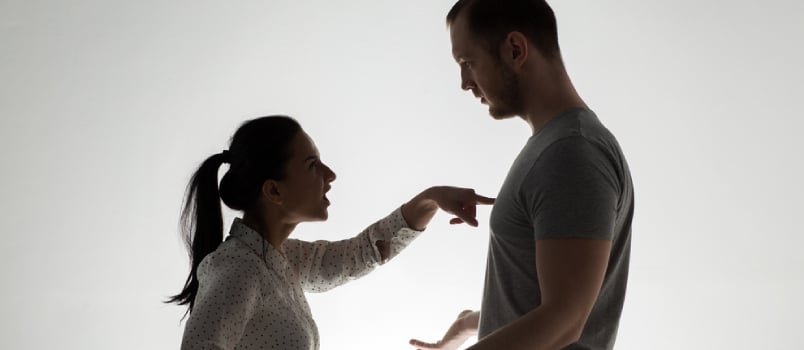
Blame is usually a response to deeper emotional triggers and unmet needs
What Children Take In
If you share a home with children, it is worth knowing that they notice far more than we tend to assume. Children learn a great deal from the model of relationship their parents provide, and much of this is absorbed passively and not by anything we say. A child who regularly sees adults deal with problems by assigning fault learns one thing about how love handles difficulty. A child who sees adults disagree, own their part and repair learns something quite different. That is a good reason to treat the work of moving beyond blame as a gift to the whole household and not only to the couple.
When It Is More Than Blame
Most blame, however corrosive, sits within relationships where both people have a voice. There are situations that are different. If you feel afraid of your partner, if you are being controlled, belittled or isolated, or if blame is used to make you doubt your own memory and judgement, that is a different and more serious pattern than ordinary couple conflict. The article on signs of emotional abuse sets out what to look for, and individual support is usually the right first step in that situation, not couples therapy.
How Therapy Can Help Break the Cycle of Blame
Therapy offers a space where blame can be unpacked and understood, not as something to be ashamed of, but as a signal that something in the relationship needs attention.
Creating a safe, steady space. In couples therapy the therapist helps hold the emotional temperature steady so that both partners can feel heard without being attacked. That safety allows couples to begin replacing criticism with curiosity, often for the first time in months.
Understanding the pattern as well as the person. Therapy reframes conflict as something that arises between partners and not because one of them is flawed. This shift reduces defensiveness and encourages shared responsibility, because the focus becomes the cycle you are both caught in. Approaches that work in this way, such as emotionally focused couples therapy, have a substantial research base. A review of that research concluded that this attachment based approach meets or exceeds the guidelines for classification as an evidence based couple therapy (Wiebe and Johnson, 2016). In my own work I draw on Imago and other relational approaches, and the common thread is the same, which is moving from "whose fault is it" to "what keeps happening to us".
Building emotional vocabulary. Therapy helps couples move beyond the surface frustration of blame to the more vulnerable feelings underneath, such as sadness, fear, shame and longing. As partners learn to name and share these feelings, they begin to see each other with more compassion.
Repairing and rebuilding connection. With support, couples can practise new ways of relating, including expressing needs without accusation, responding to each other's distress and working together on conflict. These skills are the foundation of long term resilience, and they can be learned at any stage of a relationship. Repair After a Fight is a good companion read for what to do once the heat has gone out of an argument.
What It Feels Like to Move Away From Blame
Couples often expect change to arrive as a big moment. More often it arrives as a series of small ones. A partner pauses before replying. Someone says "that landed badly, can I try again?" A familiar argument starts, and one of you laughs and says "we're doing it again". These small interruptions matter a great deal, because each one shows both of you that the pattern can be seen and the cycle can be slowed.
It is also common for things to feel a little worse before they feel better. When blame softens, the feelings it was covering, such as hurt, disappointment or fear, come closer to the surface. That can be uncomfortable, and it is a sign that the conversation is getting to where it needs to go. Most couples find that the vulnerability they feared turns out to be the thing that brings them closer.
Moving From Blame to Collaboration
So what can you start doing today if blame has become a regular guest in your relationship?
Pause before reacting. Notice when you feel the impulse to blame and ask what emotion sits underneath it. Try naming the feeling first ("I feel hurt") before pointing the finger.
Use "I" statements. Shift from "you never" to "I feel" or "I need". This invites dialogue and not defensiveness. It will feel clumsy at first, and that is fine.
Practise curiosity. Instead of assuming your partner's intention, ask "can you help me understand what was going on for you?"
Take ownership. Reflect on your part in the dynamic. Even if your partner did something that hurt you, there may be something you can acknowledge or do differently too. This is not about taking all the blame yourself, and it is certainly not about staying silent about what hurt.
Agree a pause signal. Some couples choose a word or a gesture that means "we are heading towards blame, let's stop for twenty minutes and come back". Coming back is the important part. How to stop arguing with your partner has more on this.
Seek support. If blame feels deeply ingrained, working with a therapist can provide the structure and steadiness needed to change the pattern.
One note on the second practice. "I" statements work best when they describe a feeling and not a hidden accusation. "I feel like you don't care" is still a blame statement in disguise, while "I felt lonely tonight and I would love to spend time together" invites a different kind of conversation.
Final Thoughts
Blame is often a sign that something deeper needs attention, whether that is emotional pain, unmet needs or a longing for connection. It may offer short term relief, but its long term cost is high. It distances us from the people we love and from our own vulnerability.
Therapy can help shift the story. It does not do this by deciding who is right and who is wrong, but by asking how we got here and how we can find our way back to each other. Whether you are in a long marriage, a new relationship, a queer partnership or a polyamorous network, the same principle holds. People tend to soften when they feel understood, and understanding is something you can learn to offer.
If you are wondering whether blame has taken hold in your own relationship, I offer a free 30 minute consultation in person (in London) or online. You are welcome to come as a couple or to start on your own, and there is no obligation beyond that first conversation.
About the Author
Mark Ryan is a BACP Accredited Psychotherapist and NCPS Accredited Relationship Therapist, and the founder of Rise and Grow Therapy, a private practice offering couples and relationship therapy across Kensington, Pimlico, and Angel, Islington in London, as well as online consultations. His approach draws first on Imago Relationship Therapy, alongside integrative relational, attachment based, Gottman, and systemic approaches. Mark works with couples of all kinds, including LGBTQ+ couples and those in non traditional relationship structures such as consensual non monogamy, as well as with individuals working through relational issues.
References
Bradbury, T. N., & Fincham, F. D. (1990). Attributions in marriage: Review and critique. Psychological Bulletin, 107(1), 3 to 33. https://doi.org/10.1037/0033-2909.107.1.3
Gottman, J. M., & Levenson, R. W. (2000). The timing of divorce: Predicting when a couple will divorce over a 14 year period. Journal of Marriage and Family, 62(3), 737 to 745. https://doi.org/10.1111/j.1741-3737.2000.00737.x
Wiebe, S. A., & Johnson, S. M. (2016). A review of the research in emotionally focused therapy for couples. Family Process, 55(3), 390 to 407. https://doi.org/10.1111/famp.12229
