
Gay Open Relationships: A Therapist’s View
By Mark Ryan, BACP Accredited Psychotherapist and NCPS Accredited Relationship Therapist
There's an assumption I want to deal with directly before anything else: that all gay men want, or should want, a non-monogamous relationship. It isn't true, and I see the damage that assumption does from both directions. Some of the gay couples I work with feel judged for wanting monogamy, as though it makes them less authentically part of their own community. Others feel the opposite pressure, pushed towards an assumption that non-monogamy is simply how gay relationships work, without ever being asked what they want. Neither pressure belongs in a healthy relationship, and neither is something I bring into the room.
What is true is that non-monogamy is common among gay male couples, considerably more common than among heterosexual couples, and research puts consensual non-monogamy at somewhere between two-fifths and just over half of gay male relationships. That statistic matters mainly because it means you are not unusual if this is your situation, and it removes some of the shame that can otherwise attach itself to the conversation. But prevalence is not a prescription. This article is for couples who are already navigating non-monogamy and want it to work better, not an argument that it's what you should be doing.
There's a cultural history behind that prevalence too, and it's worth a moment before moving into the practical material. Gay male relationships largely developed outside the institutions, marriage, religious sanction, inherited family scripts, that shaped heterosexual coupledom for centuries, particularly through the decades when same-sex relationships had no legal recognition at all. Without those inherited scripts to follow or rebel against, many gay men built relationship norms from scratch, often within tight-knit chosen-family communities that had already learned to define commitment on their own terms. Non-monogamy, for many couples, grew out of that freedom rather than out of any difficulty with intimacy or commitment; it was simply one of several structures available once the default heterosexual template stopped applying automatically. None of this makes non-monogamy compulsory or monogamy a lesser choice. It only explains why the conversation looks different here than it does for most heterosexual couples arriving at the same decision.
When monogamy is the minority position in the room
I want to give the earlier point more room, because it deserves it. Some of the gay men I see want monogamy clearly and simply and still arrive feeling they have to justify that choice, sometimes to friends, sometimes to a previous partner, sometimes only to themselves. When the culture around you treats non-monogamy as the more sophisticated, more authentically queer option, wanting exclusivity can start to feel like a failure of imagination rather than a legitimate preference. I've had clients describe feeling boring, unadventurous, even a little ashamed, for wanting the same thing a monogamous heterosexual couple might want without a second thought.
This matters clinically because shame makes honest negotiation almost impossible. A partner who feels embarrassed about wanting monogamy will often go along with an open arrangement they don't want, hoping the feeling will pass or that they'll adjust to it. It rarely works that way. Wanting monogamy is not a smaller or more limited way of loving someone, and a couple's agreement only holds if both partners are stating what they want rather than what they think they're supposed to want, in either direction.
It's also worth saying plainly that monogamy itself is a choice, not the default that non-monogamy deviates from. Plenty of monogamous relationships were never actively discussed as such; they were simply assumed. Monogamy that hasn't been actively chosen isn't automatically fragile, but it isn't automatically solid either, and it deserves the same honest conversation any other structure would need. I've written about this at greater length, including what the research on infidelity actually suggests about how airtight assumed monogamy really is, in Modern Love, Many Forms.
Three ways gay couples structure this
Research into sexual agreements among gay male couples has found they tend to fall along a continuum rather than into two clean boxes of open and closed. A well-known qualitative study identified three broad patterns: open agreements, where outside sex is permitted under conditions the couple has set; closed agreements, sexually monogamous relationships, sometimes with narrow, explicitly named exceptions; and discrepant agreements, where each partner believes they have agreed to something slightly different from what their partner believes (Hoff and Beougher, 2010).
That third category is the one I see most often in practice. Couples rarely arrive describing themselves as having a discrepant agreement. They arrive describing a specific incident that doesn't make sense to them: a boundary they thought was clear that turned out not to be, or a partner who did something one of them considers a clear breach and the other considers well within the rules. Almost always, when we slow down and compare what each partner believed the agreement was, the two versions don't match. Nobody was lying. The agreement was simply never as settled as it felt.
Where this tends to show up in the room
Most of the gay couples I see around non-monogamy are not deciding whether to open up; they are already practising some form of it and have hit a specific, concrete problem. Something has happened that one partner reads as within the agreement and the other reads as a breach, or an agreement that worked well for a year has stopped fitting without either partner saying so out loud. Research on broken agreements backs up how ordinary this is: even among couples with clear, established rules, breaches happen more often than most people assume, and only around half of those breaches get disclosed to the other partner at the time (Gomez et al., 2012). An agreement that goes unspoken for long enough tends to erode gradually rather than break all at once. That's often harder to work with in therapy, because by the time a couple arrives, both partners may have been managing a private, unstated version of the relationship for months.
The work in these sessions is rarely about deciding whether non-monogamy is right for the couple. It's forensic in a much more practical sense: going back to what was agreed, where the language was vague enough to allow two different interpretations, and what has changed since the agreement was made that nobody has revisited. Apps, travel, a new friendship that has started to blur into something else, a partner spending more on outside connections than the couple ever discussed, these are the ordinary triggers, and almost none of them are about whether non-monogamy itself is working.
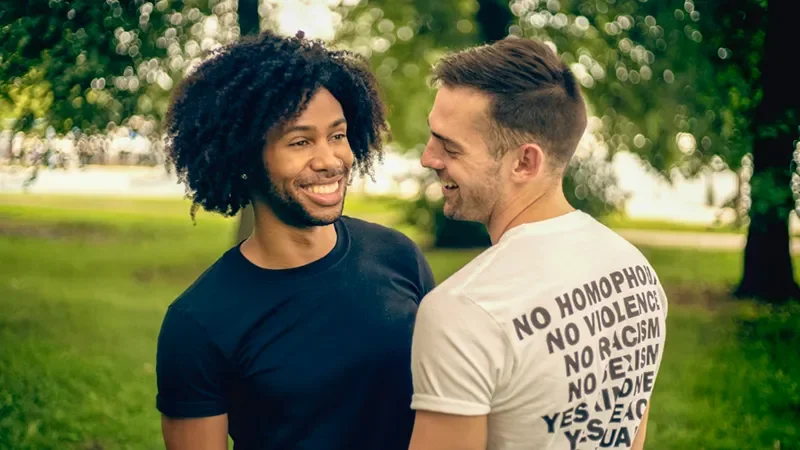
Monogamy is a choice, not the default that non-monogamy deviates from
What the agreement needs to cover, specifically
Vague agreements are the single most common thing I help couples fix. “We're open, but nothing serious” or “just don't bring it home” sound like agreements, and they are not specific enough to survive contact with a real situation. The couples who do well tend to have talked through detail that can feel unromantic in the moment: whether outside sex happens together or apart, whether it needs to be with the same person more than once, what gets disclosed and when, and what happens if the rules get broken rather than assuming that possibility away.
A few specifics tend to matter most in practice. Do dating apps stay active and visible, or get archived for the relationship's duration? Can an outside partner be a repeat connection, or does it need to stay one-off? How much time, money, or emotional energy can an outside connection absorb before it needs discussing? What is either partner comfortable their friends or family knowing? And what does “disclosure” mean in practice: a full account afterwards, a same-day mention, or simply an honest answer if asked directly? Couples who have never named these specifics often discover they were each assuming a different answer, usually at the worst possible moment to find out.
Sexual health communication deserves to be named specifically here, not as clinical advice, which sits outside what I offer, but as a relational agreement like any other: what testing looks like, how and when status gets shared, and what happens if either partner's situation changes. Interestingly, research on why gay couples build these agreements in the first place found that HIV prevention was rarely the primary motivation, even though it mattered; couples were more often motivated by wanting structure, honesty, and a shared sense of what the relationship was. Reducing the agreement to a health precaution alone tends to miss what it's doing for the couple, which is protecting the relationship as much as protecting either partner's body.
Renegotiating without waiting for a crisis
The couples whose agreements hold up longest treat renegotiation as routine maintenance rather than emergency repair. A brief, scheduled check-in, monthly is common, doesn't need to be clinical or heavy; it can be as simple as each partner naming one thing that's working and one thing that feels slightly off before it becomes a bigger conversation. Agreements that are only ever revisited after something has gone wrong start to feel like a courtroom rather than a relationship, and couples begin avoiding the conversation altogether, which is exactly how discrepant agreements form in the first place.
It also helps to treat a request to renegotiate as information rather than betrayal. A partner who says “this part isn't working for me anymore” is not necessarily saying the relationship has failed. Usually they're reporting a genuine change, in desire, in capacity, in what they need to feel secure. Couples who can hear that without treating it as an attack tend to adapt far more easily than couples who experience every renegotiation as a threat to the whole structure.
When the agreement itself has become the problem
Sometimes what looks like a non-monogamy problem is really an agreement that no longer reflects who either partner has become. People change; what felt exciting and freeing three years into a relationship can feel hollow or even threatening ten years in, and neither partner is wrong for having changed, even if it makes the conversation harder. I encourage couples to treat their agreement as something to be revisited on purpose, not just after something has gone wrong. An agreement that's only ever discussed in crisis will always feel like a negotiation under fire rather than a shared decision.
Jealousy still shows up here
An open or non-monogamous agreement doesn't remove jealousy from a relationship, and I want to be direct about that because some couples arrive believing that jealousy means the arrangement has failed. It usually means something much more ordinary is happening underneath, and it's worth reading properly rather than treating as a verdict on the relationship structure itself. I've written in more depth about jealousy in relationships generally and about the specific patterns jealousy takes in non-monogamous relationships, including what compersion is and what it isn't. Both are worth reading if jealousy is the thing bringing you here.
Where therapy fits
I don't come into this work trying to move any couple towards monogamy or away from it. My job is to help you build an agreement that is honest, specific, and truly shared, rather than one that sounds settled but turns out to mean two different things to two different people. For some couples that means renegotiating the rules. For others it means recognising that the agreement was never really the problem, and something older or unrelated is. If you're navigating any of this, I'd also point you towards a wider look at non-monogamy and relationship structures, which covers the ground this article doesn't.
If you'd like to talk this through, I offer a free 30-minute consultation, in person in London or by video.
About the Author
Mark Ryan is a BACP Accredited Psychotherapist and NCPS Accredited Relationship Therapist working in person across central London, from rooms in Pimlico, Kensington, and Angel. He works with couples, individuals, and polycules on relationship issues including jealousy, affairs and betrayals, sex problems, and considered separation. His practice is integrative, sex-positive, and affirming of all relationship structures and identities.
References
Hoff, C. C., & Beougher, S. C. (2010). Sexual agreements among gay male couples. Archives of Sexual Behavior, 39(3), 774–787. https://link.springer.com/article/10.1007/s10508-008-9393-2
Gomez, A. M., Beougher, S. C., Chakravarty, D., Neilands, T. B., Mandic, C. G., Darbes, L. A., & Hoff, C. C. (2012). Relationship dynamics as predictors of broken agreements about outside sexual partners: Implications for HIV prevention among gay couples. AIDS and Behavior, 16(6), 1584–1588. https://doi.org/10.1007/s10461-011-0074-0
Parsons, J. T., Starks, T. J., DuBois, S., Grov, C., & Golub, S. A. (2013). Alternatives to monogamy among gay male couples in a community survey: Implications for mental health and sexual risk. Archives of Sexual Behavior, 42(2), 303–312. https://pmc.ncbi.nlm.nih.gov/articles/PMC5830303/
