
Am I Bisexual? What It Means and What Happens Next
By Mark Ryan, BACP Accredited Psychotherapist and NCPS Accredited Relationship Therapist
You've typed the question into a search bar, maybe deleted it and retyped it, maybe closed the tab before you let yourself press search. That hesitation is telling you something on its own. People don't usually spend this much effort interrogating a feeling that isn't real.
For people asking this, sometimes there's a partner somewhere in the picture, a few feet away or a few miles, entirely unaware the question is live. That changes things. This isn't tidy, solitary self discovery happening in a vacuum. It's a question with someone else's life attached to it too, whether they know it yet or not, and working out what it means for you tends to happen alongside working out what, if anything, it means for them.
What bisexuality requires, and what it doesn't
Bisexuality means attraction to more than one gender. That's the whole definition, and most of the confusion people bring to me comes from adding conditions to it, without realising they're doing it, that were never part of it. It doesn't have to be an even split. Plenty of bisexual people are attracted to one gender considerably more often than the other and still meet the definition, because meeting it was never about the ratio. It doesn't require experience with more than one gender either. Attraction is the criterion, not a portfolio of past relationships proving it. And it doesn't stop being true the moment you're in a monogamous relationship. Being committed to one person describes your relationship. It doesn't describe your orientation, and the two questions don't cancel each other out. It also doesn't need to be constant. Attraction that comes and goes, or that surfaces more strongly at some points in life than others, still counts, and doesn't need to be present at every moment to be real.
It isn't a waiting room for gay or straight
The most persistent version of this doubt isn't about whether bisexuality is real at all. It's the belief that it's a temporary stop on the way to somewhere else, gay or straight, and that enough time will eventually sort you into one or the other. This idea has been tested directly, over a long period, rather than just argued about.
Lisa Diamond followed 79 women who identified as lesbian, bisexual, or unlabelled over ten years, collecting information about their attractions, behaviour, and identity at five points. Two thirds of the women changed the label they used at least once, so the words people chose moved around a good deal. But the pattern was not one of bisexual women gradually resolving into gay or straight. More women adopted a bisexual or unlabelled identity than gave one up, and few bisexual or unlabelled women ended up identifying as lesbian or heterosexual. The study found no support for the idea that bisexuality is simply a transitional stage (Diamond, 2008).
The same doubt shows up for men too, usually in a harsher form, the idea that bisexual men are almost always gay men who haven't fully admitted it yet. That claim has also been tested directly rather than left as speculation. Researchers combined data from eight earlier studies, giving a sample of 474 to 588 men, and compared genital and subjective arousal. Men who identified as bisexual showed arousal patterns that were more bisexual than those of men who identified as exclusively straight or gay, which does not fit the view that bisexual identification is a more comfortable label for a hidden preference (Jabbour et al., 2020). Both studies point the same direction. Bisexuality holds up as its own thing rather than dissolving into something else once you look closely enough or wait long enough.
The doubt often comes from inside, not just outside
A lot of what makes this hard isn't other people's scepticism. It's your own. In my experience, bisexual people frequently doubt themselves more than gay or straight people do about their own orientation, partly because there's no single clear moment of realisation to point back to, and partly because the surrounding culture keeps offering more plausible sounding explanations. Maybe it's just a phase. Maybe you're seeking attention. Maybe you're not attracted enough to one gender for it to properly count. These thoughts tend to arrive dressed up as reasonable caution rather than as the internalised stigma they usually are.
It helps to notice when that internal voice is applying a standard you wouldn't apply anywhere else. Nobody asks a straight person to prove their attraction to the opposite sex meets some threshold of frequency or intensity before it counts. The same courtesy is yours to extend to yourself here. If you notice attraction to more than one gender, that observation doesn't need to clear a higher bar than any other feeling you'd otherwise take at face value.
Why it can take so long to recognise in yourself
If you're only noticing this now, whatever age you're at, that's ordinary rather than late. Attraction to one gender is usually easy to notice because culture hands you a script for it early and often. Attraction to more than one gender doesn't come with the same script. People frequently register it as something else first, a close friendship that felt more intense than expected, a passing thought dismissed as random, a feeling filed away because there was no ready category for it at the time. None of that means the attraction wasn't there. It means there was nowhere obvious to put it.
Being in a long term relationship, especially a happy one, can make this harder to notice rather than easier, because there's less obvious reason to go looking. The question tends to surface anyway, often triggered by something small, someone you meet, a piece of media, a passing comment that lands harder than it should. When it does, it can feel like it's arriving from nowhere. It usually isn't. It's arriving because something finally gave it enough room to be noticed.
What your partner might feel, and why that's not a verdict on you
If you do decide to say something, expect a reaction that isn't fully about you, even though it can land that way. A partner hearing this for the first time sometimes reads it as a threat to the relationship's exclusivity, worried that acknowledging attraction to another gender means something is now missing between you. That worry usually says more about their own fears than about anything you've done or asked for. Being bisexual and being satisfied in a monogamous relationship aren't in tension with each other, and a partner's jealousy, if it shows up, deserves to be understood on its own terms rather than treated as proof you've done something wrong. I've written more generally about where that kind of jealousy comes from and how couples work through it, since the underlying pattern is often less about your bisexuality specifically than it looks.
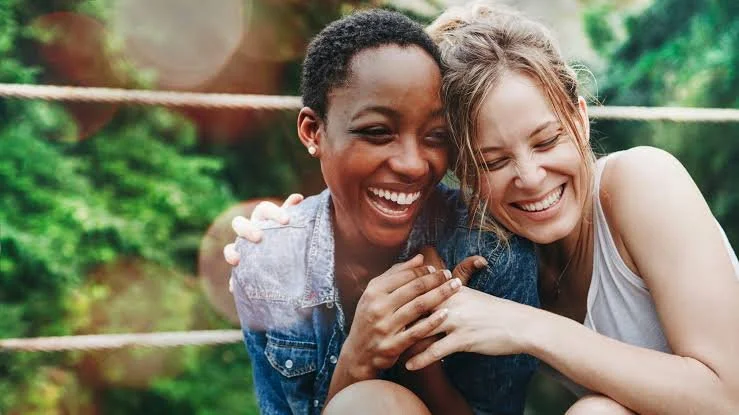
Bisexual people frequently doubt themselves more than gay or straight people do about their own orientation
What this means if you're already with someone
Recognising this doesn't automatically require you to do anything with it. Some people sit with it privately for a long time before deciding whether to say anything at all, and that's a complete response, not an incomplete one waiting to become a decision. Others feel that keeping it entirely private starts to cost more than sharing it would, and choose to tell a partner. If that's where you're heading, I've written separately about how to have that conversation, including what tends to help and what the first reaction usually does and doesn't tell you. For people who are questioning more broadly, the piece on questioning your sexuality may also help.
What it doesn't mean is that your relationship was built on a lie, or that it needs to change shape to be honest. A relationship can be monogamous and entirely truthful at the same time as one partner is bisexual. The two facts sit next to each other without needing to resolve into a single, simpler story. Some couples, of any gender combination, also find that this opens a wider conversation about what kind of relationship suits them, including consensual non monogamy, and others find that it doesn't. Either is a legitimate outcome.
The label is optional, even once you're sure
You don't have to use the word bisexual even if the definition fits you clearly. Some people take to it immediately, relieved to finally have language for something they'd been carrying without a name. Others find the word comes with baggage they don't want, stereotypes about instability or greed that have nothing to do with their actual experience, and prefer a different word, or no word at all. Both are legitimate. The purpose of a label is to describe your experience accurately to yourself and, if you choose, to other people. If it isn't doing that, you're allowed to set it down.
Some people also find their sense of it shifts over time without that meaning anything went wrong the first time around. An attraction that felt roughly even at one point in your life can lean more one way a decade later, or the reverse. That's not evidence you were wrong before, and it doesn't demand a new label each time something shifts slightly. Sexuality is allowed to be a description of where you are rather than a permanent, unchangeable fact fixed at the moment you first noticed it.
If it's the wider question of how others receive this, rather than what it means to you personally, that's weighing on you, that's a slightly different piece. I've written separately about bisexual erasure in relationships, which covers how this can get dismissed or overlooked even by people who love you, and what helps.
How therapy helps
I'm not going to tell you whether you're bisexual. That isn't something a therapist can determine for you and treating it as though it were would misunderstand what the work is for. What I can do is give you a space to think it through without an audience, away from a partner's reaction, away from what you think you're supposed to conclude, and separate from any pressure to resolve it quickly. Some people need a handful of sessions to get clear on something they'd already half known. Others need considerably longer, and that's fine too.
Where a partner is already part of the picture, the individual work and the couple's work aren't always the same conversation, and it helps to be honest about that early on. Sometimes it makes sense to think this through largely on your own first, and bring a partner in once you have a clearer sense of what you're describing. Other times, particularly if the question has already surfaced between you, working through it together from the start is the more honest option. Neither approach is more correct than the other. It depends on where you're starting from.
What I'm generally working towards isn't a label at all, even though the question that brings people in is usually phrased as one. It's a settled relationship with your own experience, whatever word ends up attached to it, or none. For some people that means arriving at bisexual and feeling real relief in it. For others it means realising the question mattered less than they'd assumed once they'd looked at it properly, and the label itself stops feeling urgent. Both are good outcomes. Neither is the point of the work more than the other.
If you're trying to work this out, alone or with a partner, I offer a free 30 minute consultation, in person in London or online.
About the Author
Mark Ryan is a BACP Accredited Psychotherapist and NCPS Accredited Relationship Therapist working in person across central London, from rooms in Pimlico, Kensington, and Angel. He works with couples, individuals, and polycules on relationship issues including jealousy, affairs and betrayals, sex problems, and considered separation. His practice is integrative, sex-positive, and affirming of all relationship structures and identities.
References
Diamond, L. M. (2008). Female bisexuality from adolescence to adulthood, results from a 10 year longitudinal study. Developmental Psychology, 44(1), 5 to 14. https://doi.org/10.1037/0012-1649.44.1.5
Jabbour, J., Holmes, L., Sylva, D., Hsu, K. J., Semon, T. L., Rosenthal, A. M., Safron, A., Slettevold, E., Watts Overall, T. M., Savin Williams, R. C., Sylla, J., Rieger, G., & Bailey, J. M. (2020). Robust evidence for bisexual orientation among men. Proceedings of the National Academy of Sciences, 117(31), 18369 to 18377. https://doi.org/10.1073/pnas.2003631117
