
Am I Gay? Questioning Your Sexuality While in a Relationship
By Mark Ryan,BACP Accredited Psychotherapist and NCPS Accredited Relationship Therapist
This comes up in my room more often, and in more ways, than people expect. Sometimes someone arrives already sure something has shifted and hasn't found a way to tell their partner yet. Sometimes the couple is already in it together, blindsided a few weeks ago and still finding their footing. And sometimes a person isn't sure any of this means what they're afraid it means; they've noticed something, and the noticing itself is what's unsettled them. All three are common. None of them means the same thing, and none of them requires you to arrive at an answer before you're ready.
In brief
One arousal response is information, not a verdict. Research on arousal shows real differences between men and women, and some limits on what any single response tells you.
Desire and identity are different questions, and they do not have to match.
You do not need a label, and many people live well without one.
Noticing same sex attraction does not mean your relationship is wrong or ending.
You can explore this alone or with your partner, at a pace that works for you.
It doesn't start the way people expect
A pattern I see often, and one that rarely gets discussed openly, starts with pornography. A man who has always identified as straight watches gay porn, once or repeatedly, and is aroused by it. What follows is often days or weeks of private agonising. What does this mean? Am I gay? Have I been lying to myself? Does this mean my whole relationship is built on something false? The distress is usually completely out of proportion to what happened, and it's rarely about the porn at all. It's about what the person has decided the porn must mean. If porn has become a source of distress in its own right, I have written about porn addiction and relationships.
Here is what I try to help people understand, because it changes how the question feels. Attraction is more complicated than a single response to a single piece of content, and what arouses you once you're already aroused is not straightforwardly the same thing as what attracted you in the first place.
What arousal can and can't tell you
Research on sexual arousal has found a real difference between men and women. In a study that measured both genital and subjective arousal to male and female sexual stimuli in women, men and post operative male to female transsexual women, men's arousal was category specific: heterosexual men were more aroused by female than by male stimuli, and homosexual men showed the opposite pattern. Women showed little category specificity on either the genital or the subjective measure, and both heterosexual and homosexual women experienced strong genital arousal to both male and female stimuli. The authors concluded that sexual arousal patterns play fundamentally different roles in male and female sexuality (Chivers et al., 2004). That study compared heterosexual and homosexual participants, so it cannot tell us about bisexual people.
Studies of bisexual identified men add something. Researchers combined data from eight earlier studies, with a sample of 474 to 588 cisgender men depending on the analysis, and found that bisexual identified men's genital and subjective arousal patterns were more bisexual than those of men who identified as exclusively heterosexual or exclusively homosexual (Jabbour et al., 2020). So for men, arousal measured in a laboratory does tend to track orientation, including bisexual orientation.
What follows is my own reading and not a research finding. For many men, I think a repeated, genuine pattern deserves to be taken seriously as real information about attraction. And for women, the research suggests that a single response to content outside someone's usual pattern tells us less about their attractions than it might for a man. I say that carefully, because it is an inference from the research on arousal and not something those studies tested, and I would not want it to become a rule for anyone.
A repeated, genuine pattern is not the same thing as an occasional night of browsing while already aroused, and here a different line of research helps. In a study of male college students, sexual arousal was induced by self stimulation in some, while others were in a neutral state. All were asked how appealing they found a wide range of sexual stimuli and activities, and about their willingness to engage in morally questionable behaviour and unsafe sex. Sexual arousal had a strong impact on all three areas of judgement, and the authors point to the importance of situational forces on preferences and to the students' inability to predict these influences on their own behaviour (Ariely & Loewenstein, 2006). That study was about decision making in the heat of the moment, not sexual orientation, and it involved male college students, so it does not tell us what any one man's response means. But it does suggest that being aroused changes what feels appealing, and that we are not good at predicting how. What you click on at 1am when you're already worked up is shaped by that state as well as by anything resembling a fixed attraction.
Put together, this gives a more honest answer than either extreme. 'It's just arousal, it means nothing' isn't quite true, especially for men, where genuine patterns do tend to track real attraction. 'I was aroused by it, so I must be gay or bisexual' isn't reliable either, because a single instance, especially one that happened once you were already turned on, is exactly the kind of data point to be cautious about. One response is information. It isn't a verdict.
Desire and identity are different questions
It helps to be precise about what's being conflated when this feels like a crisis. Desire is a felt experience: what arouses you, what you fantasise about, who you notice. Identity is a different kind of thing entirely: how you understand and describe yourself, out loud, to other people. Most of the distress I see comes from an unexamined assumption that these two must automatically match, so that any evidence of desire outside your stated identity becomes evidence that the identity was false. They don't have to match, and for a great many people, they simply don't.
Sexuality researchers have long modelled orientation with more than one dimension. Fritz Klein's Sexual Orientation Grid, published in 1985, considers seven variables: sexual attraction, sexual behaviour, sexual fantasies, emotional preference, social preference, lifestyle and self identification, and it rates each one for the past, the present and an ideal, which recognises that the variables might change over time (Klein et al., 1985). Klein developed it because he found that sexual orientation was more complicated than the single scale developed by Kinsey allowed. I find it useful because it gives people a way to see that their own pattern, such as mostly heterosexual behaviour alongside same sex fantasy, can be described without being forced into a single box.
So the honest answer to 'does this mean I'm gay, bi, or something else' is often 'not necessarily', and it doesn't have to. Some people do eventually find a label that captures the fuller picture, and that's a fine outcome too. But in my view a gap between what you desire and how you identify isn't a sign of unfinished work or avoidance. For plenty of people it may simply be the accurate, complete description of how their sexuality is organised. That is my view as a therapist. It is not a finding, and I know that some people do find that the gap closes over time.
Most of the research above was conducted on people categorised as men or women, and I don't want to overstate how well it maps onto non binary experience, because the honest answer is that it hasn't been studied nearly enough. What I can say from the room rather than from a study is this. The underlying principle, that desire and identity are separate things that don't have to reconcile on anyone else's timeline, holds regardless of how you understand your own gender. You don't need to fit the research population to be allowed the same lack of pressure.
You don't need a label to have this conversation
The misconception I want to push back on hardest is the idea that noticing something means you now owe yourself, or your partner, an immediate answer. You don't. Some people eventually find a word that fits reasonably well; others find that nothing quite does, and stop looking, which is a legitimate place to land rather than a problem still waiting to be solved.
There is research on people who live in the space between the usual categories. In an online survey of 1,676 people, 20 per cent of women and 9 per cent of men identified themselves as mostly heterosexual. The researchers concluded that sexual orientation is best represented as a continuum with these additional categories, and that having more same sex sexuality does not necessarily mean having less opposite sex sexuality (Vrangalova & Savin Williams, 2012). A study of 12,287 young adults in a US national survey found that the majority identified as 100 per cent heterosexual, that the second largest group, 'mostly heterosexual', was larger than all other nonheterosexual identities combined, and that stability of identity was more common than change, with the bisexual category being the most unstable (Savin Williams et al., 2012). Those were samples from the United States and from an online survey, so they may not describe everyone, but they show that 'mostly heterosexual' is a real and common identity. If this sounds like you, I have written about heteroflexibility and about bisexuality. The label, if you want one, can come later. The pressure to produce one immediately is not one you need to carry.
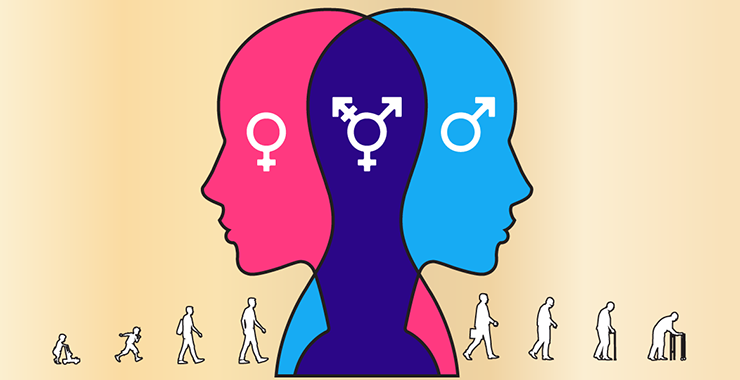
A gap between what you desire and how you identify isn't a sign of unfinished work or avoidance
What this means for your relationship
This is usually the real question underneath the question. Noticing same sex attraction does not automatically mean your relationship is wrong, was built on a lie, or is ending. In my experience, attraction to your partner and the discovery of attraction elsewhere are not mutually exclusive, and plenty of people carry both without either one cancelling the other out. What matters more than the noticing itself is what you do with it, whether you explore it alone in silence and shame, or find a way to bring your partner into the process at a pace that feels survivable for both of you.
If you're ready to involve your partner or already have and are figuring out what comes next, that conversation deserves its own space. I have written about coming out to your partner, and about mixed orientation relationships and how couples stay together. If you're not there yet, that's fine too. There's no required timeline.
What this looks like in the room
Couples rarely come to me because of this specifically. They come because sex has gone quiet, or intimacy feels harder than it used to, and it's only once that work is underway, sometimes weeks in, that this starts to surface, gradually and carefully, almost never as an opening statement. In my experience, men are remarkably slow to bring it up even once it's clearly present in the room, and the reluctance is rarely about the attraction itself; it's about what they're afraid naming it will trigger in their partner. I have written more about that fear, and what it does to a relationship, in the companion piece for partners, Is my partner gay?.
Women questioning their own sexuality tend to bring a noticeably different register into the room. In my experience it's far less often framed as a crisis needing to be resolved and more often stated plainly, as a fact about themselves that simply is what it is. That is a clinical observation. There is research that describes how women's identities can shift. In a ten year study of 79 lesbian, bisexual and unlabelled women, two thirds changed the identity labels they had claimed at the start, and a third changed labels two or more times. More women adopted bisexual or unlabelled identities than gave them up, few ended up identifying as lesbian or heterosexual, and the most commonly adopted identity was 'unlabelled'. The researchers concluded that the data did not support the idea of bisexuality as a transitional stage, and that the distinction between lesbianism and bisexuality is a matter of degree rather than kind (Diamond, 2008). That was a study of 79 women who started out as lesbian, bisexual or unlabelled, so it does not describe every woman, and it does not tell us about men.
How therapy can help
Where a partner is involved and both are willing, I work with the couple together from the start rather than seeing the questioning partner alone first, because the fear driving most people's silence is relational, not individual. But this is just as often individual work, someone making sense of something before they've decided whether, or how, to involve anyone else, and that's an equally legitimate way to begin.
I'm not working towards a label or a verdict, and I say that openly early on, because most people arrive expecting the work to end in one. The actual goal is building the capacity to tolerate not knowing yet, which is a considerably more achievable and more useful thing than certainty. In my view an unresolved question is far easier to live with than an unresolved silence, and most of what I do is help someone find language for what they've noticed that doesn't require them to already have an answer attached to it. If it helps to practise saying difficult things to a partner, how to talk to your partner about sex has an approach that carries over. I also write about gay couples therapy and lesbian couples therapy, and about when to go to couples therapy.
If you're trying to make sense of this, alone or with a partner, I offer a free 30 minute consultation, in person in London or by video.
About the Author
Mark Ryan is a BACP Accredited Psychotherapist and NCPS Accredited Relationship Therapist working in person across central London, from rooms in Pimlico, Kensington, and Angel. He works with couples, individuals, and polycules on relationship issues including jealousy, affairs and betrayals, sex problems, and considered separation. His practice is integrative, sex-positive, and affirming of all relationship structures and identities.
References
Ariely, D., & Loewenstein, G. (2006). The heat of the moment: The effect of sexual arousal on sexual decision making. Journal of Behavioral Decision Making, 19(2), 87 to 98.
Chivers, M. L., Rieger, G., Latty, E., & Bailey, J. M. (2004). A sex difference in the specificity of sexual arousal. Psychological Science, 15(11), 736 to 744.
Diamond, L. M. (2008). Female bisexuality from adolescence to adulthood: Results from a 10 year longitudinal study. Developmental Psychology, 44(1), 5 to 14.
Jabbour, J., Holmes, L., Sylva, D., Hsu, K. J., Semon, T. L., Rosenthal, A. M., Safron, A., Slettevold, E., Watts Overall, T. M., Savin Williams, R. C., Sylla, J., Rieger, G., & Bailey, J. M. (2020). Robust evidence for bisexual orientation among men. Proceedings of the National Academy of Sciences, 117(31), 18369 to 18377.
Klein, F., Sepekoff, B., & Wolf, T. J. (1985). Sexual orientation: A multi variable dynamic process. Journal of Homosexuality, 11(1 to 2), 35 to 49.
Savin Williams, R. C., Joyner, K., & Rieger, G. (2012). Prevalence and stability of self reported sexual orientation identity during young adulthood. Archives of Sexual Behavior, 41(1), 103 to 110.
Vrangalova, Z., & Savin Williams, R. C. (2012). Mostly heterosexual and mostly gay or lesbian: Evidence for new sexual orientation identities. Archives of Sexual Behavior, 41(1), 85 to 101.
