
By Mark Ryan, BACP Accredited Psychotherapist and NCPS Accredited Relationship Therapist
Can a relationship survive an affair? If you are asking this question, you are probably somewhere between shock and exhaustion. You may be the partner who was betrayed, going over what you have learned at three in the morning. You may be the partner who had the affair, ashamed and frightened that you have broken something for good. Either way, the honest answer is that many relationships do survive an affair, and many do not, and what separates them is rarely the affair itself.
Article Summary
Many couples do stay together after an affair. Others decide to end the relationship. Neither outcome is a failure of effort or character.
The strongest predictor I see is the level of engagement from both partners. The betrayed partner needs a great deal of support early on, and the partner who had the affair needs to offer it with full accountability and honesty.
Research on affair recovery points to the same things. Apologies matter but are not enough, partners who feel responded to find it easier to forgive, and working through what happened together is linked to growth.
Both partners usually have to accept that the old relationship is over, then decide what, if anything, they want to build together.
Recovery is slow and often non linear. For many people it takes months, and for some it takes years.
Therapy can help you steady yourselves first, make sense of why it happened, and decide what comes next without being rushed.
What the First Weeks Feel Like
After an affair is discovered or disclosed, life can feel as though it has split into before and after. For the partner who was betrayed, the reactions are often physical as well as emotional. You may not sleep or eat. You may replay conversations, check your phone, or find yourself flooded by images you did not choose. Some people feel rage, some feel numb, and many swing between the two within an hour.
This is not an overreaction. A narrative review of the research on infidelity describes reactions that include anxiety, hyperarousal, rumination, intrusive images and low mood, and notes that some studies find betrayed partners show symptoms at clinical levels, comparable to those seen after other traumatic events (Rokach & Chan, 2023). Because this is a review of other people's studies rather than a new trial, it is best read as a map of common reactions and not as a prediction for any one person. The point for you is that what you are feeling has a name and a pattern, and with support it can ease over time.
The partner who had the affair has their own storm. There is often shame, fear of losing the relationship, and a desperate wish to make the pain stop. Many people respond by saying very little, or by saying a great deal too quickly, and neither helps. If you have just found out, my article on the first two weeks after discovering a partner has cheated looks at this stage in more detail.
So, Can a Relationship Survive?
Yes, it can. Many couples stay together after an affair. It would be wrong to promise that outcome, though. Some couples decide the damage is too great, or that the relationship was already ending, and that is a legitimate and sometimes wise conclusion.
A recent study in the Journal of Marital and Family Therapy interviewed 11 people who had been betrayed by a partner and chose to stay. It is a small qualitative study, so it tells us about their experiences and not about how many couples succeed. What it does show is how they got there. Several described reacting at first with a wish to leave, and taking time to decide. One needed the option of staying with a friend while she thought it through. They described an apology from their partner as important, and also as necessary but not sufficient, because an apology without changed behaviour did not heal anything. They described needing to rebuild trust in their partner and also learning to trust themselves again, for example by choosing not to check on their partner's every move. And they said that the willingness of both partners to understand what led to the affair was an important part of rebuilding trust (Mitchell et al., 2026).
Notice what these threads have in common. None of them is about the affair being small, or about the betrayed partner simply forgiving. They are about what both people did next.
Why Engagement From Both Partners Matters So Much
In my work, the single biggest factor is how much both partners are willing to engage. The partner who was betrayed needs a lot of support early on. The partner who had the affair needs to provide it, and to show up with total accountability and honesty, even when that is uncomfortable. After that, both need to be willing to invest in understanding and explaining why it happened. If either side holds back, the process tends to stall.
Research on wrongs between romantic partners supports this. A study of 275 couples in Canada, each of whom had experienced a transgression such as infidelity, lying or broken promises, found that partners who perceived their partner as responsive showed lower levels of unforgiveness. Partners who perceived their partner as insensitive showed higher levels. The study was a snapshot in time and most of the wrongs reported were of moderate severity, so it cannot prove cause and effect (Yilmaz et al., 2026). Still, it fits what I see. Being responded to in the hardest moments makes it easier to move through anger and resentment.
Another study followed people over three time points after a serious wrong by a romantic partner. It found that couples who worked through what happened together, which the authors call co reflection, were more likely to report that the relationship had grown stronger afterwards, even after accounting for how good the relationship was to begin with (Quinney et al., 2026). The wrongs in that study were varied and the follow up was short, so it does not show that an affair can be turned into growth. It does suggest that how a couple handles a rupture matters at least as much as the rupture.
The ability to stay steady also plays a part. A study of 591 adults in Spain looked at differentiation of self, which describes how settled a person stays in themselves under relationship stress. People with higher differentiation showed greater emotional regulation after an offence and a more realistic view of how serious it was, while people with lower levels felt more emotional distress (Kasprzak et al., 2025). The offences were of many kinds and not only affairs. Still, it suggests that the more settled you are in yourself, the less likely you are to be swept away, and that is something both partners can build.
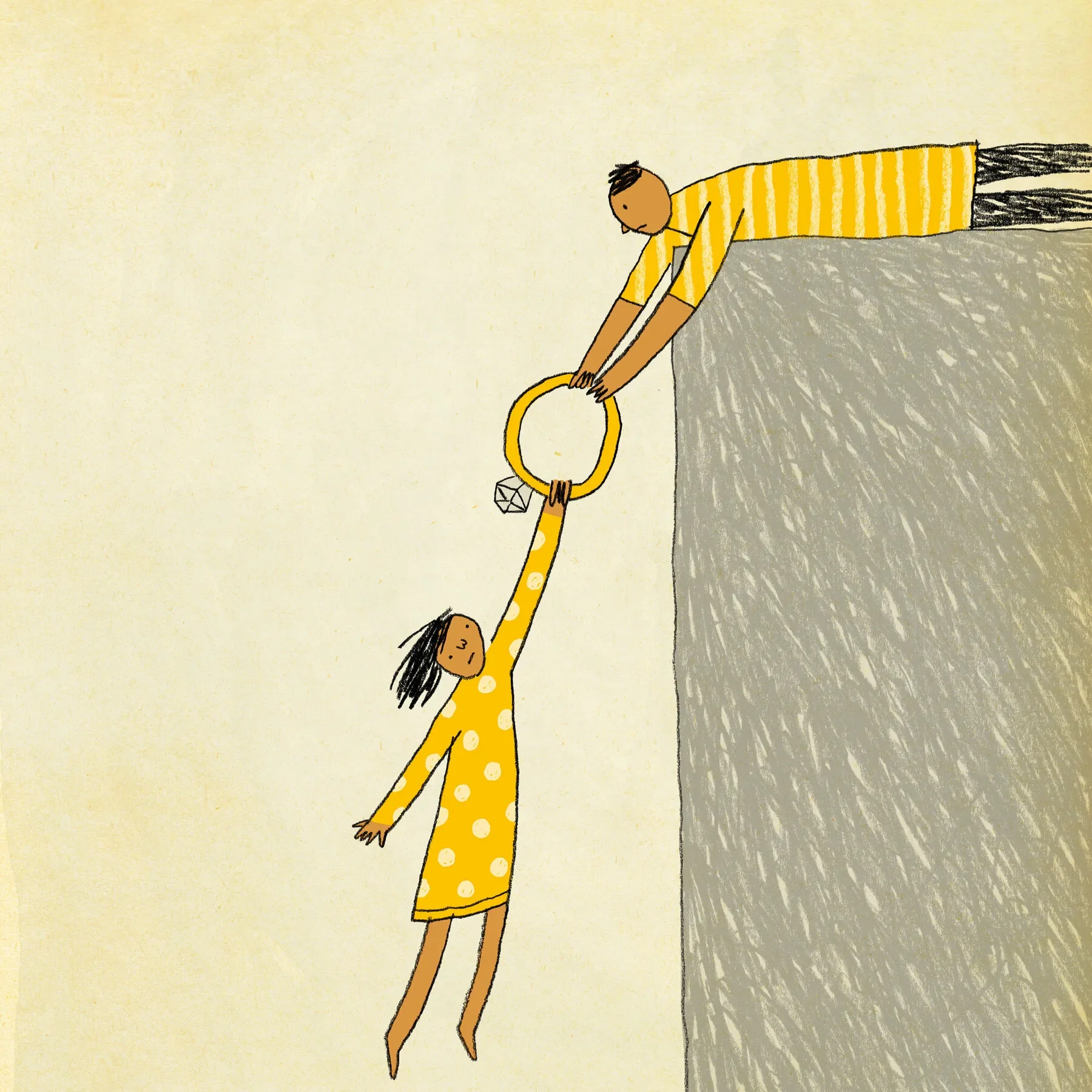
Many couples do stay together after an affair. Others decide to end the relationship. Neither outcome is a failure of effort or character.
Accepting That the Old Relationship Is Gone
One of the hardest parts of recovery is the moment when both partners accept that the relationship they had before the affair no longer exists. For the betrayed partner, that is a loss, and it needs to be grieved. For the partner who had the affair, it can feel like being told there is no way back.
The task is not to get the old relationship back. If the two of you stay, you are deciding what you want to build together, with what you now know. That might look a lot like what you had, or it might look quite different. Either way, it is a choice you make together and not a return to the way things were.
What Helps the Partner Who Was Betrayed
If you are the partner who was betrayed, you do not have to decide anything quickly. There is room to explore what happens next before reaching a decision in the heat of the moment, whether that is to leave or to stay. Giving yourself time is not weakness.
What tends to help, roughly in this order, starts with having your pain witnessed. You need to be heard, without being told how to feel or how long to feel it. Then comes understanding why it happened, which is a different thing from excusing it. After that, it helps to work out how you can best support yourself, whether through friends, individual therapy, sleep, movement or time away. Then you begin to state what you need, which might be space, reassurance at certain times, or agreed rules that help you feel safe. Finally, safety is rebuilt, slowly.
Who you tell matters. In the study of people who chose to stay, whether they expected judgment shaped who they told, and some told no one and had very little support (Mitchell et al., 2026). If you can find even one person who will listen without telling you what to do, it can make the early weeks more bearable. My article on what comes a year later describes how the experience changes over time.
Be gentle with the part of you that wants to check. It is a normal response to a threat. Over time, the aim is to trust your own judgment again, so that you are not relying only on surveillance to feel safe.
What Helps the Partner Who Had the Affair
If you are the partner who had the affair, the most useful question I can offer is this. What do you want to contribute to this relationship at a crucial time? If you want there to be a future, you need to invest now in accountability and in sharing. That means honesty, even about the parts you would rather keep quiet. It means being willing to explore why it happened, and to explain it as you come to understand it. Your partner will likely need to hear it more than once.
A real apology is part of this, and as the research above suggests, it is necessary but not enough on its own. It has to be matched by changed behaviour and by a willingness to sit with your partner's pain without trying to fix it quickly.
Shame is common, and it can take over. Some people respond by punishing themselves, saying they are a terrible person and do not deserve forgiveness. It can look like remorse, but it often works as another way of avoiding the difficult conversations, because it makes the moment about your pain and not your partner's. Self compassion helps here. It is not letting yourself off the hook. It is staying kind enough to yourself that you can stay in the room.
If you want to understand how affairs come about, my article on emotional affairs and why they hurt may be useful, as may the broader piece on blame in relationships.
What Helps the Two of You Together
Together, the first job is stabilising. Before you can make sense of anything, you both need some safety and some regulation. That means working out what each of you needs right now and over the next few weeks, which might be practical arrangements, some reassurance, or space. The aim is safety and regulation for both of you, before the harder conversations begin.
Next comes space to explore. I try to create a place where there is support, and also room to look at what happens next, without forcing a decision in the middle of a crisis. This is where the work of understanding why begins. It is rarely one thing. It usually involves the individual story of the person who had the affair, the state of the relationship, and sometimes a mixture of both. The aim is to understand, without turning understanding into blame or excuse.
Then comes the longer work of deciding what you want to build. That includes looking at what you each want from the relationship, how you will handle conflict, how you will rebuild intimacy and what trust will look like in practice. My article on rebuilding trust after betrayal covers more of this stage.
Be prepared for it to take time. Recovery from an affair is a very long process, and it can take some people months or even years. There will be good weeks and then a trigger sends you back. That is not failure. It is how healing from a significant rupture tends to go.
When the Relationship Does Not Survive
Sometimes, after careful thought, one or both partners decide to end the relationship. This is not a sign that the work was pointless. Ending with honesty and care for each other matters too. If you are not sure which way you are heading, my article on getting clarity about whether to stay together or break up may help, and separating well is there if you decide to part.
If you are afraid of your partner, or an affair has been followed by threats, control or violence, please speak to a specialist service first. In immediate danger, call 999. The National Domestic Abuse Helpline is on 0808 2000 247, free and open 24 hours a day. Joint therapy is not suitable where there is abuse.
How Therapy Can Help
Many people arrive at therapy after an affair in the middle of a crisis, uncertain whether anything can be saved and unsure how to have the conversation at all. My first priority is to help both of you feel steady enough to think. That often means starting with each partner's immediate and interim needs for safety and regulation, and making clear that nothing has to be decided yet.
From there, therapy offers a place where the betrayed partner can be witnessed first, and where the partner who had the affair can practise accountability and honesty with support. It then gives you both room to understand why it happened and to decide what you want to build. I do not tell couples to stay or to leave, and I work with people of every background and relationship structure.
Therapy experiences after an affair do vary. In the study of people who stayed, some found couple therapy helpful and others did not, and some felt the timing was off and that they needed individual support before joint sessions (Mitchell et al., 2026). I take that seriously. It is one reason I pay close attention to pace and fit, and sometimes recommend individual sessions alongside couple work.
If you are wondering whether therapy could help you and your partner, I offer a free 30 minute consultation, in person in London or online. You can ask anything, and there is no obligation to continue.
About the Author
Mark Ryan is a BACP Accredited Psychotherapist and NCPS Accredited Relationship Therapist, and the founder of Rise and Grow Therapy, a private practice offering couples and relationship therapy across Kensington, Pimlico, and Angel, Islington in London, as well as online consultations. His approach draws first on Imago Relationship Therapy, alongside integrative relational, attachment based, Gottman, and systemic approaches. Mark works with couples of all kinds, including LGBTQ+ couples and those in non traditional relationship structures such as consensual non monogamy, as well as with individuals working through relational issues.
References
Kasprzak, A., Martínez Díaz, M. P., & Giráldez, C. A. M. (2025). Forgiveness in romantic relationships: The moderating role of differentiation of self in the relationship between offense severity and post offense distress. Family Process, 64(4), 1601 to 1627. https://pmc.ncbi.nlm.nih.gov/articles/PMC12582876/
Mitchell, E. A., Brown, K. S., Spencer, J., & Harris, K. (2026). Staying together after infidelity: An exploration of the decision making process of recovery from the perspective of the injured partner. Journal of Marital and Family Therapy, 52(1), e70110. https://pmc.ncbi.nlm.nih.gov/articles/PMC12745057/
Quinney, B., Wenzel, M., Okimoto, T. G., Thai, M., & Woodyatt, L. (2026). Transformative moral repair following interpersonal transgressions: Post transgression relationship growth. Personality and Social Psychology Bulletin, 52(9), 3017 to 3031. https://pmc.ncbi.nlm.nih.gov/articles/PMC13392185/
Rokach, A., & Chan, S. H. (2023). Love and infidelity: Causes and consequences. International Journal of Environmental Research and Public Health, 20(5), 3904. https://pmc.ncbi.nlm.nih.gov/articles/PMC10002055/
Yilmaz, E., Jean, M., Brassard, A., & Péloquin, K. (2026). Could partner responsiveness be involved in the unforgiveness process following a relational transgression? Journal of Marital and Family Therapy, 52(1), e70109. https://pmc.ncbi.nlm.nih.gov/articles/PMC12719928/
