
Narcissist, Avoidant, Anxious: Why the Label Lets Everyone Off the Hook
By Mark Ryan, BACP Accredited Psychotherapist and NCPS Accredited Relationship Therapist
Somewhere in the last few years, ordinary relationship difficulty got a new vocabulary. An ex who took a while to text back is avoidant. A partner who wanted reassurance too often is anxiously attached. Someone who disagreed with your version of events gaslit you. A parent who set a boundary is a narcissist. Every one of these words started life doing real clinical work, describing something specific, researched, and often serious. What they're doing now, in most of the places you'll encounter them, is closer to name-calling with better credentials.
The issue isn't just that it's reductive, though it is. A label, however precise it sounds, tends to work against the two things that change a relationship, someone taking honest responsibility for a specific behaviour, and both people staying curious enough about what's happening to see it clearly. A diagnosis feels like insight. Often, it's closer to an exit from the conversation that would have produced real insight.
This piece is about that mechanism. It's also the first in a short series. Narcissist, avoidant, and anxiously attached each get their own fuller treatment elsewhere on this site, going deeper into what social media gets wrong about each specific term. This piece is about the pattern underneath all of them, and specifically about what a label costs the two things that matter most, accountability and honest awareness of what's going on.
The pattern has a name
Psychologists call this concept creep, the tendency for words describing harm to gradually widen until they cover a much broader, much milder range of experience than they originally did. The researcher who named the pattern traced it across several concepts at once, abuse, trauma, bullying, prejudice, addiction, and mental disorder, and found the same basic shape in each, a word starts out anchored to something severe and relatively rare, and slowly stretches to include ordinary, everyday difficulty (Haslam, 2016). None of the words stopped meaning their original, serious thing. They just started also meaning a lot of milder things at the same time and lost some precision doing it.
What's different now is the speed and the audience. Concept creep used to happen slowly, over decades, largely through academic and clinical writing drifting into general use. The version happening with narcissist, avoidant, gaslighting, trigger, and anxiously attached has happened in a handful of years, largely through short videos with no editorial process at all, watched by people who often have no other exposure to where the term came from or what it was built to describe.
A useful way to notice the drift in your own thinking is to ask what the word would have meant to someone hearing it fifteen years ago, before it became common shorthand. Narcissist, fifteen years ago, meant something closer to a specific personality disorder discussed mainly by clinicians. Today it's frequently applied to anyone who's self-absorbed, defensive, or bad at apologising, a much larger and much less specific category. The word didn't change meaning so much as it started doing two jobs at once, one precise and clinical, one loose and colloquial, with most people using the second while borrowing the authority of the first.
Why a label specifically blocks accountability
Research tracking how people's impressions of others change over time found that negative trait attributions, the belief that someone is a certain kind of person, tend to become more entrenched rather than less, while positive impressions revise more easily as new information comes in (Sanbonmatsu, Adams and White, 2022). Once a partner has been filed under a negative trait, further behaviour needs to work harder to shift that impression than it would if no label had been applied at all. A single act of care from someone already labelled a narcissist tends to get discounted as an exception. A single act of thoughtlessness gets read as confirmation.
This has a direct, practical consequence for accountability specifically. If a partner's good behaviour can't meaningfully update your view of them once a trait label is in place, they have very little incentive to keep offering it. Accountability depends on the possibility that changed behaviour will be seen and credited. A fixed trait label removes exactly that possibility, quietly, without either person deciding to remove it on purpose. The label doesn't just describe someone unfavourably. It makes it structurally harder for them to be seen as having changed, even when they have.
The same mechanism runs the other way when the label gets turned on yourself. Describing your own behaviour as I'm just avoidant or I can't help it, I'm anxiously attached, converts something you did into something you are, which is a much harder thing to feel accountable for. A specific choice, going quiet during a hard conversation, sending a fourth message when the third went unanswered, can be examined, understood, and changed. A fixed trait mostly needs to be managed or excused. This is often the quieter half of the problem, since it happens in private, inside someone's own account of themselves, with no one else in the room to notice the substitution happening.
Why social media specifically accelerates this
Platforms built around short clips reward whatever's instantly relatable over whatever's accurate, since a viewer needs to recognise themselves in a few seconds, not follow a careful argument. A term that can describe almost any familiar situation, a partner who seems a bit distant, a friend who wanted space, spreads further than a more accurate version that only fits a narrow, specific pattern. That's a large part of why avoidant and narcissist travel so much further online than the more precise, less punchy language clinicians use.
The cost shows up once the label lands on someone you're in a relationship with. Say a partner cancels plans twice in a row. Naming it, you've cancelled twice this month, and I want to understand why, opens a conversation. Naming it you're being avoidant closes one. The second version sounds like an explanation, but it settles the question before anyone's answered it. Your partner's behaviour now has a cause attached to it that doesn't require you to look at your own part in the pattern and doesn't require either of you to work out what's going on underneath it.
There's a telling asymmetry in how carefully people apply this kind of label. A study of young adults and mental health content on social media found many were privately uncertain about applying a label to themselves, drawing a real line between quietly wondering whether a description fit and publicly claiming it as a diagnosis (Madsen and Raikhel, 2025). That hesitation rarely survives the trip from labelling yourself to labelling someone else. Once it's a partner's behaviour under discussion rather than your own, the label tends to arrive with far more confidence and far less checking.
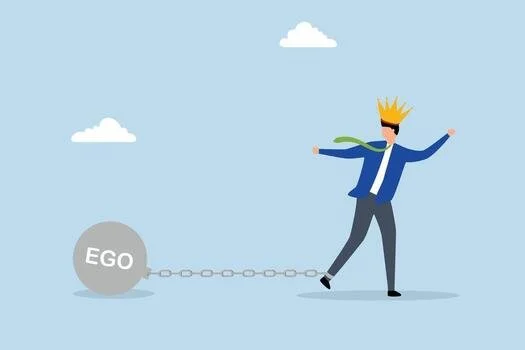
A label, however precise it sounds, tends to work against the two things that change a relationship, someone taking honest responsibility for a specific behaviour, and both people staying curious enough about what's happening to see it clearly.
Gaslighting, as a case study
Gaslighting is probably the clearest example of this pattern in action, and it has its own dedicated research now. A recent study asked participants to define gaslighting in their own words and found genuine, significant disagreement about which features belong in the definition, whether repetition matters, whether a power imbalance is required, whether the person doing it has to know they're doing it (Darke, Paterson and van Golde, 2025). Only about half of participants included repetition in their own definition, even though repetition is central to the concept clinically and in the domestic abuse literature it originates from. The researchers noted this matters beyond semantics, when the word gets applied to a single disagreement or an honest difference in memory, it risks diluting the seriousness of what the term is supposed to name, which can make it harder for people experiencing the real thing to be believed.
The clinical version of gaslighting describes a sustained pattern, a partner repeatedly and deliberately undermining your grip on your own memory and perception, over time, until you doubt your own judgement more than theirs. Someone disagreeing with your account of an argument, forgetting something you said, or holding a different memory of the same event, is not that, even though it can feel disorientating in the moment. The distinction matters practically, one situation calls for a serious, safety-aware conversation, and possibly professional support. The other calls for two people comparing notes, which is uncomfortable but ordinary.
A useful, if imperfect, question is whether the disagreement has a direction to it. In an ordinary difference of memory, both people are usually open, at least in principle, to being wrong, and the disagreement doesn't come with an agenda beyond working out what happened. In the pattern gaslighting describes, the goal isn't accuracy. It's control, over what the other person believes about their own experience, applied consistently enough that they stop trusting their own read of things. One of these is a normal feature of two people remembering things differently. The other is a specific, harmful strategy, and conflating them helps neither the couple having an ordinary disagreement nor the person experiencing the pattern.
Narcissist, avoidant, anxious, and trigger, briefly
Narcissist is probably the biggest version of this problem, and it gets a fuller piece of its own. Narcissistic Personality Disorder is a specific, relatively rare diagnosis with defined criteria, a pervasive pattern of grandiosity, a need for admiration, and a lack of empathy, present consistently across contexts and relationships, not just with one particular partner. What gets called narcissism online is usually selfishness, defensiveness, or an inability to apologise well, real and worth addressing, but not the same thing. Treating them as the same thing closes down the possibility that ordinary bad behaviour can change, and it also costs the term its usefulness for people who've been in a relationship with someone who meets the clinical picture, since the word now gets applied to almost anyone who was difficult or wrong in an argument.
Avoidant and anxiously attached describe real, well-researched patterns in how people manage closeness and distance in relationships, covered in more depth in what avoidant attachment looks like and what anxious attachment looks like. Online, both terms have drifted into meaning almost any behaviour the speaker didn't like, needing space becomes avoidant, wanting reassurance becomes anxious, and the actual clinical distinction gets lost. Each gets its own piece looking specifically at what social media does with the term, covering avoidant and anxious in turn.
Trigger belongs on this list for a different reason than the other three. It doesn't label a person, it labels a reaction, which means it doesn't do the same accountability-blocking work described below, there's no one being filed under a fixed trait. It's included here mainly as an example of how far a precise clinical word can drift once it enters everyday speech. It began as trauma vocabulary describing a specific, often physiological response rooted in a past event, and gets used loosely now for anything upsetting, which matters less for accountability than the other three, but still costs something, since it can leave a genuine trauma reaction under-recognised by flattening it into ordinary annoyance.
What this looks like in practice
The practical cost isn't about vocabulary. It's about what a label does to the conversation that would otherwise have happened. Naming your partner's behaviour with a clinical-sounding term, even inaccurately, tends to end curiosity rather than start it. It's much harder to ask what's going on for someone once you've already decided what's wrong with them. The label arrives with its own built-in explanation, and that explanation usually doesn't require anything further from you.
It also tends to make the labelled person defensive rather than reflective, for an understandable reason. Being told you're a narcissist or you're gaslighting me lands as an accusation with clinical authority behind it, not an invitation to talk. Most people respond to that kind of framing by defending themselves against the label, rather than engaging with whatever specific behaviour prompted it. The actual, addressable problem, a tendency to interrupt, a habit of minimising, a pattern of going quiet under pressure, gets buried under a much bigger argument about whether the label fits.
There's a longer-term cost too, beyond any single argument. Once a partner has been privately filed under a diagnostic-sounding category, new behaviour tends to get read through that category automatically, rather than assessed on its own terms. A thoughtful gesture from someone already labelled a narcissist gets read as manipulation. A moment of needing space from someone already labelled avoidant gets read as confirmation rather than a normal, human need for a break. The label doesn't just describe what's already happened. It quietly shapes how everything afterward gets interpreted, usually in whichever direction confirms the label was right in the first place.
What to do instead
Where possible, describe the behaviour rather than reach for the category. Not you're so avoidant, but I notice you go quiet when I bring up anything difficult, and I don't know what that means. Not you're gaslighting me, but I remember that conversation differently, and I want to understand where the gap is. These versions are slower and less satisfying in the moment, a label delivers a verdict, a description opens a conversation, but they're also more likely to be accurate, and considerably more likely to lead somewhere useful.
It's also worth treating your own certainty about a label as information rather than fact. A strong, immediate sense that a term fits perfectly is often a sign the label is doing emotional work for you, making a confusing or painful situation feel more legible, rather than a sign the diagnosis is correct. That doesn't mean the underlying feeling is wrong. It usually means the feeling deserves more attention than the label is giving it.
This applies to how you describe your own patterns too, not only your partner's. Reaching for anxious attachment or avoidant to explain your own behaviour can be a genuine, useful step toward self-understanding, or it can become a way of pre-excusing a pattern before doing the harder work of changing it. The label isn't the problem in either direction. What matters is whether it's opening up curiosity about the pattern underneath it, in yourself or in a partner, or closing that curiosity down by supplying an answer that feels complete before the conversation has happened.
How therapy can help
You don't need to arrive with the right clinical term for what's happening between you, and I'd generally rather you didn't, since the term itself is often the thing standing between you and a clearer look at what's underneath it. What I'm listening for is the specific, repeated pattern, not the label either of you has already applied to it. Sometimes what gets described as narcissism turns out to be defensiveness that responds well to being named directly. Sometimes what gets called gaslighting turns out to be a pattern closer to genuine emotional abuse that deserves to be taken exactly as seriously as the word suggests. The label rarely tells you which one you're dealing with in advance. The pattern underneath it usually does.
If you feel like now might be the right time to talk this through with a therapist, I offer a free 30-minute consultation in person (in London) or online. You're welcome to arrive without a diagnosis for either of you, or for the relationship itself.
About the Author
Mark Ryan is a BACP Accredited Psychotherapist and NCPS Accredited Relationship Therapist working in person across central London, from rooms in Pimlico, Kensington, and Angel. He works with couples, individuals, and polycules on relationship issues including jealousy, affairs and betrayals, sex problems, and considered separation. His practice is integrative, sex-positive, and affirming of all relationship structures and identities.
References
Haslam, N. (2016). Concept creep: Psychology's expanding concepts of harm and pathology. Psychological Inquiry, 27(1), 1–17. https://doi.org/10.1080/1047840X.2016.1082418
Darke, L., Paterson, H., & van Golde, C. (2025). Public perceptions of gaslighting: Understanding definitions, recognition, and responses. Journal of Social and Personal Relationships. https://doi.org/10.1177/02654075251366643
Madsen, A., & Raikhel, E. (2025). Swipe to diagnose: College students, social media, and the stigma of self-diagnosis. SSM - Mental Health, 8, 100572. https://doi.org/10.1016/j.ssmmh.2025.100572
Sanbonmatsu, D. M., Adams, T., & White, P. H. (2022). Perceived changes in trait attributions to others and the self. The Journal of Social Psychology, 164(5), 588–606. https://doi.org/10.1080/00224545.2022.2136060
