
Rejection Sensitivity in ADHD: Why Feedback Can Feel Like an Attack
By Mark Ryan, BACP Accredited Psychotherapist and NCPS Accredited Relationship Therapist
A small, gently meant comment can sometimes land not as a small note but as proof of total failure, evidence that the relationship is ending, and that the person saying it has finally seen who you are underneath. If you've watched a partner with ADHD respond this way to something that felt minor to you, or you've been the one having that response and hated yourself for it afterward, this piece is about why that gap between the comment and the reaction is so wide, and what tends to close it.
This gap is one of the more disorienting parts of loving someone with ADHD, because it doesn't announce itself as a pattern the first few times it happens. It looks, at first, like an unusually strong reaction to one comment, or a bad day, or oversensitivity that will settle once things calm down. It's usually only after it's happened enough times, across enough different, ordinary triggers, that either partner starts to suspect something more structured is going on underneath, rather than a series of unrelated bad moods or a run of unfortunate timing.
A term to use carefully
You may have come across the term rejection sensitive dysphoria, often shortened to RSD, used to describe this pattern. RSD is not a formal diagnosis. It doesn't appear in the DSM-5 or ICD-11, and there's no clinical test or agreed set of criteria for it. That doesn't mean the experience it describes is invented or exaggerated. It means the popular label has outpaced the formal research, which is a different problem from the experience itself not being real.
This distinction matters practically, not just academically. If a partner searches for RSD expecting to find a recognised medical condition with a clear treatment pathway, and instead finds a term that clinicians disagree about, that can feel like the whole experience has been dismissed. It hasn't. The underlying pattern, intense reactivity to perceived criticism or rejection, is well documented in the research on ADHD and emotional regulation. What's less settled is whether it deserves its own separate diagnostic category, or whether it's better understood as one expression of the emotional dysregulation that's increasingly recognised as a core feature of ADHD generally, alongside inattention and impulsivity rather than separate from them.
One further honest note belongs here, in the same spirit as the terminology caveat above. Not every study measuring rejection sensitivity in ADHD populations has found a clear, statistically significant difference from people without ADHD, and research on some specific subgroups has come back mixed. This doesn't undercut the broader picture so much as reflect how young and unevenly developed this specific area of research still is. The lived experience described consistently across qualitative work is real, even where the quantitative research hasn't yet caught up to measure it as reliably as the everyday reports suggest it deserves. I also see it in relationships where one or both partners with ADHD describes their responses to things.
What does have a genuine, longer research history is rejection sensitivity itself, a well-studied tendency to anxiously expect rejection, to notice it quickly when it might be present, and to react to it intensely once it registers. That's the piece worth grounding this in, rather than treating the newer, catchier label as though it were an established medical fact.
Why ADHD and rejection sensitivity travel together
The link between ADHD and rejection sensitivity has real, if still developing, research behind it. An early study comparing young adult men with ADHD to their peers found the ADHD group reported significantly higher rejection sensitivity, along with worse social outcomes tied to it (Canu and Carlson, 2007). That finding has been extended since by qualitative work looking at how this feels from the inside, rather than only measuring how strongly it shows up on a questionnaire.
A qualitative study exploring this experience directly, through focus groups with ADHD adults, found the reaction wasn't simply about the rejection itself. Participants described the anticipation of rejection as more distressing than an actual instance of it, a persistent background expectation that criticism or abandonment was coming, regardless of whether anything had happened yet (Rowney-Smith, Sutton, Quadt and Eccles, 2026). This matters practically. It means the reaction you're seeing often isn't a response to the specific comment just made. It's a response to a threat that's been anticipated for a long time, which the comment has simply confirmed.
This helps explain a pattern that otherwise looks inconsistent from outside, the same partner reacting mildly to a significant criticism on one occasion, and explosively to something trivial on another. The difference often isn't the size of the comment. It's how loaded that moment already was, how tired, how recently something similar had happened, how much unspoken anticipation had already built up before the comment arrived. Looking for consistency in the size of the trigger tends to miss what's driving the intensity.
What this pattern looks like
The study above identified three recurring patterns worth knowing by name. The first is withdrawal, pulling back from relationships, opportunities, or conversations before rejection can happen, sometimes so early and so quietly that a partner never realises a retreat is even underway. The second is masking, hiding the intensity of the reaction behind a calm or unaffected surface, which can look like someone not being bothered when they're privately overwhelmed. The third is a cluster of real, physical bodily sensations, a tightening chest, nausea, a sudden wave of exhaustion, that accompany the emotional spike and can be mistaken for an unrelated physical issue if nobody names what's happening.
A separate qualitative study of ADHD adults found this pattern described consistently enough that researchers noted current diagnostic criteria for ADHD may not fully capture what people are living with day to day, since rejection sensitivity and its accompanying emotional intensity showed up as a defining feature of participants' experience rather than a minor side note (Ginapp, Greenberg, MacDonald-Gagnon, Angarita, Bold and Potenza, 2023). For a partner watching this from outside, recognising these three patterns, withdrawal, masking, and physical symptoms, tends to be more useful than waiting for someone to simply explain what's happening, since masking specifically makes that explanation less likely to arrive unprompted, and often makes the underlying pattern harder to spot until it's already well established and difficult to unpick between the two of you.
A concrete version of this might look like a partner who, after a fairly mild comment about being late again, goes quiet for the rest of the evening, insists everything is fine when asked, and then a week later brings up an unrelated small thing with unexpected force. The quiet evening was withdrawal. The insistence that everything was fine was masking. The delayed, disproportionate response a week later was the same original hurt finally finding an outlet, misdirected onto a smaller, safer target rather than the original comment it belonged to in the first place.
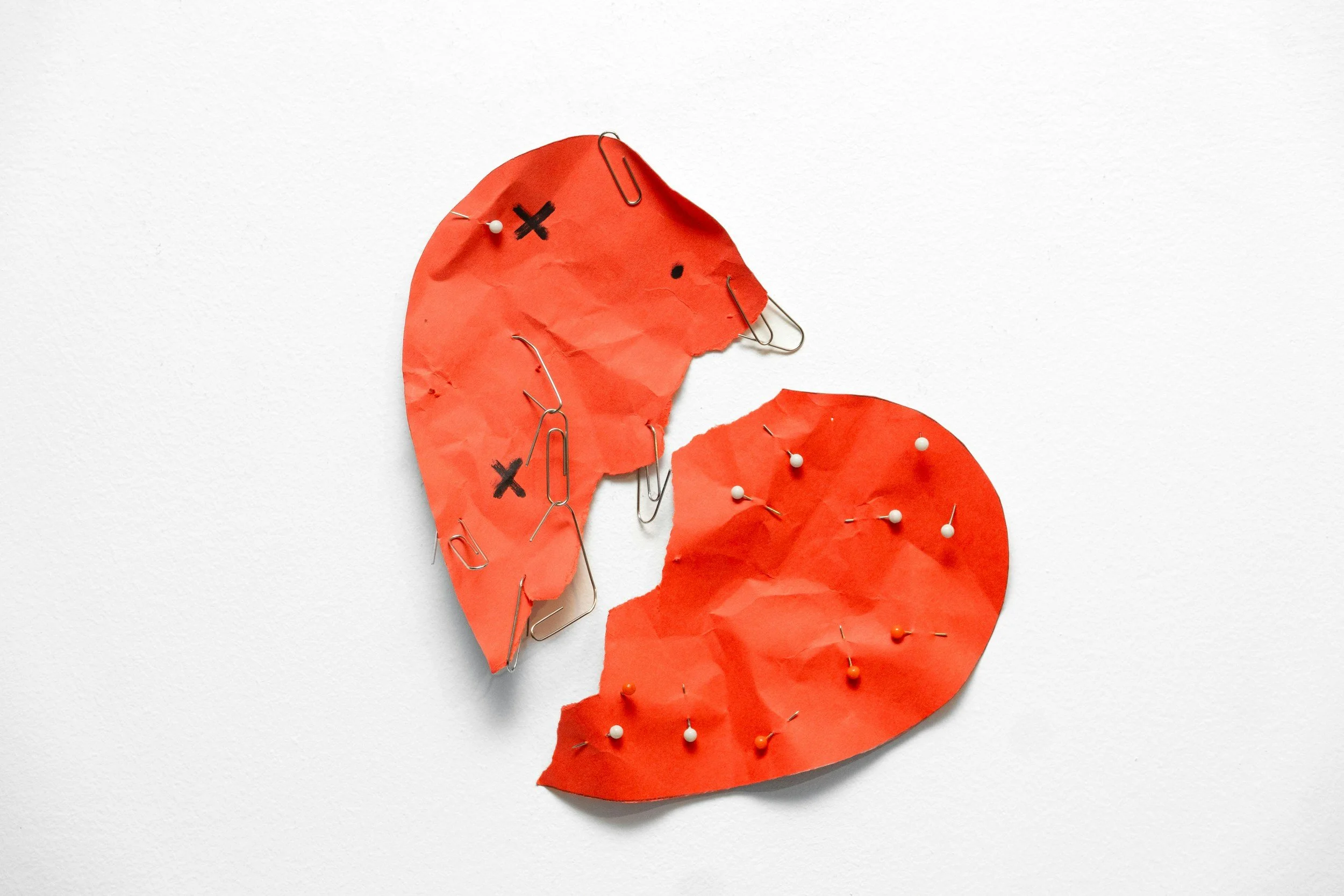
The link between ADHD and rejection sensitivity has real, if still developing, research behind it.
Why this creates a specific relationship problem
The core difficulty isn't that feedback triggers a strong reaction. Most people feel something when they're criticised. It's that the reaction is disproportionate to the comment itself, and both partners can end up confused about why. The partner giving the feedback often has no idea their mild observation has just been received as a verdict on the whole relationship. The partner receiving it often can't easily explain, in the moment, why something so small has produced something so large, which frequently leads to a second layer of shame on top of the original reaction.
That second layer of shame often does more lasting damage to the relationship over time than the original reaction itself ever did. Feeling something disproportionate is one difficulty. Believing that feeling proves you're too much, too fragile, or too broken for an ordinary relationship is a separate, heavier one, and it's the layer most likely to get carried forward into the next disagreement, making the whole cycle more sensitive rather than less each time it plays out between two otherwise well-meaning people.
This can create a pattern where feedback stops being given at all, out of a wish to avoid triggering the response, which solves nothing and often makes things worse over time. A relationship where one partner has quietly stopped saying what bothers them tends to accumulate a very specific kind of distance, one that looks like harmony from outside and feels like isolation from within.
What helps
Naming the pattern directly, outside the heat of a specific moment, tends to help more than trying to manage each individual reaction as it happens. Something as simple as sometimes feedback lands for me like a much bigger verdict than you meant it as, and I'm working on that, but it helps if you know it's not about the size of what you said, gives a partner something to work with the next time it happens, rather than being left to guess.
It also helps for the partner giving feedback to know that a big reaction in the moment isn't reliable evidence the feedback itself was wrong or unfair. It's tempting, when someone reacts intensely, to soften or retract what was said to de-escalate things quickly. Done repeatedly, this tends to teach the relationship that feedback isn't safe to give at all, which removes the thing both partners need, honest, ordinary information about what isn't working, rather than reducing the underlying sensitivity in any lasting way.
It also helps to separate the feedback itself from how it's delivered, since the two get tangled together easily. How something gets raised often matters as much as what gets raised, and a small amount of care in the delivery, choosing a calm moment, leading with what's working before naming what isn't, tends to reduce the intensity of the response without requiring either partner to change who they fundamentally are.
Timing matters more here than it might for a couple without this pattern in play. Raising something the moment it happens, while emotions are already running high on both sides, tends to produce the most intense version of the reaction. Choosing a calmer, more neutral moment, even if that means waiting a day, usually gives the same information a much better chance of landing as information rather than as an attack.
Where withdrawal has become a habitual response, pulling away before rejection can land rather than after, that pattern is better understood as a form of self-protection that's outlived its usefulness, rather than as a lack of commitment to the relationship, since treating it as a character flaw tends to entrench it further rather than loosen its grip.
The qualitative research on this pattern found withdrawal often starts small and grows through repetition, a slightly earlier exit from a difficult conversation, a slightly longer gap before responding to a message, each one individually reasonable, each one making the next slightly easier to justify. By the time it's become a recognisable pattern, it can feel less like a choice being made and more like a groove the relationship has quietly worn into itself, which is exactly why naming it explicitly tends to matter more than either partner trying to will it away on their own.
How therapy can help
Some couples come to this work already able to name the pattern but stuck in the same cycle regardless, feedback triggers withdrawal or an outsized reaction, which triggers frustration, which makes the next piece of feedback feel even riskier to give. Breaking that cycle usually means slowing down enough to look at what's happening in the gap between a comment and the reaction to it, rather than only addressing the reaction after it's already in full swing.
Individual work on the underlying rejection sensitivity, separate from the couple's dynamic, often matters here too, since a partner's response to feedback is unlikely to change much through relationship strategies alone if the underlying sensitivity hasn't been addressed directly. The two kinds of work tend to support each other rather than compete, and neither replaces the need for the other.
Where the reaction has a real history behind it, earlier experiences of harsh criticism, bullying, or a home environment where mistakes were met with real hostility rather than ordinary correction, that history deserves its own attention, separate from the couple's current dynamic. The intensity of an adult reaction rarely comes from nowhere, and knowing what it's responding to, historically as well as in the moment, tends to make the present-day pattern easier to work with rather than simply harder to tolerate.
If you feel like now might be the right time to talk this through with a therapist, I offer a free 30-minute consultation in person (in London) or online. Either partner is welcome to reach out first, whether you're the one experiencing this pattern, the one on the receiving end of it, or both trying to work out how to give each other feedback that doesn't feel dangerous to either side, at whatever stage that conversation currently sits.
About the Author
Mark Ryan is a BACP Accredited Psychotherapist and NCPS Accredited Relationship Therapist working in person across central London, from rooms in Pimlico, Kensington, and Angel. He works with couples, individuals, and polycules on relationship issues including jealousy, affairs and betrayals, sex problems, and considered separation. His practice is integrative, sex-positive, and affirming of all relationship structures and identities.
References
Canu, W. H., & Carlson, C. L. (2007). Rejection sensitivity and social outcomes of young adult men with ADHD. Journal of Attention Disorders, 10(3), 261–275. https://doi.org/10.1177/1087054706288106
Ginapp, C. M., Greenberg, N. R., MacDonald-Gagnon, G., Angarita, G. A., Bold, K. W., & Potenza, M. N. (2023). “Dysregulated not deficit”: A qualitative study on symptomatology of ADHD in young adults. PLOS ONE, 18(10), e0292721. https://doi.org/10.1371/journal.pone.0292721
Rowney-Smith, A., Sutton, B., Quadt, L., & Eccles, J. A. (2026). The lived experiences of rejection sensitivity in ADHD: A qualitative exploration. PLOS ONE, 21(1), e0314669. https://doi.org/10.1371/journal.pone.0314669
