
Impulse Control and ADHD: What It Means for a Relationship
By Mark Ryan, BACP Accredited Psychotherapist and NCPS Accredited Relationship Therapist
I've written more broadly about how ADHD gets mistaken for not caring in a relationship, and about the specific way ADHD can make interrupting and half-listening feel like disinterest. This piece is about a different, often more consequential pattern, the impulsivity that shows up in bigger moments, an unplanned purchase, a decision made and acted on before either partner has properly talked it through, a hurtful sentence said in the middle of an argument that can't be taken back. This is rarely about attention slipping in a conversation. It's about the gap between an urge and a choice closing faster than it does for most people.
This gap tends to be harder to work around than the interrupting or the half-listening, precisely because the stakes are usually higher. A missed detail in conversation can be repeated. A significant purchase already made, or a sentence already said, can't be undone in the same way, which means the ordinary strategy of simply repairing after the fact carries a heavier cost here than it does elsewhere in the relationship.
This piece also isn't about a single, dramatic incident, and that distinction is important. Most couples I work with who are navigating this describe a pattern of smaller, repeated moments; a decision made without a check-in, a sharper comment than the situation called for, that individually feel forgivable and collectively wear down trust in a way neither partner fully notices until it's already significant. Recognising the pattern for what it is, rather than re-litigating each instance as an isolated, unrelated event, tends to be the first real step toward changing it in any lasting way.
Why this is a different mechanism from interrupting
Precision about what's happening matters here, since impulsivity in ADHD isn't one single thing. Interrupting in conversation is largely about response inhibition, catching an already-triggered urge to speak before it happens. The impulsivity that shows up in spending, decisions, and emotional outbursts runs on a related but distinct system, sometimes called delay discounting, the tendency to weigh an immediate reward much more heavily than a delayed one, even when the delayed option is clearly better on balance.
This distinction matters because it explains something that otherwise looks contradictory, someone who can be thoughtful and careful in a slow, low-pressure conversation, but who makes a significant financial or life decision within minutes of the idea occurring to them. These aren't different levels of the same trait showing up inconsistently. They're two different systems, one governing whether a thought gets spoken immediately, the other governing how heavily the future gets weighed against the present and either can be affected independently of the other.
A partner who's only ever noticed the interrupting might reasonably assume impulse control isn't an issue in the relationship at all, since conversations flow well enough most of the time. The bigger, less frequent impulsive decisions can then arrive as a genuine surprise, disconnected in the partner's mind from anything already understood about how the other person's brain works, when in fact both patterns trace back to the same broader diagnosis operating through different, specific channels.
A longitudinal study following children with ADHD into adolescence found that this specific pattern, difficulty tolerating delay rather than impulsivity in the moment-to-moment sense, was the strongest predictor of later interpersonal problems, more so than conduct or anxiety symptoms measured at the same time (Sørensen, Adolfsdottir, Kvadsheim, Eichele, Plessen and Sonuga-Barke, 2024). The study followed young people rather than adult couples specifically, so it shouldn't be read as direct evidence about adult romantic relationships, but the underlying mechanism it identifies, difficulty tolerating delay driving real relational strain, is the same one adult research on impulsivity in ADHD keeps returning to.
Where this often show up: money
Financial decisions are often where this pattern becomes visible earliest and most concretely in a relationship. A large community study of over 1,200 adults found that people reporting current ADHD symptoms engaged in significantly more impulsive buying, relied more often on avoidant or spontaneous financial decision styles, and saved money less consistently than those without symptoms (Bangma, Tucha, Fuermaier, Tucha and Koerts, 2020). None of this means financial decisions are made carelessly or without real intention in the moment. An unplanned purchase or an impulsive financial commitment often feels, at the time, like a good and even exciting idea. The difficulty is in how the future cost gets weighted against the present pull, not in a lack of care about the outcome.
A concrete version of this might look like agreeing together to save toward something specific, then finding a significant chunk of that saving redirected toward an unplanned purchase a few weeks later, one that felt worthwhile in the moment and only looks like a departure from the plan in hindsight. The partner who agreed to the original plan often experiences this as a broken promise or a lack of seriousness about shared goals. The person who made the purchase often experiences real confusion at that reaction, since nothing about their commitment to the original goal felt different to them at the time, only the pull of the immediate opportunity felt stronger than it did when the plan was made.
The same pattern shows up beyond money too, in bigger life decisions made and sometimes acted on before the couple has had a proper conversation about them, a job accepted or resigned from, a significant commitment made to a friend or family member, a plan for the weekend upended in favour of something more appealing that's just come up. Each of these can feel, from the partner not consulted, like being treated as an afterthought in decisions that affect them directly, when the more accurate explanation is usually that the decision simply outran the conversation that should, in an ideal world, have preceded it.
For a partner managing shared finances, this can be one of the more corrosive patterns in the relationship, not because of any single purchase, but because of the accumulated uncertainty about whether an agreed plan will hold. Trust around money tends to be rebuilt through transparency and shared systems rather than promises alone, since promises depend on the same in-the-moment judgement that's already proving unreliable under pressure.
This isn't a reason to hand over full financial control to one partner as a permanent fix, which tends to create its own resentments over time, a sense of being managed rather than trusted as a full and equal adult in the relationship. The more sustainable versions of this usually involve shared visibility rather than one-sided control, both partners able to see the same account activity, an agreed threshold above which a purchase gets discussed first, and a regular, low-stakes check-in on shared goals rather than a single tense conversation after something has already gone wrong.
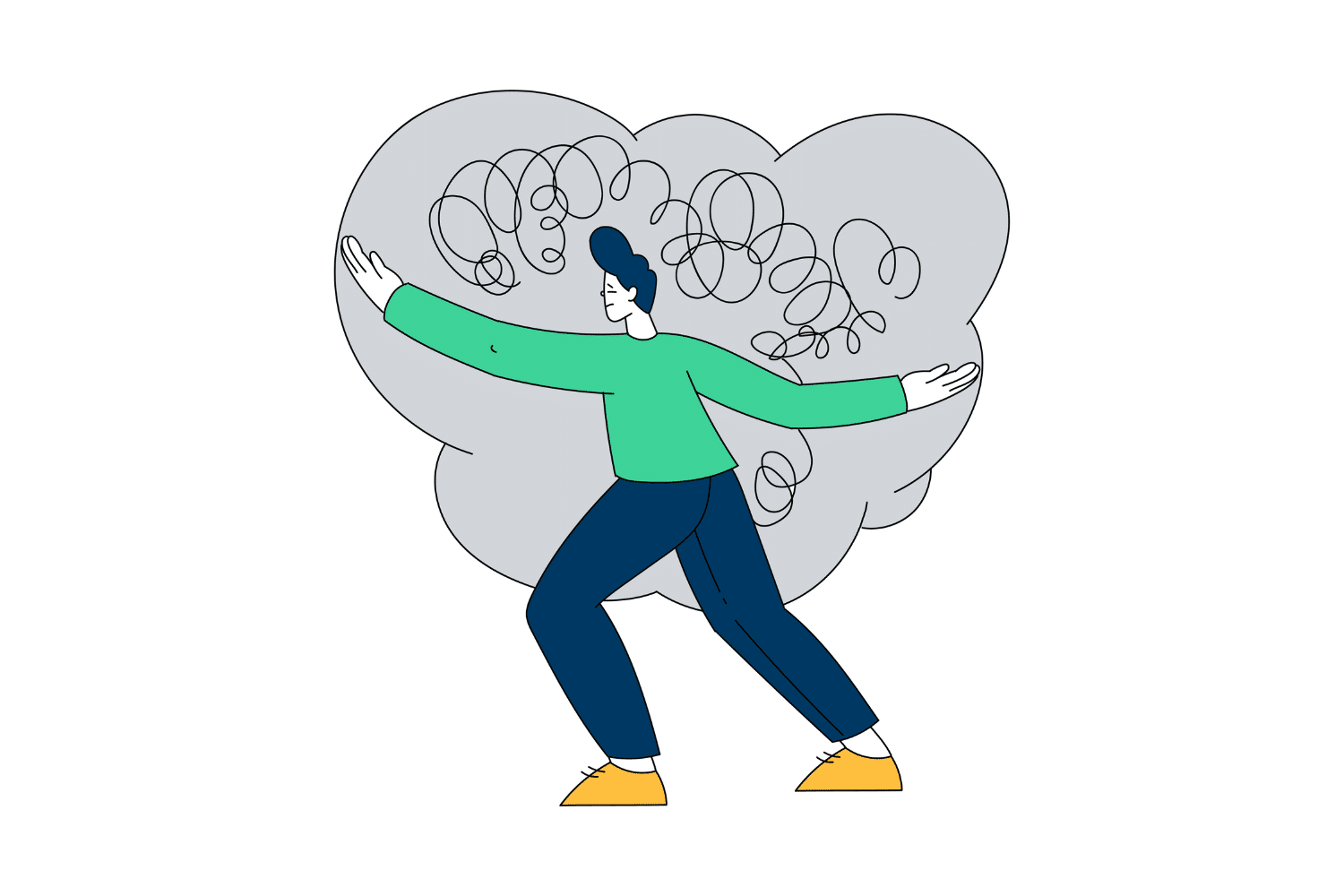
Delay discounting is the tendency to weigh an immediate reward much more heavily than a delayed one
Impulsive words in a heated moment
The same delay-discounting pattern shows up differently in conflict, less about spending or a single decision and more about the immediate relief of saying something in the heat of the moment outweighing a cost to the relationship that only becomes clear once things have calmed down. This is a complicated area of the research, and worth representing honestly rather than simply. Broader reviews have found strong links between ADHD as a whole and both affect lability, sudden, intense shifts in emotional state, and general difficulties with emotion regulation. A recent, more careful network analysis of adults from the general community adds an unexpected complication, once inattention, hyperactivity, and impulsivity were separated out and considered together, emotional difficulties showed a specific, measurable link to inattention, but not to impulsivity or hyperactivity on their own (Gomez, Brown, Zarate, Houghton and Stavropoulos, 2026). That doesn't mean impulsive speech in conflict isn't real or isn't connected to ADHD. It more likely traces back to the same underlying mechanism as the financial pattern above, rather than to a separate, distinct emotional volatility specific to the impulsive side of the diagnosis. In practice, a partner's frustration can still arrive quickly and fully formed, and it's the words spoken in that window, sometimes far harsher than anything the person believes once the moment has passed, that tend to cause the most lasting damage, whichever specific mechanism is driving it.
This pattern often confuses both people in the relationship, since it doesn't match how either of them experiences the underlying feeling. The ADHD partner frequently describes the emotion itself as accurate, real anger, real hurt, proportionate to what triggered it in that instant, while recognising afterward that what got said went considerably further than the feeling itself warranted. The other partner, hearing something harsh and specific, has little reason to assume it was a temporary spike rather than a long-suppressed truth finally surfacing, which is often exactly the wrong read.
This is a difficult pattern to be on the receiving end of, since words said in anger are hard to fully unhear even once both partners understand the mechanism behind them. Understanding how blame tends to settle into a relationship after moments like this can help separate what was meant from what was said in a state of emotional flooding, without pretending the impact of the words themselves doesn't matter.
What can help
Building in a deliberate pause before acting on financial decisions above an agreed threshold tends to help more than relying on willpower in the moment, precisely because it doesn't depend on the same in-the-moment judgement that struggles under pull. A shared rule, anything over a set amount gets discussed first, works because it removes the decision from the exact situation where delay discounting is strongest.
The exact threshold itself matters less than both partners agreeing to it while both are calm and clear-headed, and reviewing it periodically rather than treating it as fixed forever once it's set. A rule set too low ends up feeling restrictive over minor purchases and gets quietly abandoned. A rule set sensibly, and revisited every so often as circumstances change, tends to hold because it was built around the real pattern rather than around a moment of frustration after a specific incident.
For conflict specifically, agreeing in advance on a pause when things escalate, a genuine break rather than a punishing silence, gives the emotional intensity time to pass before anything gets said that can't be walked back. This only tends to work if both partners have agreed to it calmly beforehand, since negotiating a pause for the first time in the middle of the argument it's meant to prevent rarely goes well.
A workable version of this includes a clear, agreed signal, a specific word or phrase either partner can use, and a genuine commitment to return to the conversation once things have settled rather than using the pause to avoid it indefinitely. Without that second part, the pause itself can become its own fresh source of resentment, one partner left feeling permanently unresolved and dismissed while the other feels they've done the responsible, mature thing by stepping away entirely.
Where the aftermath of an impulsive decision or a harsh exchange has left one partner feeling consistently unable to rely on the other's judgement, that deserves direct acknowledgement rather than being folded quietly into the next practical fix. That specific kind of loneliness, being physically present but not able to be depended on in the way that matters, deserves its own honest conversation, separate from whatever practical system gets put in place going forward. Fixing the system without naming the accumulated hurt tends to leave that hurt looking for somewhere else to surface later.
How therapy can help
Couples often arrive here having already tried the obvious fixes, more communication, more promises, a fresh start after each incident, without much lasting change. Useful work usually starts by identifying which specific version of impulsivity is at play, financial, verbal, or decision-making more broadly, since the practical structures that help with one don't always transfer neatly to another.
Where trust has been significantly eroded by a pattern of impulsive decisions, the work often needs to hold two things at once, real, structural changes that reduce the likelihood of repetition, and honest acknowledgement of the accumulated impact on the partner who's had to absorb it. Neither on its own tends to be enough. A better system without acknowledgement of the damage already done can feel hollow, and acknowledgement without a real change in structure tends to wear thin once the next incident happens.
Where medication is already part of the picture, this work sits alongside it rather than in place of it. Medication can meaningfully change how strongly an urge is felt in the first place, but on its own it doesn't automatically produce the shared systems, the agreed thresholds, the pause before conflict escalates, that ultimately make the practical difference between an urge and a lived, repeated action inside a real relationship context. Those still tend to need building deliberately, together, over time, rather than being assumed to follow naturally and automatically from symptom improvement alone.
If you feel like now might be the right time to talk this through with a therapist, I offer a free 30-minute consultation in person (in London) or online.
About the Author
Mark Ryan is a BACP Accredited Psychotherapist and NCPS Accredited Relationship Therapist working in person across central London, from rooms in Pimlico, Kensington, and Angel. He works with couples, individuals, and polycules on relationship issues including jealousy, affairs and betrayals, sex problems, and considered separation. His practice is integrative, sex-positive, and affirming of all relationship structures and identities.
References
Sørensen, L., Adolfsdottir, S., Kvadsheim, E., Eichele, H., Plessen, K. J., & Sonuga-Barke, E. (2024). Suboptimal decision making and interpersonal problems in ADHD: Longitudinal evidence from a laboratory task. Scientific Reports, 14, 6535. https://doi.org/10.1038/s41598-024-57041-x
Bangma, D. F., Tucha, L., Fuermaier, A. B. M., Tucha, O., & Koerts, J. (2020). Financial decision-making in a community sample of adults with and without current symptoms of ADHD. PLOS ONE, 15(10), e0239343. https://doi.org/10.1371/journal.pone.0239343
Gomez, R., Brown, T., Zarate, D., Houghton, S., & Stavropoulos, V. (2026). A network approach to the association between emotional regulation and ADHD symptoms in adults: Pathways between difficulties in emotional regulation and ADHD dimensions. Psychiatric Quarterly, 97(2), 231–251. https://doi.org/10.1007/s11126-026-10270-x
