
ADHD and Relationships: When It Seems Like Your Partner Doesn't Care
By Mark Ryan, BACP Accredited Psychotherapist and NCPS Accredited Relationship Therapist
If you're the partner who keeps saying I don't feel like I matter to you, or you're the one hearing it and not understanding why, given how much you do care, this piece is for both of you. ADHD has a specific, well-documented way of creating exactly this gap, a real, felt sense of not being cared for on one side, and real, felt love that keeps failing to land on the other. Neither of you is imagining it, and neither of you is simply wrong.
ADHD isn't a single, uniform experience, and this piece describes patterns that show up often, not a checklist every relationship affected by ADHD will match exactly. Some couples may recognise almost everything here immediately. Others will see parts of it and not others, and that variation is expected rather than a sign that ADHD explains less than it seems to for a given couple.
This gap tends to widen precisely because both experiences are genuine. The forgotten plans, half-heard conversations, and missed follow-through are real and have a real cost, whatever their cause. The love and investment behind them are also real, and don't disappear just because they keep failing to show up in the way a partner needs to see them. Sitting with both of these at once, rather than resolving the tension by deciding one side must be lying to themselves, is usually the more accurate, if less comfortable, starting point.
Why inattention gets read as indifference
This misreading is one of the most consistently reported experiences in the research on ADHD and romantic relationships. A large recent study asked 355 adults with ADHD to describe how their ADHD had affected their relationships, and one of the clearest, most repeated themes was the experience of being perceived as not caring, disinterested, or unreliable, when the underlying cause was attention regulation rather than a lack of investment in the relationship (O'Brien, Kini-Seery, Kelly, Kilbride, Wrigley, Nearchou and Bramham, 2025). Forgetting a conversation, missing a message, or drifting mid-sentence isn't the same thing as not valuing the person it happened with, but from the outside, and often from the inside too, it can be difficult to tell the two apart.
This matters because the two explanations lead to completely different responses. If the working theory is he doesn't care enough to remember, the natural response is hurt, followed by resentment, followed by a slow withdrawal of trust. If the working theory is his brain drops details regardless of how much he cares, the same behaviour still needs addressing, but it stops being evidence that the relationship itself is in trouble. This second reading isn't a way of excusing the behaviour or letting anyone off the hook. It's a more accurate map of what's happening, and a more accurate map tends to lead to a more useful conversation about what to do next.
This isn't a reason to accept every dropped plan or missed message without comment, and getting the explanation right doesn't mean the impact stops mattering. It means the conversation that follows can be about the specific, fixable thing that happened, a missed reminder, an unclear system for tracking commitments, rather than an argument about whether the relationship is fundamentally sound. Those are very different conversations, and couples who consistently have the wrong one tend to wear each other down over things that were, underneath the hurt, solvable.
Why this isn't about trying harder
One of the most robust findings in this area is that ADHD's effect on a relationship isn't fully explained by the visible symptoms themselves. Research comparing spouses of people with ADHD to spouses of people without it found that the gap in relationship satisfaction was mediated by intimacy specifically, meaning ADHD's impact often travels through a slow erosion of closeness rather than showing up as a single, obvious problem (Ben-Naim, Marom, Krashin, Gifter and Arad, 2017). That's a meaningfully different picture from ADHD simply causing arguments about forgotten chores. It suggests the real cost accumulates quietly, in the small, repeated moments where attention drifts, a story goes half-heard, a plan gets missed, each one small enough to forgive on its own, and large enough in total to leave a partner feeling steadily less important over time.
This is also why telling the ADHD partner to just pay more attention rarely works, and why hearing it usually lands as another accusation rather than useful advice, even when it's meant gently. Sustained attention under low-stimulation conditions, an ordinary evening conversation, a routine errand, a check-in about someone's day, is precisely the terrain ADHD makes hardest, not because the person doesn't value the moment, but because the brain's attention system doesn't reliably prioritise it the way it would something urgent or novel.
There's a counterintuitive corollary here that often confuses partners more than the forgetting does. The same person who can't reliably hold a low-key conversation in mind may give a captivating, high-intensity partner their full, undivided focus for hours, particularly in the early stages of a relationship, when everything about the other person still feels novel. This isn't inconsistency or proof that the effort was always available and simply withheld later. It's the same attention system responding differently to novelty than to routine, which is part of why so many ADHD relationships describe an intense, almost overwhelming beginning followed by a confusing, painful drop-off once ordinary life resumes.
What tends to help
The evidence here is encouraging. A randomised controlled trial testing a structured psychoeducation programme for adults with ADHD and their partners found real improvements in relationship quality, alongside a reduction in the partner's burden of care and the sense of being constantly on guard for the next slip (Hirvikoski, Lindström, Carlsson, Waaler, Jokinen and Bölte, 2017). The intervention wasn't primarily about teaching the ADHD partner new tricks. It was about both partners coming to a shared, accurate understanding of what was happening, which on its own was enough to shift how the relationship felt.
This lines up with what tends to help in the therapy room too. Separating the behaviour from its meaning, this got forgotten because attention slipped, not because you don't matter, is rarely a complete fix on its own, but it changes what the argument that follows is about. A great deal of resentment in relationships comes from an inaccurate story about why something happened, and correcting that story is often the single most useful thing a couple can do before addressing the practical problem underneath it.
Beyond correcting the story, practical systems tend to matter more than willpower ever will, external structures that don't depend on remembering to remember, a shared calendar both partners check regularly, a single agreed place for commitments rather than scattered mental notes, a habit of confirming plans the same way each time rather than trusting memory alone. None of this is about infantilising the ADHD partner or turning them into someone who needs managing. It's closer to using glasses for poor eyesight, a practical accommodation for a real, well-documented difference, not a referendum on anyone's character.
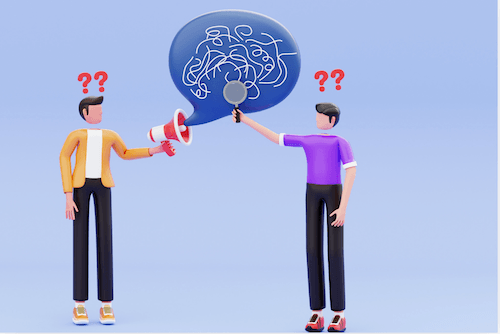
Telling the ADHD partner to just pay more attention rarely works, and why hearing it usually lands as another accusation rather than useful advice, even when it's meant gently.
What this costs the non-ADHD partner, and why that matters too
None of this is a reason to minimise what the other partner is experiencing. Repeatedly feeling forgotten, deprioritised, or like the only one keeping track of the relationship's practical and emotional details is exhausting, and understanding the cause doesn't automatically make the impact disappear. A specific, persistent kind of loneliness can build inside a relationship that looks, from outside, entirely intact, and that experience deserves its own attention, not just an explanation that reframes it as nobody's fault.
A common, difficult pattern here is the partner who becomes the relationship's default project manager, the one who remembers birthdays, tracks bills, and holds the shared calendar together, not by choice but because someone has to and it stopped feeling safe to assume the other person would. This role tends to arrive gradually, through a hundred small moments of picking up slack, rather than through any single decision, which is part of why it can be so hard to name and so exhausting to carry once it's fully in place.
The resentment that builds in this position often gets aimed at the wrong target, either turned inward as guilt for feeling frustrated with someone who can't fully help how their brain works, or turned into a running scorecard of every failure that gets brought up in every subsequent argument, whether or not it's relevant to the one happening now. Neither response tends to resolve the underlying exhaustion. What helps more consistently is naming the role itself directly, out loud, as something that needs redistributing or at least acknowledging, rather than something to simply keep absorbing quietly.
Both things are true at once, and a couple navigating this well usually needs to hold both rather than picking one. The ADHD isn't a character flaw, and the tiredness of constantly managing around it isn't an overreaction. Progress tends to come from addressing the mechanism and taking the impact seriously, together, rather than treating one as the real issue and the other as something to get over.
This balance is easy to state and hard to hold under pressure, especially after a bad week. When something's just been forgotten again, the explanation that it isn't about caring can feel, in the moment, like it's asking the hurt partner to swallow their frustration for the sake of being fair. It isn't asking that. It's asking both partners to solve two separate problems side by side, the practical pattern that needs a better system, and the accumulated hurt that needs its own acknowledgement, rather than letting one argument try to carry both.
How therapy can help
This work often starts with mapping the actual pattern rather than relitigating the most recent argument, what specifically tends to get missed, in what situations, and what each of you has already tried. That map matters more than it might seem to, since a lot of couples arrive having tried the same handful of fixes repeatedly, more reminders, more apologies, more promises, without ever stepping back to ask whether those particular fixes were ever likely to work for this particular brain.
Where an ADHD diagnosis is recent, whether that's the ADHD partner's own or a discovery made together while trying to understand what's been happening, there's often a period of genuine grief mixed in with the relief of finally having an explanation. Years of arguments that felt like character failures suddenly look different in hindsight, which can bring real anger about time lost to misunderstanding, alongside real hope about what might change now that the pattern has a name. Both reactions are normal, and neither needs to be resolved quickly before the practical work can begin.
Where there's no diagnosis at all yet, only a strong suspicion after reading something like this, that's also a perfectly reasonable place to start the work from. Therapy doesn't require a formal assessment to begin addressing the pattern itself, though a proper diagnostic assessment is usually worth pursuing in parallel where it feels right, since it can open up treatment options, workplace accommodations, and a clearer shared language that self-diagnosis alone doesn't provide in quite the same way.
Where intimacy has quietly declined alongside the practical friction, which the research above suggests is common rather than unusual, that deserves to be addressed directly and on its own terms rather than assuming it will simply recover once the logistics improve. The two often need separate attention, even though they're connected.
Part of why intimacy tends to suffer specifically is that it depends on the same sustained, low-stimulation attention that's hardest for ADHD to sustain elsewhere. Feeling desired in an ongoing way, rather than only during the intense early phase of a relationship, often requires the kind of consistent, unglamorous attentiveness, noticing a partner's mood shift, remembering what mattered to them yesterday, that overlaps directly with the attention difficulties already described. Naming this connection explicitly tends to help, since otherwise a couple can end up treating a decline in intimacy as evidence the attraction itself has faded, when the more accurate story is closer to the attention it depends on being harder to sustain.
This series will go on to look at some of the more specific patterns underneath this broader picture, why criticism can feel disproportionately painful, why interruptions happen even when someone is listening closely, and what's going on when a partner seems to forget you exist the moment you're out of the room. Each of those deserves more space than a single piece can give them, and understanding the general mechanism covered here should make each of those more specific patterns easier to recognise once they're covered in their own right.
If you feel like now might be the right time to talk this through with a therapist, I offer a free 30-minute consultation in person (in London) or online. Either partner is welcome to reach out first, and you don't need a formal diagnosis in hand for the work to be useful, plenty of couples begin this conversation while still working out whether ADHD explains what they're seeing.
About the Author
Mark Ryan is a BACP Accredited Psychotherapist and NCPS Accredited Relationship Therapist working in person across central London, from rooms in Pimlico, Kensington, and Angel. He works with couples, individuals, and polycules on relationship issues including jealousy, affairs and betrayals, sex problems, and considered separation. His practice is integrative, sex-positive, and affirming of all relationship structures and identities.
References
Ben-Naim, S., Marom, I., Krashin, M., Gifter, B., & Arad, K. (2017). Life with a partner with ADHD: The moderating role of intimacy. Journal of Child and Family Studies, 26(5), 1365–1373. https://doi.org/10.1007/s10826-016-0653-9
O'Brien, M., Kini-Seery, C., Kelly, C., Kilbride, K., Wrigley, M., Nearchou, F., & Bramham, J. (2025). “I felt like a burden”: An exploration into the experience of romantic relationships for people with ADHD. Journal of Marital and Family Therapy, 52(1), e70097. https://doi.org/10.1111/jmft.70097
Hirvikoski, T., Lindström, T., Carlsson, J., Waaler, E., Jokinen, J., & Bölte, S. (2017). Psychoeducational groups for adults with ADHD and their significant others (PEGASUS): A pragmatic multicenter and randomized controlled trial. European Psychiatry, 44, 141–152. https://doi.org/10.1016/j.eurpsy.2017.04.005
