
By Mark Ryan, BACP Accredited Psychotherapist and NCPS Accredited Relationship Therapist, couples and relationship therapy in London
An adult ADHD diagnosis can change the whole story a couple has been telling about itself. For the person diagnosed, it may explain a lifetime of questions. For their partner, it may explain years of puzzlement, and at the same time raise a new set of feelings that are hard to say out loud.
If you are reading this because you, or your partner, have recently been diagnosed, you are probably carrying more than one feeling at once. Relief and sadness can sit side by side. So can gladness and frustration. None of it means the relationship is in trouble, and none of it means either of you is being unfair. It means a big piece of information has arrived and you are both finding out what to do with it.
This article looks at what the diagnosis can stir up for each of you, why the changes you hope for do not happen at the flick of a switch, and what tends to help. It is written for both people in the relationship, and it assumes you are both doing your best.
Article Summary
A late ADHD diagnosis often brings relief first, followed by a period of sadness as the person looks back over their life.
Their partner is usually glad for them, but may still feel frustrated by how ADHD shows up day to day, and then guilty for feeling it.
Behaviour rarely changes quickly just because it now has a name, which can be hard for a partner to understand.
Separating the ADHD presentation from the person lets you face it as a team instead of as opponents.
Learning about ADHD, individual support for the person diagnosed, and couples therapy can all help.
What it can feel like for the person who is diagnosed
For many people, the first feeling is relief. Something that has been confusing for years finally has an explanation. In a qualitative study of twelve adults diagnosed with ADHD in Japan, many described relief at understanding long standing difficulties, and at realising they had been wrongly labelling themselves, for example as lazy (Aoki et al., 2020). The same study found that the diagnosis was often hard to accept at first, and that people began asking who they were underneath it. The authors described coming to terms with ADHD as a gradual, non linear process rather than a single moment.
In my work with couples, I often see a second stage follow the relief. Once the explanation is in place, the person begins to look back. School, jobs, friendships, earlier relationships, and the times it was put down to effort or character. There is often real sadness, and sometimes grief, for the years spent believing something was wrong with them. It can be a tender and disorienting period, and it can come as a surprise to a person who expected to feel only better.
A study of romantic relationships among adults with ADHD in Ireland, based on an online survey, found that many people described feeling too much for their partners, or like a burden, and that lacking an explanation for their difficulties left some feeling confused and ashamed. Diagnosis, or a deeper understanding of themselves, often helped with that (O’Brien et al., 2025). Around six in ten participants had a formal diagnosis and the rest identified themselves as having ADHD, so it shows what people described rather than what is true of everyone. It does ring true, though, with what many people say once they have language for their experience.
If you are the person who has been diagnosed, it is allowed to feel both things. You do not have to be grateful and cheerful about it. Grief for the past is a normal response to understanding it differently, and it usually softens with time and with being heard.
What it can feel like for their partner
Partners are often glad for the person who has been diagnosed. They may have watched them struggle and wanted them to have answers. The diagnosis can bring a sense of relief for them too, because the patterns finally make sense.
Then, often a little later, something else shows up. The day to day reality has not changed overnight. The forgotten plans, the unfinished tasks, the conversations that drift, and the roles each of you has settled into are all still there. Many partners find they are still frustrated, and now feel they cannot say so. How can you complain about something that is a recognised condition and not a choice? So the frustration goes underground.
Guilt tends to follow. A partner may feel bad for being irritated, for having needs, or for wishing things were different, especially at a moment when the person they love is also processing something painful. That guilt can make the partner quieter and more resentful at once, which is a hard combination to carry.
There is another thing I notice. It is rarely said out loud, but it often shows in reactions. The partner without ADHD finds it hard to understand why their partner cannot simply change a behaviour once it has been named and agreed. If you can do it when it matters, the thinking goes, surely you can do it every time. That is a very natural question, and it deserves an answer. The next section offers one.
Research on adults’ own accounts of living with ADHD points in a similar direction. A review of 35 qualitative studies found that people widely described difficulty building and sustaining relationships, with impulsive remarks straining interactions, and also that a supportive partner often helped with organisation and daily tasks, in studies where most participants were men (Ginapp et al., 2022). That support is valuable, and it is also work, which is part of why it can build resentment when nobody talks about it.
Everything in this article applies whatever the genders of the people in the relationship.
Why a diagnosis does not mean quick change
ADHD is a neurodevelopmental condition that affects how a person manages attention, memory, impulses, time and feelings. Those are exactly the things that everyday life in a couple relies on. Remembering what was said, starting a task, stopping to think before reacting, noticing that an hour has gone by. For a person with ADHD, these do not work reliably on demand, even when they care deeply and are trying hard.
That is why “just do it” does not work, and why a person can follow through on something one week and not the next. It is not a measure of love or effort. It is also why a diagnosis does not make behaviours disappear. Understanding explains why something happens. It does not cancel the impact on the person on the receiving end, and it does not remove the need for change or repair.
Held together, those two ideas make room for both of you. The ADHD is real and it is not a choice. The effect on the relationship is real and it matters. Neither cancels the other.
How it can show up between you
Over time, couples affected by ADHD often drift into roles that neither of them chose. One person becomes the planner, the reminder and the safety net. The other becomes the one who is reminded, corrected and, sometimes, managed. In the Irish survey, participants described unequal responsibility, sometimes shading into dependency, and the distress and reduced sense of self worth that came with it (O’Brien et al., 2025). They also described their inattention being read as not caring.
From the other side, the partner can feel like a parent, a project manager or a permanent supervisor, and then feel unattractive to themselves in that role. Neither person wants this. Both of them can feel unseen. For more on how this plays out when a partner seems distracted, our article on ADHD and relationships when it seems like your partner doesn’t care is a good place to continue.
Beyond the roles, there are a handful of everyday patterns that couples describe again and again. You may recognise one or all of them. Each has its own explanation, and each is easier to work with once it is understood.
Conversations that feel one sided
One of you is halfway through a sentence and the other is already speaking. For the partner on the receiving end, it can feel dismissive, as though what they have to say is not worth waiting for. For the person with ADHD, it is often the fear of losing a thought, or the excitement of one arriving, and not a lack of interest. Neither experience is imagined. Our piece on why an ADHD partner interrupts looks at what is happening and how to make conversations feel more even.
Plans, messages and people that slip away
Something that is out of sight can drift out of mind. A message goes unanswered, a plan made last week is gone, or a conversation that mattered to one of you has vanished for the other. The partner can feel forgotten. The person with ADHD often feels ashamed, because they care a great deal and cannot make the memory stay. Why this happens, and what helps, is covered in our article on object permanence and ADHD.
Big feelings about small moments
A short reply, a change in tone or a sentence that begins with “can we talk” can land with surprising force. Some people with ADHD describe a rush of pain that feels out of proportion to the moment, often called rejection sensitivity. It is a term many people use rather than a formal diagnosis. It can lead to withdrawing, defending or working hard to keep the peace, while the partner learns to tread carefully and holds back what they need to say. You can read more in our guide to rejection sensitivity in ADHD.
Decisions made in a rush
Impulse control can touch spending, big decisions, words said in the heat of an argument and sometimes alcohol or drugs. Because it reaches into money, trust and shame, it is often the hardest pattern to talk about. Couples can work on it without blame, and our article on impulse control and ADHD shows how.
When resentment builds
When these patterns repeat without being understood, resentment tends to follow on both sides. If that sounds familiar, our article on resentment in relationships and how to let it go may help.
These articles belong together, so read them in whichever order matches what is hardest for you right now.
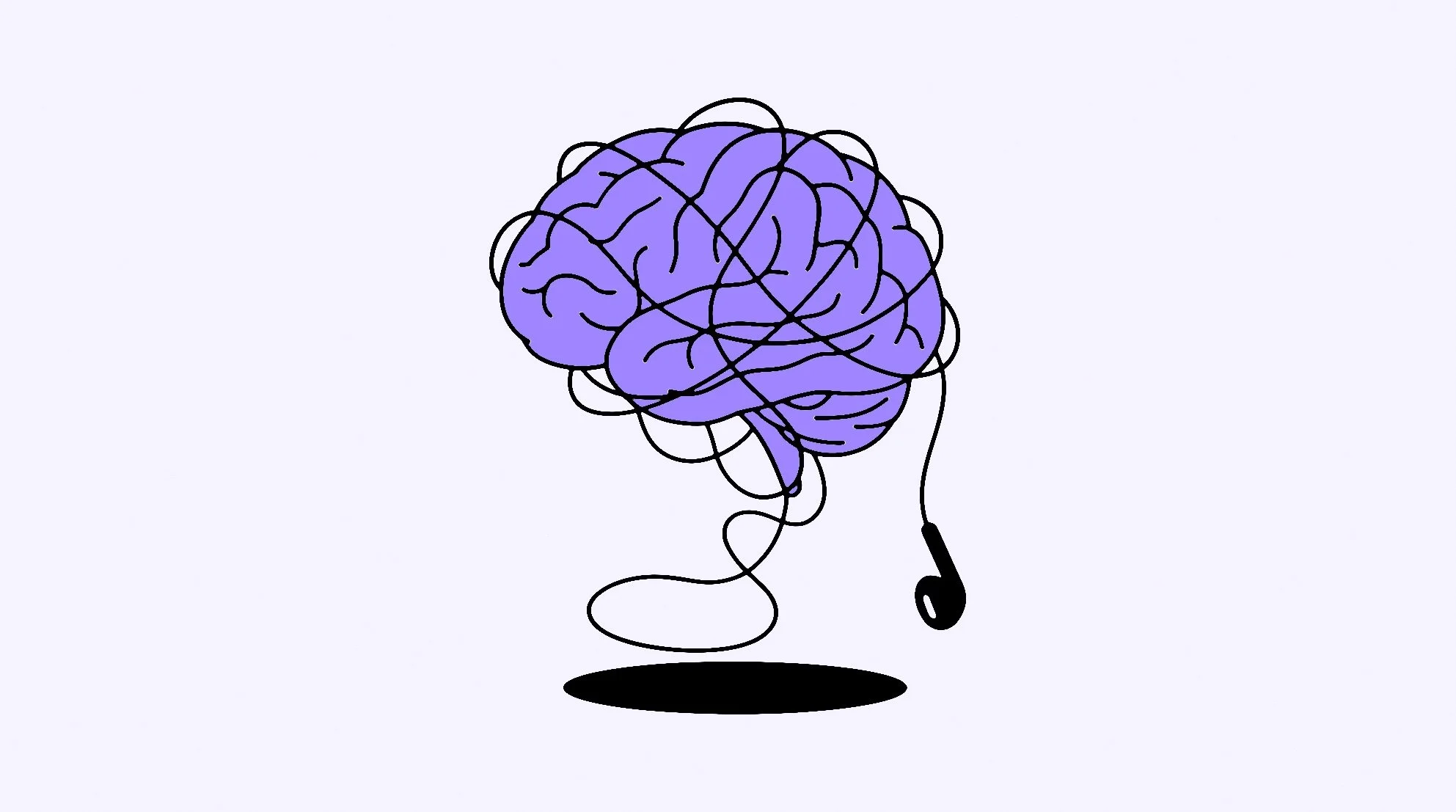
Separating the ADHD presentation from the person lets you face it as a team instead of as opponents.
What helps
The aim is not for one of you to fix the other. It is for the two of you to work out how to live well alongside ADHD. These are the things I see make the biggest difference.
Separating the presentation from the person
This is the single most useful shift. The ADHD presentation is the forgotten plan, the interruption, the late arrival, the unfinished job. The person is the partner you love who is trying. When the presentation and the person are tangled together, every difficulty feels like a verdict on the relationship, and the two of you end up in a battle.
When you separate them, you stop being on opposite sides. You become two people facing the same problem. “Why do you always do this?” becomes “What gets in the way when this happens, and what would help us?” That is a very different conversation, and one that both people can stay in.
If you are the partner without ADHD
Learning about ADHD in depth makes a large difference. That does not mean a quick read. It means immersing yourself in how ADHD works, what it feels like from the inside and how it varies from person to person. The more you understand, the more behaviours that seemed careless or personal begin to look like what they are. Many partners find their frustration changes shape, even when it does not disappear.
It also helps to allow yourself your own feelings. You can be glad for your partner and frustrated at the same time. You can have needs that are not being met. Those needs do not become unreasonable because there is a diagnosis. The skill is in raising them in a way that targets the pattern and not the person, ideally at a calm moment and not in the middle of a row.
There is some evidence that involving partners directly can help. In an early Swedish trial of a psychoeducational course for adults with ADHD and their significant others, knowledge of ADHD improved in both groups, with a somewhat larger gain for partners. Partners also reported lower burden in terms of worry and guilt (Hirvikoski et al., 2015). This was an open trial without a control group, so its findings are preliminary. A 2026 review found very little research on couples based treatment for ADHD, and concluded that including partners in treatment is important (Huynh-Hohnbaum & Benowitz, 2026).
If you are the partner with ADHD
Be gentle with yourself. A late diagnosis often comes with a backlog of old hurts, and it is fine to take time with them. Individual therapy can be a good place to make sense of the past, the shame that may come with it, and who you are now. ADHD coaching can also help with the practical side, building routines and systems that suit how your mind works.
It also helps to treat ADHD as a shared project rather than a private shame. That means being open with your partner about what is hard, rather than hiding it, and being willing to try agreed strategies even when they feel clumsy at first. Strategies work best when they are chosen by you, not imposed on you.
Together
Agree on one or two patterns at a time. Choose a calm moment, describe the pattern without blame, work out what each of you needs, and try something small. Review it after a couple of weeks and adjust. Systems, reminders and shared routines work better when both of you have helped design them, and they work better still when neither of you treats a missed reminder as a character flaw.
Agree, too, that either of you can pause a conversation that is getting heated, and that you will come back to it. That one habit protects a lot of goodwill.
If you would like a structured way to do this, our ADHD and Your Relationship workbook can help. It offers private reflection pages for each of you and a way to map how ADHD shows up for you both. It also offers step by step ways to work on five common patterns together, and it works with or without a formal diagnosis.
How therapy can help
Couples therapy gives you a neutral space to have the conversations that are hardest to have at home. It can help you separate presentation from person, understand each other’s experience, and agree on practical changes that you can both live with. It can also make room for the grief on one side and the frustration and guilt on the other, without either being treated as the problem.
Individual therapy can sit alongside this. For the person with ADHD, it offers a place to work through the past and build self understanding. For the partner, it offers a place to look after their own feelings so that they do not have to carry them alone. The most helpful route is usually a combination, and I am happy to talk through what might suit you both.
Structured psychological treatments for adult ADHD are being tested. In a Swedish randomised trial of 108 adults with the inattentive presentation of ADHD, a cognitive behavioural group programme led to greater improvement in behavioural activation than an alternative group programme. Participants and therapists rated it as more satisfactory and useful. The trial was underpowered and found no significant differences between the groups on ADHD symptoms (Strålin et al., 2025). Research on couples therapy for ADHD in particular is still limited, which is one reason it matters to find a therapist who takes both your experiences seriously.
The same ideas apply where a person has more than one partner, with the work shared across each relationship that matters.
One important note. ADHD can explain how a pattern starts, but it never explains or excuses fear, threats, violence or control. If you are afraid of your partner, please contact the National Domestic Abuse Helpline on 0808 2000 247, free and open 24 hours, and consider seeking help individually before any joint work.
If you would like to talk through what this means for your relationship, I offer a free 30 minute consultation, in person in London or online. You can book a free consultation and we can see whether working together would suit you both.
There is more to explore on our Resources page, which has a mix of free and paid guides and workbooks for couples and individuals. If you would like to go straight to the ones on this topic, start with the ADHD and relationships section.
About the Author
Mark Ryan is a BACP Accredited Psychotherapist and NCPS Accredited Relationship Therapist based in London. He works with couples and individuals, with a particular interest in attachment, neurodiversity, sex and intimacy, and the many forms relationships take. Read more about couples and relationship therapy in London.
References
Aoki, Y., Tsuboi, T., Furuno, T., Watanabe, K., & Kayama, M. (2020). The experiences of receiving a diagnosis of attention deficit hyperactivity disorder during adulthood in Japan: A qualitative study. BMC Psychiatry, 20, Article 373. https://doi.org/10.1186/s12888-020-02774-y
Ginapp, C. M., Macdonald-Gagnon, G., Angarita, G. A., Bold, K. W., & Potenza, M. N. (2022). The lived experiences of adults with attention deficit/hyperactivity disorder: A rapid review of qualitative evidence. Frontiers in Psychiatry, 13, Article 949321. https://doi.org/10.3389/fpsyt.2022.949321
Hirvikoski, T., Waaler, E., Lindström, T., Bölte, S., & Jokinen, J. (2015). Cognitive behavior therapy based psychoeducational groups for adults with ADHD and their significant others (PEGASUS): An open clinical feasibility trial. ADHD Attention Deficit and Hyperactivity Disorders, 7(1), 89 to 99. https://doi.org/10.1007/s12402-014-0141-2
Huynh-Hohnbaum, A.-L., & Benowitz, S. M. (2026). Relationship difficulties: Compounding effects of adult attention deficit/hyperactivity disorder (ADHD). Medical Research Archives, 14(2). https://doi.org/10.18103/mra.v14i2.7244
O’Brien, M., Kini-Seery, C., Kelly, C., Kilbride, K., Wrigley, M., Nearchou, F., & Bramham, J. (2025). “I felt like a burden”: An exploration into the experience of romantic relationships for people with ADHD. Journal of Marital and Family Therapy, 52(1), Article e70097. https://doi.org/10.1111/jmft.70097
Strålin, E. E., Thorell, L. B., Lundgren, T., Bölte, S., & Bohman, B. (2025). Cognitive behavioral therapy for ADHD predominantly inattentive presentation: Randomized controlled trial of two psychological treatments. Frontiers in Psychiatry, 16, Article 1564506. https://doi.org/10.3389/fpsyt.2025.1564506
