
By Mark Ryan, BACP Accredited Psychotherapist and NCPS Accredited Relationship Therapist
You look at your partner across the room and the feeling you expected is not there. Perhaps it has been fading for months, or it arrived in one flat moment that frightened you. You may be asking whether you have fallen out of love, whether it can come back, and what you are supposed to do with this. You may also be the partner who has just heard those words. "I don't love my partner anymore" is one of the most painful sentences a person can say or hear, and it is also one of the most useful places to begin an honest conversation about the relationship.
Article Summary
In my experience, the feeling usually comes after a long period when issues went unaddressed, and over time the partner and the relationship blur together in the mind, so the partner starts to feel like the problem.
In a smaller number of cases, one person has changed a great deal, and what they want and value is no longer what they wanted when the relationship began.
Research on spouses links negative explanations for a partner's behaviour with lower satisfaction, which may help explain how the partner and the problem merge.
A review of research on long term couples found that romantic love without the early obsession can continue for years and is linked with satisfaction.
Asking what the feeling means, what has changed and when you first noticed it turns a vague feeling into something you can work with.
A helpful question can be not "do I love them" but "what relationship do I want, and can we build it together".
Leaving is a legitimate outcome and so is rebuilding.
If you feel afraid of your partner, a different kind of support is needed.
What It Feels Like to No Longer Feel Love
For many people, the first feeling is not coldness. It is grief, confusion or guilt. You may remember the start and wonder what is wrong with you. You may dread hurting someone you still care about, or feel relief followed by shame. Some people feel numb, and some feel irritated by small things. Others feel nothing at all, which can be the most unsettling.
If you are the partner who has just been told, the experience often splits in two. In my work, roughly half of the partners on the receiving end are devastated. They are deeply upset. The other half had already known or suspected. For them it can feel almost like confirmation. For them, it can feel as if they already know they are not the issue and that something deeper is going on. Both reactions are understandable.
If your relationship already feels lonely, why do I feel lonely in my relationship may help you put words to it, and nothing left to say to each other looks at what happens when conversation shrinks to the practical.
Why Love Seems to Disappear
The most common story I hear is that the relationship has been suffering for a while. Issues and problems were never fully addressed. Perhaps a row was smoothed over, or a need went unspoken year after year. Over time, one person begins to feel that the partner is the problem and not the relationship. The two get blurred. Every irritation becomes evidence about who the partner is, and the pattern between you slips out of view.
Research on married couples helps explain this. A review of studies on the explanations spouses give for their partner's behaviour found that dissatisfied spouses, compared with satisfied ones, tended to explain the partner's behaviour in a negative light. The evidence also suggested that these explanations may influence satisfaction, and not only follow from it (Bradbury and Fincham, 1990). Once a story takes hold that your partner is selfish, cold or not interested, you may begin to read much of what they do through it. If your partner's behaviour has been harmful, though, the feeling is information and not a distortion. The feeling of not loving them can be the end point of a long chain of unspoken hurt and resentment. Blame in relationships explores how that story forms, and contempt in relationships describes where it can end up.
A smaller number of people describe something different. In these cases one partner has changed a great deal. What they want, value and need from life is no longer what it was when they chose each other, and they describe having fallen out of love. This is not a failing on either side. People change, and sometimes the relationship has not changed with them.
Many people expect the intensity of the early months to last. A review of research on long term couples suggested that romantic love without the obsessive component of early love can exist in long term marriages. It was associated with marital satisfaction, well being and high self esteem. In long term relationships the obsessive part was negatively related to satisfaction, although in short term relationships it was positively related (Acevedo and Aron, 2009). So if you miss the butterflies, that does not on its own tell you that love is gone. The question is whether warmth, engagement and desire are still present, or whether they have been starved.
The physical side can fade alongside the emotional side. Why desire fades in long term relationships and why couples stop having sex look at how that happens.
How It Affects the Relationship
Not feeling love rarely stays private. The person who feels it often pulls back, becomes polite but distant, or stops trying to resolve things because it no longer seems worth it. Their partner often notices before anything has been said, and may respond by pursuing harder, by withdrawing too, or by doubting themselves. The distance then feeds the feeling, and the cycle tightens.
Keeping the feeling secret carries its own cost. Some people carry it alone for months or years because they do not want to hurt their partner. The longer it is held in, the more likely it is to come out sideways, as sarcasm or coldness. For the partner, living with a distance that nobody names can be harder than hearing the truth.
When the words are finally said, they can feel like a verdict. They need not be. For some couples this is the moment the relationship starts to be talked about openly, and a feeling that was hidden becomes information.
What Helps
Whichever side you are on, the first aim is to understand and not to decide. The suggestions below begin with what each of you can do on your own and then move to what you can do together, and they assume you feel safe with your partner. If you do not, the section on safety after this one is the place to start.
If you are the one who feels it, these steps tend to help.
Ask yourself what it means. When someone tells me they no longer love their partner, I ask what they mean by it. You might ask yourself whether it is attraction, warmth, respect or a shared future that has gone. These are very different things.
Ask what has changed. Try to describe it as concretely as you can. Is it something your partner does, something that is missing between you, or something that has changed in you?
Ask when you first noticed. Roughly when did the feeling start, and what was happening in your life and in the relationship at the time? The answer can point to a specific stretch, such as a bereavement, a baby, a betrayal or a conversation that went badly and was never repaired.
Notice the story you tell about your partner. If every explanation for their behaviour is negative, ask whether there is another way to see at least some of it.
Avoid irreversible decisions while you are unsure. If someone else is involved, that is a separate question that deserves its own honest conversation.
Ask whether you want the relationship to change or your life to change. Sometimes the feeling is about the relationship, and sometimes it is about something else.
If you have heard these words, there is usually a mixture of shock and fear. These steps may help.
Give yourself time before you respond.
Resist the pull to defend yourself, or to read it as a verdict on your worth. If you already suspected, listen to that instinct. It may be telling you that the problem is bigger than any one person.
You can ask for honesty, including whether anyone else is involved, and you can ask for time. Ask the same questions of your partner, gently. What do they mean, what has changed and when did they notice?
Look after yourself with friends, family or your own therapist.
Together, a shift that can help is from "do I love them" to "what relationship do we each want". If you can understand what you do not like about the relationship as it is, you can start to work out what relationship you do want. Then you can see whether those wants are broadly compatible. If they are, the next question is whether each of you believes you can build that relationship with each other, and whether you want it to be with this partner or with someone new. That question is hard, and if the answer is that you want someone new, it is better said with care.
Some couples want to rebuild. Repairing after a fight and how to stop arguing with your partner are practical places to begin.
Others find the answer is no, and that is allowed too. Nobody is obliged to stay in a relationship that no longer works for them, and nobody has to decide quickly. How to know when a relationship is over and can a trial separation save a relationship may help you think it through, and how to separate or divorce well describes how to do it with care if that is where you land.
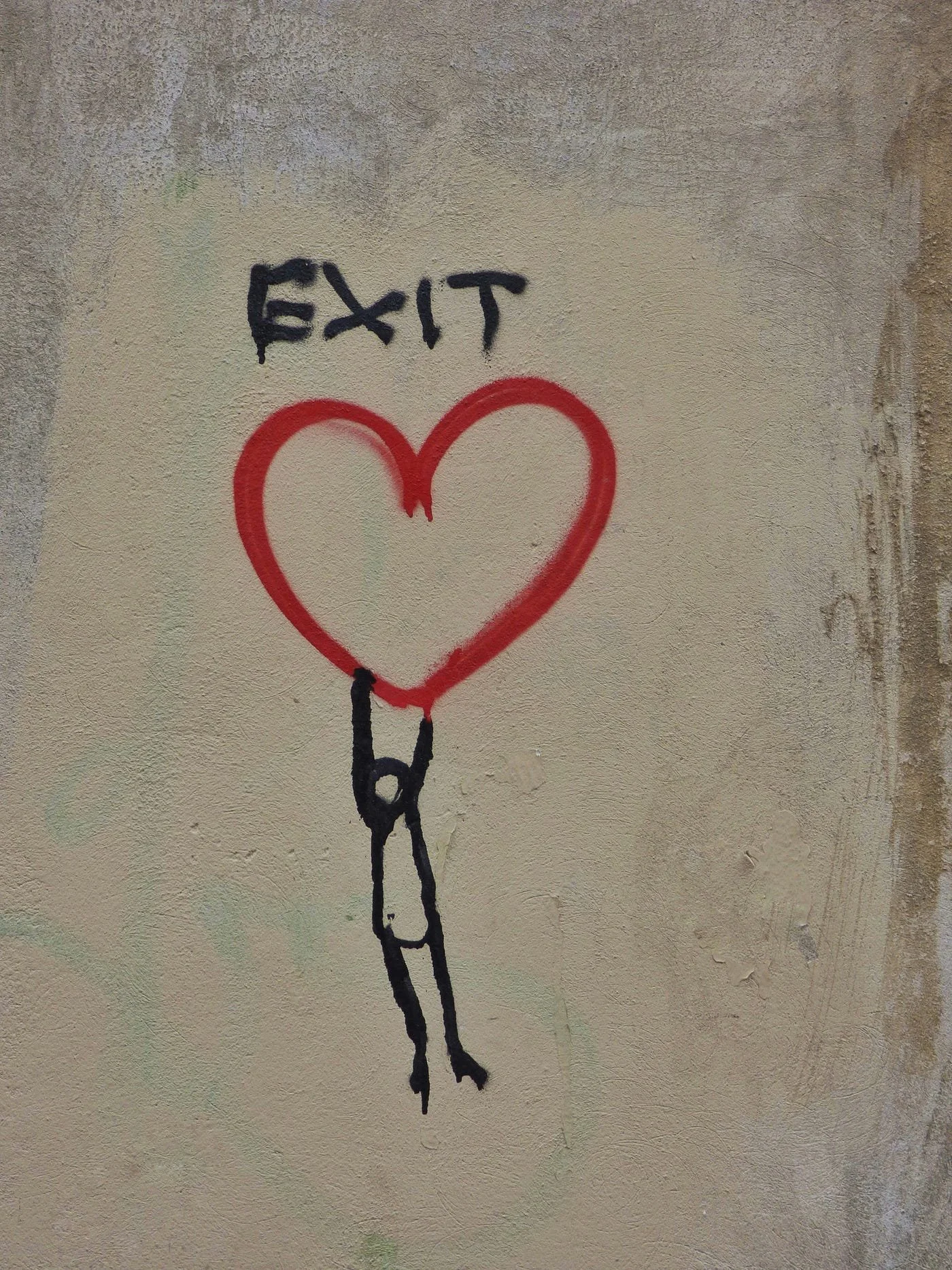
Leaving is a legitimate outcome and so is rebuilding.
When This Is About Safety
If you are afraid of your partner, or you feel controlled, humiliated or put down, this may not be a simple loss of love. Numbness and withdrawal can be a response to fear, and telling a controlling partner that you want to leave can raise the risk. A joint conversation or couples therapy is generally not suitable while abuse is happening, and support for you on your own comes first. Please read signs of emotional abuse in a relationship and coercive control versus conflict. Support is available.
The National Domestic Abuse Helpline is free and open 24 hours on 0808 2000 247, for women who are afraid of a partner.
The National LGBT+ Domestic Abuse Helpline from Galop is on 0800 999 5428 for LGBT+ people, and its opening hours are listed at galop.org.uk.
The Men's Advice Line is on 0808 8010327, from 10am to 5pm on weekdays, for men experiencing abuse from a partner.
If you are in immediate danger, call 999.
Falling Out of Love in LGBTQ+ and Non Monogamous Relationships
The same patterns appear in LGBTQ+ couples and in consensually non monogamous relationships. There are two extra considerations that come up.
The first is a sense of how a relationship should look. Many people carry an unspoken script, such as how much time a couple should spend together, who should take which role, or what counts as a real relationship. When what you have does not match the script, it can cloud your view of what is going on. You may conclude that love has gone when the real issue is that the shape of the relationship no longer fits, or you may stay in a shape that never suited you. The same is true in non monogamous relationships, where people can hold an unspoken idea of how an arrangement ought to feel. Falling out of love with one partner among several also affects the others, so decisions deserve extra care, and non monogamy is not the cause. Jealousy in non monogamous relationships and opening a relationship look at some of these questions.
The second is internalised shame. Many LGBTQ+ people encounter messages that being gay, lesbian, bisexual or trans is wrong. That can influence closeness and intimacy in deep ways that are mostly out of awareness, unless they are talked about and shared. Research on 396 lesbian, gay and bisexual adults found that internalised homophobia was associated with greater relationship problems. This was independent of how out people were or how connected they felt to the community, and depressive symptoms mediated the link (Frost and Meyer, 2009). This was an association in one community sample and does not mean that shame decides whether love lasts. It does suggest that, for some LGB people, difficulties in a relationship can be linked to shame carried in from outside it. Gay couples therapy in London and lesbian couples therapy describe the affirming way I work.
How Therapy Can Help
Many people believe that by the time love has faded, therapy is too late. Research on couple therapy in general is more encouraging, although it covers couples seeking help with relationship distress and not only couples where one partner no longer feels love. A meta analysis of 58 studies covering 2,092 couples found a large improvement in relationship satisfaction from before to after couple therapy, while couples on waitlists did not significantly improve, and the gains were generally maintained at follow up. These are averages, so outcomes vary between couples. All of the couples in those studies were opposite sex, so the picture for other couples is less certain (Roddy et al., 2020).
In sessions, I keep the focus on the relationship and the space between you, and we use the same questions together. We look at what each of you wants and whether it can be built between you, or whether it is leading somewhere else. Both answers are valid, and finding out can be a relief after months or years of not knowing. If you have heard the words, therapy gives you a place to take them in. If you would like to talk it through on your own first, that is fine, and it is the right route if you are unsure about joint sessions. When to go to couples therapy can help you decide. You do not need to be sure of anything to begin. If you are afraid of your partner, tell me and we will start with you alone.
I work with couples and individuals of all kinds, including same sex couples and those in consensually non monogamous relationships. If you are wondering whether love can come back, or whether it is time to let go, I offer a free 30 minute consultation, in person in London or online.
About the Author
Mark Ryan is a BACP Accredited Psychotherapist and NCPS Accredited Relationship Therapist, and the founder of Rise and Grow Therapy, a private practice offering couples and relationship therapy across Kensington, Pimlico, and Angel, Islington in London, as well as online consultations. His approach draws first on Imago Relationship Therapy, alongside integrative relational, attachment based, Gottman, and systemic approaches. Mark works with couples of all kinds, including LGBTQ+ couples and those in non traditional relationship structures such as consensual non monogamy, as well as with individuals working through relational issues.
References
Acevedo, B. P., & Aron, A. (2009). Does a long-term relationship kill romantic love? Review of General Psychology, 13(1), 59 to 65. https://doi.org/10.1037/a0014226
Bradbury, T. N., & Fincham, F. D. (1990). Attributions in marriage: Review and critique. Psychological Bulletin, 107(1), 3 to 33. https://doi.org/10.1037/0033-2909.107.1.3
Frost, D. M., & Meyer, I. H. (2009). Internalized homophobia and relationship quality among lesbians, gay men, and bisexuals. Journal of Counseling Psychology, 56(1), 97 to 109. https://doi.org/10.1037/a0012844
Roddy, M. K., Walsh, L. M., Rothman, K., Hatch, S. G., & Doss, B. D. (2020). Meta-analysis of couple therapy: Effects across outcomes, designs, timeframes, and other moderators. Journal of Consulting and Clinical Psychology, 88(7), 583 to 596. https://doi.org/10.1037/ccp0000514
