
By Mark Ryan, BACP Accredited Psychotherapist and NCPS Accredited Relationship Therapist
Women's mental health is a critical yet often overlooked issue, shaped by a variety of factors, including biological, psychological, and social influences. While mental health struggles affect individuals across all genders, women face distinctive pressures from societal expectations, gender norms, and systemic inequalities. These pressures can make it difficult for women to acknowledge their mental health concerns and seek the support they need.
Despite the increasing awareness of mental health issues, many women continue to struggle in silence, fearing stigma, judgement, or the burden of additional responsibilities. However, therapy can play a valuable role in helping women navigate these challenges, providing a safe space to explore their emotions, develop coping strategies, and build resilience. This article explores the pressures women describe, what the research does and does not show, and how therapy can help women on their journey towards healing.
A note on scope: I write here about women, and most of the research I cite does not separate out trans women or non binary people, so please do not read it as speaking for everyone. Many of the pressures described will be familiar to people of other genders too.
In brief
Large studies find that depression is more common in women than in men. The gap appears in adolescence, and it varies by age and country.
Women in the UK do, on average, a good deal more unpaid work than men, and that load is part of what many women tell me they are carrying.
Pressure to present a flawless life, including through social media, is linked with poorer body image, though the research does not show it affects only women.
Stigma deters help seeking across many groups, and the research suggests it is not a women only problem.
Therapy can help, and several approaches have evidence, but fit and the relationship with your therapist matter.
Being self critical is linked with distress, and self compassion is linked with better mental health.
Societal pressures and their impact on women's mental health
What the data show about depression
It helps to start with the numbers. Two meta analyses of nationally representative samples looked at gender differences in depression, covering 65 articles on diagnoses and 95 on symptoms, with data from more than 1.7 million and 1.9 million people in over 90 nations. Women were nearly twice as likely as men to have a diagnosis of major depression (odds ratio 1.95), and the difference in symptoms was small to moderate (d = 0.27). Age was the strongest predictor of the size of the difference, which emerged by age 12 and peaked in adolescence (Salk et al., 2017). That is evidence of a gap, and it does not tell us why. Researchers in that review tested a number of explanations, and I would be cautious of anyone who says they know a single cause.
The weight of expectations
Women are often expected to excel in many roles at once: professional success, caregiving, maintaining social and personal relationships, all while meeting beauty and lifestyle standards that no one can reach. In my experience this produces a constant need to appear 'put together' that can lead to chronic self criticism and feelings of inadequacy, which in turn make it harder for women to recognise when they need help. That is my clinical observation. I have not found a study I can stand behind that links perfectionism to depression and anxiety specifically in women, so I am not claiming one.
Social media can add to the pressure. A systematic review of 20 studies found that use of social networking sites is associated with body image and disordered eating, with particular activities such as viewing and uploading photos and seeking negative feedback identified as especially problematic. Appearance based social comparison appeared to explain part of the link. The review found that gender was not a moderating factor, so the associations were not limited to women, and most of the research was correlational (Holland & Tiggemann, 2016). If you want to read more on body image and closeness, I have written about how body image shapes intimacy.
Gender roles and the unpaid load
Traditional gender roles continue to shape expectations around women's responsibilities. Women are frequently expected to be caregivers, whether as mothers, daughters, or partners, often at the expense of their own wellbeing. UK data give some sense of the practical side. An analysis of 2015 time use data by the Office for National Statistics found that women carry out on average 60 per cent more unpaid work than men: about 26 hours a week for women against 16 hours for men. Women did more unpaid work in every age group, and the only area where men did more was transport (Office for National Statistics, 2016). Unpaid work in that analysis includes cooking, childcare, housework and adult care.
The idea of emotional labour goes further than hours. It describes the work of managing not only your own emotions but also the emotional needs of other people, an invisible yet substantial burden. I have not found data that measures that kind of load directly, so I describe it from my clinical experience and not from a study. In my experience, women who prioritise others' needs over their own wellbeing often downplay their struggles or feel guilty for seeking support. If that sounds familiar, you might read my pieces on why a partner might not be listening and on the first two years after a baby.
Stigma, and being taken seriously
Despite progress in mental health awareness, stigma remains a barrier to seeking help. A systematic review of 144 studies with 90,189 participants found a small to moderate negative association between stigma and help seeking (median d = -0.27), with internalised stigma and treatment stigma most often linked with reduced help seeking, and stigma was the fourth highest ranked barrier. The review found that ethnic minorities, young people, men and people in military and health professions were disproportionately deterred by stigma (Clement et al., 2015). So the research does not support saying that stigma deters women more than anyone else. It affects many groups, men included. What I can say from my own work is that women from marginalised communities often tell me they fear being judged as weak or incapable if they admit to struggling, and that this is especially so where talking about mental health is still taboo. That is a clinical observation.
There is also evidence about how women's pain is treated in health care. A literature review of 77 articles on gender bias in health care and gendered norms towards patients with chronic pain found a variety of gendered norms about men's and women's experience and expression of pain, and identified gender bias in pain treatment, in both the patient and provider encounter and the professional's treatment decisions (Samulowitz et al., 2018). That review was about chronic pain, not psychological distress, so it does not tell us how women's mental health symptoms are treated. But it fits what many women describe: the sense of not being believed. It can discourage women from seeking help, reinforcing the notion that their struggles are not valid.
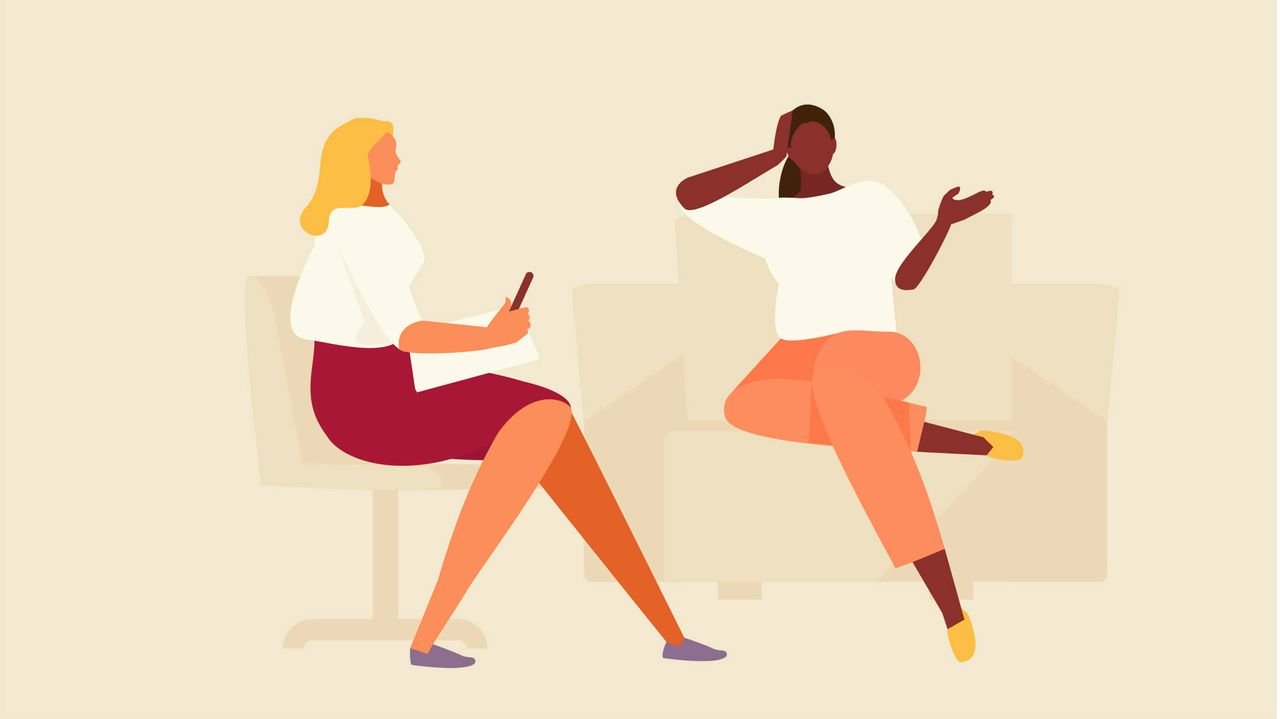
Seeking therapy is not a sign of weakness. It is an act of strength and self-care.
How therapy can help women navigate these challenges
Creating a safe space for emotional expression
Therapy offers a non-judgemental and supportive environment where women can openly discuss their emotions without fear of criticism. Many women feel pressure to suppress their feelings or appear strong, and therapy can encourage them to acknowledge and validate their emotions. By processing difficult experiences in a safe space, women can develop healthier coping mechanisms and a greater sense of self awareness.
Several approaches have evidence. A review of 106 meta-analyses found the strongest support for cognitive behavioural therapy in anxiety disorders, somatoform disorders, bulimia, anger control problems and general stress (Hofmann et al., 2012), and I write more about this in the benefits and limitations of CBT. That review was about CBT in general, not women specifically. Person centred therapy, developed by Carl Rogers, focuses on self-acceptance and personal growth, and in my experience it can help women reconnect with themselves. I am not citing outcome research for it here, because I did not verify any. If you are looking for support with low mood or anxiety, I have written about sadness or depression and anxiety and the nervous system, and about the healing power of tears.
Addressing perfectionism and building self-compassion
Therapists can help women challenge perfectionistic tendencies and replace them with self-compassion. Many women struggle with harsh self-judgement, believing that anything less than perfection is failure. There is a robust link between being self-critical and distress. A meta-analysis of 14 studies found a large association between self-compassion and lower psychopathology (r = -0.54), and the authors concluded that compassion is an important explanatory variable in understanding mental health and resilience (MacBeth & Gumley, 2012). That is an association, and the studies used one questionnaire, but it supports the idea that how we treat ourselves matters.
Acceptance and Commitment Therapy (ACT) encourages people to accept their imperfections while taking meaningful action aligned with their values. A meta-analysis of 39 randomised controlled trials with 1,821 patients found that ACT outperformed control conditions (Hedges' g = 0.57), and that it did not differ significantly from established treatments such as CBT (A Tjak et al., 2015). That was across a broad range of problems and not women specifically.
Through therapy, women can learn to set realistic expectations for themselves and recognise that they do not have to meet every societal standard to be worthy and fulfilled. Self-compassion practices, such as mindfulness and self-kindness, can help develop a healthier self-image and reduce stress. If you recognise yourself as being hard on yourself, I have written about blame and meeting the inner child.
Managing emotional labour and setting boundaries
Therapy can also help women set healthy boundaries, an essential skill for managing emotional labour. Many women struggle to say no because of guilt or fear of disappointing others. In my professional understanding, Dialectical Behaviour Therapy (DBT) includes skills in interpersonal effectiveness that help people communicate their needs assertively while maintaining healthy relationships. I describe that from my training and not from a study. The research on DBT that I can point to concerns a different problem. A Cochrane review of psychological therapies for borderline personality disorder included 75 randomised controlled trials with 4,507 participants, predominantly female, and more than 16 kinds of psychotherapy, mostly DBT and mentalisation-based treatment. Psychotherapy reduced borderline personality disorder symptom severity compared with treatment as usual (SMD -0.52, moderate quality evidence), and may reduce self-harm, improve suicide related outcomes and improve psychosocial functioning, though the evidence for those outcomes was of low quality (Storebø et al., 2020). That review does not isolate DBT, and it concerns a specific diagnosis, so I offer it as context and not as evidence about boundary setting.
By learning to set limits, women can protect their mental wellbeing without feeling obligated to meet everyone else's demands. In my view, establishing boundaries is not selfish. It is part of self-care that allows women to show up more fully in their personal and professional lives.
Breaking the cycle of inherited patterns
For many women, therapy provides an opportunity to step out of patterns inherited from earlier generations. Women who grew up in environments where mental health was not prioritised may carry unresolved emotional wounds. Trauma focused therapy can help women process past experiences, understand their impact, and develop healthier relational patterns. A Cochrane review of psychological therapies for chronic PTSD in adults, covering 70 studies with 4,761 participants, found that individual trauma focused CBT and EMDR were more effective than waitlist or usual care at reducing clinician assessed PTSD symptoms, and that there was no statistically significant difference between them immediately after treatment. The review rated the quality of the evidence as very low and urged caution (Bisson et al., 2013).
You may have heard that trauma can be passed down between generations. The research here is more limited than popular accounts suggest. A review of the evidence on the intergenerational transmission of trauma effects, and a possible role for epigenetic mechanisms, noted that the most compelling work to date has been done in animal models, and that human studies are few and face methodological challenges (Yehuda & Lehrner, 2018). In my experience, many women describe patterns in their families that feel passed down, such as how emotions were or were not spoken about, and therapy can help them understand and change those patterns. That is a description of what I see, and not a claim about biological transmission. For women from marginalised communities, these patterns can also reflect wider historical and systemic inequalities, and I would not want to oversimplify that.
Therapy as a tool for empowerment
Beyond addressing symptoms, therapy can support self-empowerment. In my experience, women who engage in therapy often develop greater self-confidence, emotional resilience, and a stronger sense of agency. They learn to prioritise their needs, advocate for themselves, and pursue personal fulfilment without guilt or societal pressure. I am describing what I observe, and I cannot point to a study that measures empowerment as an outcome.
What does the research say about getting the most from therapy? A meta-analysis of 35 studies found that clients matched to their preferred therapy conditions were less likely to drop out and showed greater improvement (Swift et al., 2011), and a large review concluded that the psychotherapy relationship makes substantial and consistent contributions to outcome independent of the type of treatment (Norcross & Lambert, 2018). That is a good reason to say what you want from therapy, and to choose a therapist you feel safe with. If you are unsure whether it is for you, Is therapy right for me? and when therapy doesn't work yet may help.
Specific times when support can matter
Some points in women's lives bring pressures. If you are thinking about a new baby, I have written about postpartum depression and relationships and the first two years after a baby. If you are worried that how you are being treated in a relationship is not right, signs of emotional abuse in a relationship may help.
If you are ever in crisis, or thinking about harming yourself, please do not wait for the right therapy. Contact your GP, call NHS 111 and choose the mental health option if you are in England, or call Samaritans free on 116 123 at any time. You can also text SHOUT to 85258. In an emergency, call 999.
Summary
Women's mental health is shaped by many things, including societal expectations, gender roles, and structural barriers. Large studies show a gap in depression between women and men, and UK data show an unequal load of unpaid work, though research cannot tell us how much each contributes. Stigma and cultural expectations can stop people seeking the support they need, and the evidence suggests this is true of many groups, not women alone.
Therapy offers a path towards healing and empowerment. By providing a safe space for emotional expression, supporting self-compassion, helping with boundaries, and working with painful experiences from the past, therapy can play a valuable role in mental wellbeing. It is essential to keep challenging societal norms that discourage women from looking after their mental health. Seeking therapy is not a sign of weakness. It is an act of strength and self-care. When women feel supported, they can cultivate greater resilience, fulfilment, and overall wellbeing.
About the Author
Mark Ryan is a BACP Accredited Psychotherapist and NCPS Accredited Relationship Therapist, and the founder of Rise and Grow Therapy™, a private practice offering couples and relationship therapy across Kensington, Pimlico, and Angel, Islington in London, as well as online consultations. His approach draws first on Imago Relationship Therapy, alongside integrative relational, attachment based, Gottman, and systemic approaches. Mark works with couples of all kinds, including LGBTQ+ couples and those in non-traditional relationship structures such as consensual non monogamy, as well as with individuals working through relational issues.
References
A Tjak, J. G., Davis, M. L., Morina, N., Powers, M. B., Smits, J. A., & Emmelkamp, P. M. (2015). A meta analysis of the efficacy of acceptance and commitment therapy for clinically relevant mental and physical health problems. Psychotherapy and Psychosomatics, 84(1), 30 to 36.
Bisson, J. I., Roberts, N. P., Andrew, M., Cooper, R., & Lewis, C. (2013). Psychological therapies for chronic post traumatic stress disorder (PTSD) in adults. Cochrane Database of Systematic Reviews, 2013(12), CD003388.
Clement, S., Schauman, O., Graham, T., Maggioni, F., Evans Lacko, S., Bezborodovs, N., Morgan, C., Rüsch, N., Brown, J. S. L., & Thornicroft, G. (2015). What is the impact of mental health related stigma on help seeking? A systematic review of quantitative and qualitative studies. Psychological Medicine, 45(1), 11 to 27.
Hofmann, S. G., Asnaani, A., Vonk, I. J. J., Sawyer, A. T., & Fang, A. (2012). The efficacy of cognitive behavioral therapy: A review of meta analyses. Cognitive Therapy and Research, 36(5), 427 to 440.
Holland, G., & Tiggemann, M. (2016). A systematic review of the impact of the use of social networking sites on body image and disordered eating outcomes. Body Image, 17, 100 to 110.
MacBeth, A., & Gumley, A. (2012). Exploring compassion: A meta analysis of the association between self compassion and psychopathology. Clinical Psychology Review, 32(6), 545 to 552.
Norcross, J. C., & Lambert, M. J. (2018). Psychotherapy relationships that work III. Psychotherapy, 55(4), 303 to 315.
Office for National Statistics. (2016, November 10). Women shoulder the responsibility of 'unpaid work'. Retrieved 5 October 2026.
Salk, R. H., Hyde, J. S., & Abramson, L. Y. (2017). Gender differences in depression in representative national samples: Meta analyses of diagnoses and symptoms. Psychological Bulletin, 143(8), 783 to 822.
Samulowitz, A., Gremyr, I., Eriksson, E., & Hensing, G. (2018). Brave men and emotional women: A theory guided literature review on gender bias in health care and gendered norms towards patients with chronic pain. Pain Research and Management, 2018, 6358624.
Storebø, O. J., Stoffers Winterling, J. M., Völlm, B. A., Kongerslev, M. T., Mattivi, J. T., Jørgensen, M. S., Faltinsen, E., Todorovac, A., Sales, C. P., Callesen, H. E., Lieb, K., & Simonsen, E. (2020). Psychological therapies for people with borderline personality disorder. Cochrane Database of Systematic Reviews, 2020(5), CD012955.
Swift, J. K., Callahan, J. L., & Vollmer, B. M. (2011). Preferences. Journal of Clinical Psychology, 67(2), 155 to 165.
Yehuda, R., & Lehrner, A. (2018). Intergenerational transmission of trauma effects: Putative role of epigenetic mechanisms. World Psychiatry, 17(3), 243 to 257.
